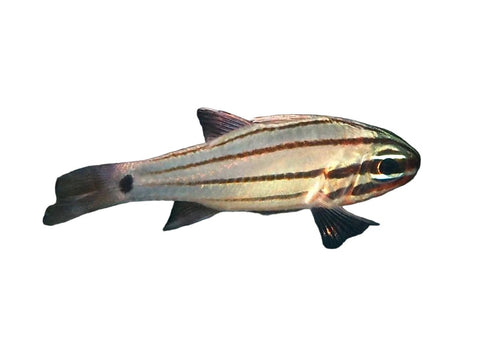
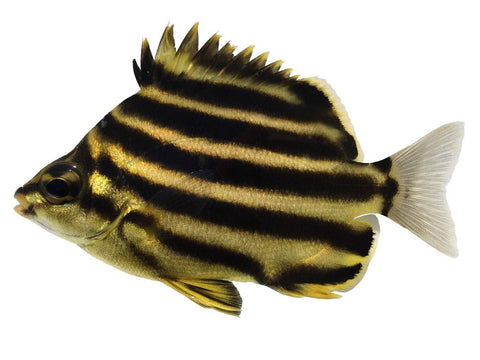
4 Lined Cardinal
$30.00

Every fish passes through our dedicated quarantine system and strict biosecurity monitoring before sale - so it arrives healthy, settled and ready to thrive. How we quarantine →
| Tasmania | YES |
| Western Australia | YES |
| Northern Territory | NO |
| All Other States | YES |
The Birdnose Wrasse is a striking and highly active marine fish recognised for its long, pointed beak-like snout, streamlined body and vibrant green, blue and yellow colouration. Its unusual appearance and constant activity make it an excellent feature fish for larger marine aquariums.
Birdnose Wrasses are powerful swimmers and spend much of their time cruising through the aquarium and exploring rockwork. They are intelligent and curious fish that quickly learn to recognise feeding routines.
They are generally hardy once established but can become aggressive towards smaller, passive fish and other wrasses, particularly in confined aquariums. Plenty of open swimming space and rockwork is important.
Birdnose Wrasses are carnivorous and should be fed a varied diet of mysis shrimp, enriched brine shrimp, chopped seafood and quality marine pellets.
They are generally considered reef safe with corals, although their active hunting behaviour means very small ornamental crustaceans may be at risk.
Scientific Name: Gomphosus varius
Common Name: Birdnose Wrasse / Bird Wrasse
Family: Labridae
Type: Marine Fish / Wrasse
Adult Size: Approximately 30 cm
Temperament: Semi-Aggressive
Care Level: Intermediate
Minimum Aquarium: 450 L+
Temperature: 24–28°C
pH: 8.0–8.4
Salinity: 1.023–1.026 SG
Diet: Carnivore
Tank Level: All Levels
Reef Safe: Generally, with caution around small invertebrates
Suitable For: Large marine aquariums, reef systems and established fish communities
Birdnose Wrasses can reach approximately 30 cm, making them a substantial fish that requires plenty of swimming space.
They are generally reef safe with corals, but their predatory nature means small ornamental shrimp and other tiny crustaceans may be eaten.
They are carnivorous and readily accept mysis shrimp, brine shrimp, chopped seafood and quality marine pellets.
They can be territorial towards other wrasses, particularly similar-sized or similarly shaped species. Careful selection of tank mates and sufficient aquarium space are important.
They don't rely on sand for sleeping in the same way as many Halichoeres wrasses. However, providing suitable rockwork and sheltered areas is important for security.
Keeping them in an undersized aquarium
Birdnose Wrasses are active swimmers and can reach around 30 cm.
Not providing enough swimming space
Leave plenty of open water around the rockwork for natural cruising behaviour.
Keeping them with very small fish or shrimp
Their natural hunting behaviour can put small tank mates at risk.
Keeping incompatible wrasses together
Territorial behaviour can become significant between similar wrasse species.
Underfeeding
Active wrasses have high energy requirements and benefit from regular feeding.
Livestock is dispatched with heat/cool packs and oxygen from our Melbourne facility, timed for the safest transit. Live arrivals may be scheduled for the best shipping window. A live arrival guarantee applies - contact us within the required window if anything is not right.
We stand behind everything we sell. If something is not right, get in touch and we will make it right. See our returns policy for the details.
This fish has been through our dedicated quarantine system and is feeding, settled and health-checked before sale. We still recommend acclimating slowly and quarantining new additions at home. Our team is happy to talk you through the right setup - just ask.
Choose type