Longfin Balloon Ram
$35.00

Every fish passes through our dedicated quarantine system and strict biosecurity monitoring before sale - so it arrives healthy, settled and ready to thrive. How we quarantine →
| Tasmania | NO |
| Western Australia | NO |
| Northern Territory | NO |
| All Other States | YES |
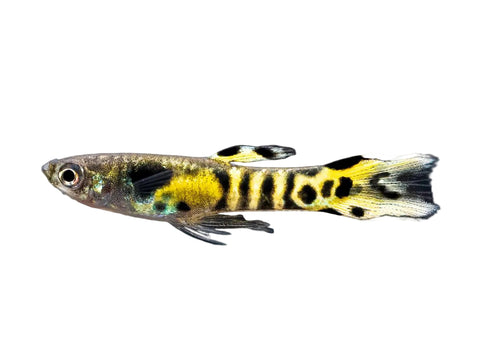
The Black & Gold Molly is a striking freshwater livebearer featuring a contrasting combination of deep black and golden-yellow colouration. Their bold pattern makes them an excellent feature fish for community aquariums.
Mollies are active, hardy and adaptable fish that are particularly well suited to beginner aquarists. They appreciate plenty of swimming space and benefit from an aquarium containing live plants and some open areas.
Like other livebearers, Mollies are prolific breeders. Females give birth to free-swimming, fully formed fry rather than laying eggs. If males and females are kept together, regular breeding should be expected.
Mollies can tolerate a wide range of water conditions and generally prefer neutral to slightly alkaline, moderately hard water.
Scientific Name: Poecilia sp.
Common Name: Black & Gold Molly
Family: Poeciliidae
Type: Freshwater Fish / Livebearer
Adult Size: Approximately 6–10 cm
Temperament: Peaceful
Care Level: Easy
Minimum Aquarium: 60 L+
Temperature: Approximately 22–28°C
pH: Approximately 7.0–8.2
Water Hardness: Moderate to Hard
Diet: Omnivore
Tank Level: All Levels
Group Size: 4+ Recommended
Breeding: Livebearer / Prolific
Suitable For: Community and Planted Aquariums
Yes. Mollies are hardy and beginner-friendly fish that adapt well to a range of aquarium conditions when water quality is maintained.
Depending on sex and variety, adults can reach approximately 6–10 cm, with females generally larger than males.
Yes. Mollies are prolific livebearers. Females can produce dozens of fry from a single brood, and breeding can occur regularly in suitable conditions.
They are omnivores and should receive a varied diet of quality flakes and pellets, algae-based foods and occasional frozen or live foods.
Yes. They are generally peaceful and suitable for community aquariums with similarly sized, non-aggressive species.
They don't require live plants, but vegetation provides shelter, grazing surfaces and protection for fry.
Keeping Mollies in very soft, acidic water
Mollies generally prefer harder, alkaline water.
Keeping too many males
A higher female-to-male ratio can help reduce persistent male attention and stress.
Underestimating their adult size
Mollies are active fish and need adequate swimming space.
Overfeeding
Mollies are enthusiastic eaters, but excess food can quickly degrade water quality.
Not planning for fry
If males and females are kept together, breeding is likely and populations can increase quickly.
Livestock is dispatched with heat/cool packs and oxygen from our Melbourne facility, timed for the safest transit. Live arrivals may be scheduled for the best shipping window. A live arrival guarantee applies - contact us within the required window if anything is not right.
We stand behind everything we sell. If something is not right, get in touch and we will make it right. See our returns policy for the details.
This fish has been through our dedicated quarantine system and is feeding, settled and health-checked before sale. We still recommend acclimating slowly and quarantining new additions at home. Our team is happy to talk you through the right setup - just ask.
Choose size