Sold out
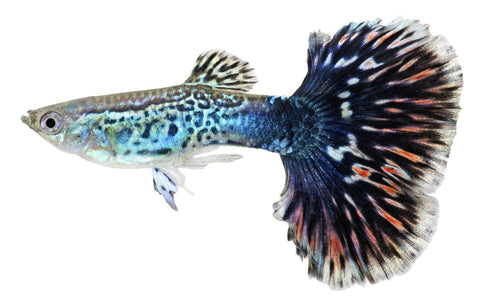
Assorted Guppy
From $7.00

Every fish passes through our dedicated quarantine system and strict biosecurity monitoring before sale - so it arrives healthy, settled and ready to thrive. How we quarantine →
| Tasmania | NO |
| Western Australia | NO |
| Northern Territory | NO |
| All Other States | YES |
The Siamese Algae Eater is widely regarded as one of the best natural algae-eating fish available for freshwater aquariums. Native to the rivers and streams of Thailand, Laos, and neighbouring parts of Southeast Asia, this active and peaceful species is particularly valued for its ability to consume nuisance algae, including the notoriously difficult Black Beard Algae (BBA).
Recognisable by the bold black stripe running from its nose through to the tail, the Siamese Algae Eater is an energetic swimmer that spends much of its day grazing on algae from plants, driftwood, rocks, and aquarium décor. Unlike many other algae eaters, true Siamese Algae Eaters remain effective algae grazers well into adulthood.
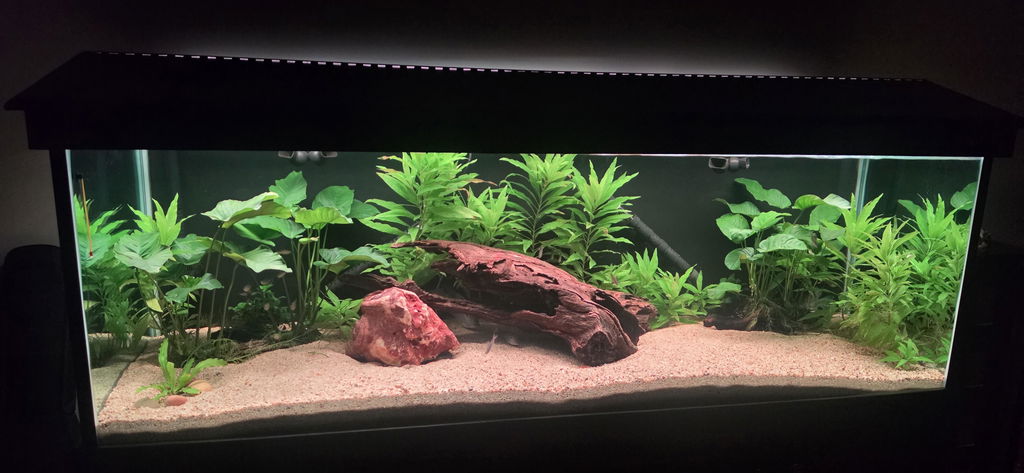
They thrive in well-planted aquariums with driftwood, rocks, open swimming space, and moderate water flow. As social fish, they do best in groups of three or more, although they can also be kept individually in suitable community aquariums. A varied diet of algae, spirulina wafers, sinking pellets, blanched vegetables, and frozen foods will keep them healthy once natural algae becomes limited.
Peaceful, hardy, and highly beneficial, the Siamese Algae Eater is an excellent addition to planted aquariums and community fish tanks.
Crossocheilus siamensis
Siamese Algae Eater
Thailand, Laos, Cambodia, and Malaysia
14–16 cm
Peaceful
Omnivore (Algae Grazer)
120 Litres
23–28°C
6.5–7.8
5–15 dGH
Beginner
8–10 Years
Planted aquariums and peaceful community tanks
Yes. True Siamese Algae Eaters are one of the few freshwater fish known to regularly consume Black Beard Algae (BBA), especially when young.
A true Siamese Algae Eater has a jagged black stripe that extends through the tail fin, lacks gold edging above the stripe, and has clear fins. Flying Foxes have a smooth stripe, gold banding, and are generally more territorial.
They eat soft algae, biofilm, spirulina wafers, sinking pellets, blanched zucchini, spinach, cucumber, and frozen foods such as bloodworms and brine shrimp.
Yes. They are generally safe with adult shrimp and make excellent community fish, although very small shrimplets may occasionally be eaten.
Absolutely. They are one of the best algae-control fish available and are widely used in heavily planted aquariums.
Flying Foxes and False Siamese Algae Eaters are often misidentified and do not provide the same level of algae control.
Once algae is depleted, they require a varied diet including quality sinking foods and vegetables.
Adults become active fish reaching around 15 cm and require plenty of swimming space.
They thrive in peaceful community aquariums where they can graze without constant stress.
Excellent filtration and regular water changes help maintain healthy, active algae eaters.
Livestock is dispatched with heat/cool packs and oxygen from our Melbourne facility, timed for the safest transit. Live arrivals may be scheduled for the best shipping window. A live arrival guarantee applies - contact us within the required window if anything is not right.
We stand behind everything we sell. If something is not right, get in touch and we will make it right. See our returns policy for the details.
This fish has been through our dedicated quarantine system and is feeding, settled and health-checked before sale. We still recommend acclimating slowly and quarantining new additions at home. Our team is happy to talk you through the right setup - just ask.