Sold out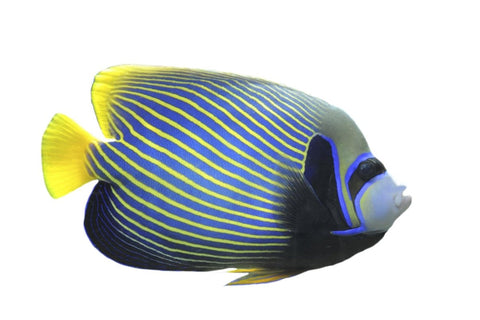
Emperor Angel
From $170.00

Every fish passes through our dedicated quarantine system and strict biosecurity monitoring before sale - so it arrives healthy, settled and ready to thrive. How we quarantine →
| Tasmania | YES |
| Western Australia | YES |
| Northern Territory | NO |
| All Other States | YES |
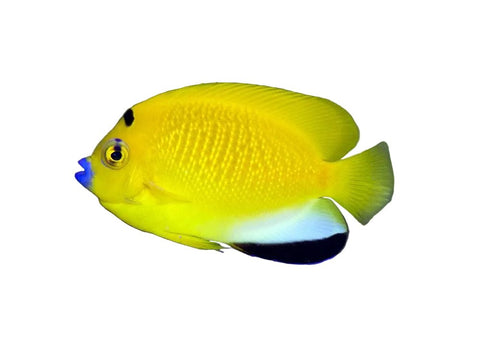
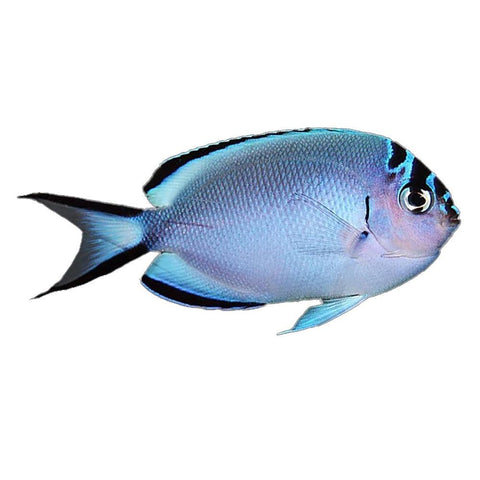
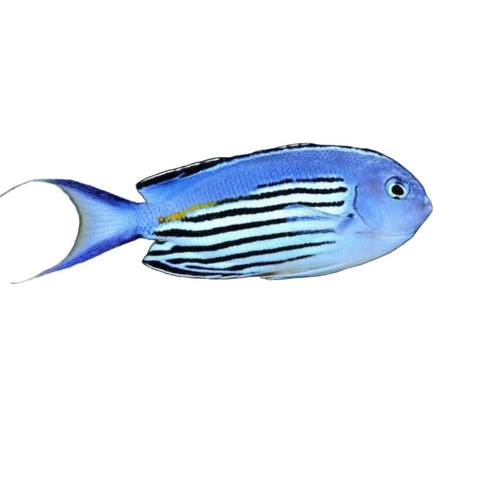
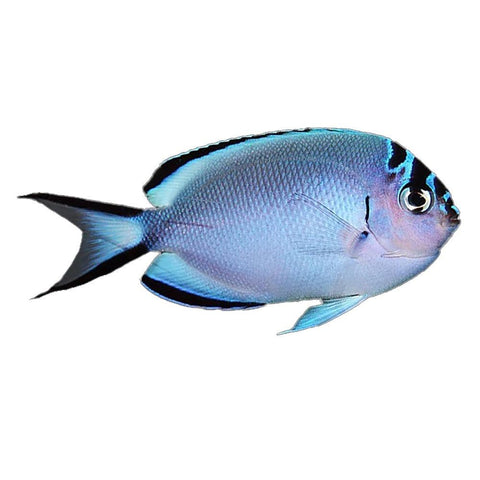
The False Personifer Angel, also known as the Queensland Yellowtail Angelfish, is a spectacular Australian marine angelfish recognised for its deep black body, bright yellow tail and fins, blue-green face and distinctive white band behind the head. It is an impressive feature fish for a large, mature marine aquarium.
Native to eastern Australia, this species is closely related to the true Personifer Angelfish but is distinguished by its characteristic colouration and smaller adult size. It can reach around 25–30 cm in the wild, so substantial swimming space is required.
False Personifer Angels are best suited to large, mature aquariums with extensive live rock, caves and crevices. They naturally feed on sponges, tunicates, algae and other marine invertebrate material, so a varied diet containing sponge-based angelfish foods, marine algae and meaty foods is important.
They are not considered reliably reef safe. They may nip at SPS and LPS corals, soft corals, sponges, tunicates and clam mantles, making them better suited to fish-only-with-live-rock systems or reef aquariums where some invertebrate grazing is acceptable.
Scientific Name: Chaetodontoplus meredithi
Common Name: False Personifer Angel / Queensland Yellowtail Angelfish
Family: Pomacanthidae
Type: Marine Fish / Large Angelfish
Adult Size: Approximately 25–30 cm
Temperament: Semi-Aggressive / Territorial
Care Level: Intermediate to Advanced
Minimum Aquarium: 680 L+
Temperature: 24–28°C
pH: 8.1–8.4
Salinity: 1.023–1.026 SG
Diet: Omnivore / Sponge & Algae Feeder
Tank Level: All Levels
Reef Safe: No — Reef With Caution
Suitable For: Large mature marine aquariums and fish-only systems
They can reach approximately 25–30 cm, so they require a very large aquarium with substantial swimming space.
No. They may nip at corals, sponges, tunicates and clam mantles. They are best considered a fish-only or reef-with-caution species.
Offer a varied diet including sponge-based angelfish preparations, marine algae, Spirulina, nori, mysis shrimp, brine shrimp and other quality marine foods. Multiple smaller feedings can help maintain condition.
They can be territorial towards similarly shaped angelfish. Careful selection of tank mates and a very large aquarium are important when keeping multiple angels.
No. Its size, dietary requirements and potential for coral and invertebrate damage make it better suited to experienced marine aquarists.
Buying one for a small aquarium
These fish become large and require substantial swimming space. Plan for their adult size.
Keeping one in a coral-focused reef
They naturally graze on sessile invertebrates and may damage corals and clam mantles.
Not providing sponge-based foods
Sponges form an important part of their natural diet, so a varied angelfish diet is essential.
Adding one to an immature aquarium
They benefit from established live rock, stable water quality and a mature biological system.
Keeping incompatible angelfish together
Territorial behaviour can become significant, particularly between similarly shaped species.
Livestock is dispatched with heat/cool packs and oxygen from our Melbourne facility, timed for the safest transit. Live arrivals may be scheduled for the best shipping window. A live arrival guarantee applies - contact us within the required window if anything is not right.
We stand behind everything we sell. If something is not right, get in touch and we will make it right. See our returns policy for the details.
This fish has been through our dedicated quarantine system and is feeding, settled and health-checked before sale. We still recommend acclimating slowly and quarantining new additions at home. Our team is happy to talk you through the right setup - just ask.