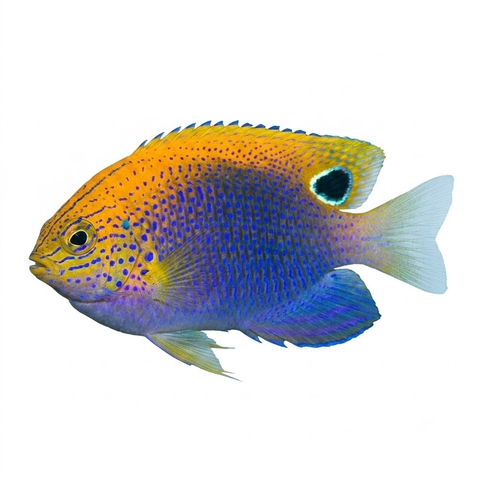
Princess Damsel
$20.00

Every fish passes through our dedicated quarantine system and strict biosecurity monitoring before sale - so it arrives healthy, settled and ready to thrive. How we quarantine →
| Tasmania | YES |
| Western Australia | YES |
| Northern Territory | NO |
| All Other States | YES |
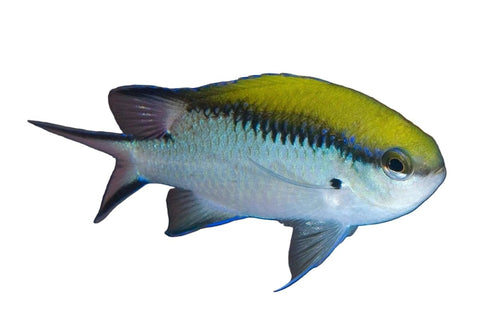
Blue Green Chromis are one of the most popular schooling fish in the marine aquarium hobby, recognised for their bright blue-green to turquoise colouration and active schooling behaviour.
They are peaceful damselfish that spend most of their time swimming in the midwater and upper areas of the aquarium. A group creates an impressive natural schooling display, particularly around live rock and coral structures.
Blue Green Chromis are relatively hardy compared with many other reef fish and are suitable for established marine aquariums. They appreciate plenty of open swimming space, good water movement and excellent oxygenation.
Although often sold as reef-safe schooling fish, groups can develop a hierarchy and some individuals may become aggressive towards weaker fish over time. Providing adequate space and maintaining a sufficiently large group can help distribute aggression.
They are primarily planktivores, so a varied diet of small frozen foods, enriched brine shrimp, mysis shrimp and quality marine pellets is ideal.
Scientific Name: Chromis viridis
Common Name: Blue Green Chromis / Green Chromis
Family: Pomacentridae
Type: Marine Schooling Fish / Damselfish
Adult Size: Approximately 8–10 cm
Temperament: Peaceful to Semi-Territorial
Care Level: Easy
Minimum Group: 6+
Minimum Aquarium: 150 L+
Temperature: 24–28°C
pH: 8.0–8.4
Salinity: 1.023–1.026 SG
Diet: Planktivore / Omnivore
Tank Level: Midwater to Upper Levels
Reef Safe: Yes
Suitable For: Reef aquariums, marine community tanks and schooling displays
They are schooling fish and are best kept in a group of 6 or more. Larger groups can create a much more impressive display, provided the aquarium is large enough.
Yes. They are generally considered reef safe and will normally leave corals and ornamental invertebrates alone.
They are relatively peaceful for damselfish, but a hierarchy can develop within a group. Some aggression is possible, particularly when the group is too small or the aquarium lacks sufficient space.
They primarily feed on plankton in the wild. Offer enriched brine shrimp, mysis shrimp, finely chopped marine foods and quality marine pellets or flakes.
Yes. They are active swimmers and benefit from plenty of open water. A larger aquarium is particularly important when keeping a group.
Keeping only 2–3 fish
Very small groups can allow aggression to become concentrated on individual fish. A proper group is generally preferable.
Not providing enough swimming space
Chromis are active open-water swimmers and need plenty of room.
Feeding too infrequently
Their planktivorous nature means they benefit from regular feeding, particularly in newly established systems.
Keeping them with aggressive tank mates
Large or highly aggressive fish can stress or prey upon them.
Overcrowding the aquarium
Groups require sufficient swimming space and filtration to maintain excellent water quality.
Livestock is dispatched with heat/cool packs and oxygen from our Melbourne facility, timed for the safest transit. Live arrivals may be scheduled for the best shipping window. A live arrival guarantee applies - contact us within the required window if anything is not right.
We stand behind everything we sell. If something is not right, get in touch and we will make it right. See our returns policy for the details.
This fish has been through our dedicated quarantine system and is feeding, settled and health-checked before sale. We still recommend acclimating slowly and quarantining new additions at home. Our team is happy to talk you through the right setup - just ask.