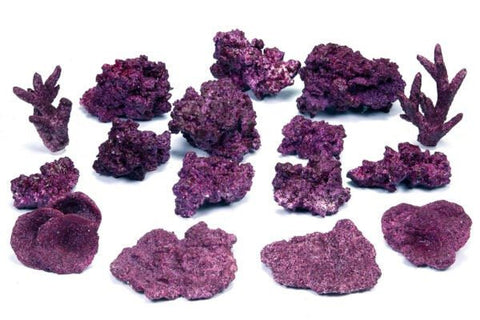
Real Reef Rocks
From $2.80
Choose type

| Tasmania | NO |
| Western Australia | NO |
| Northern Territory | NO |
| All Other States | YES |
The Blue Steel Orange Shrimp is a rare and striking selectively bred variety of Neocaridina davidi, admired for its unique blend of metallic steel-blue and vibrant orange colouration. Depending on the individual, these shrimp display an iridescent blue body with contrasting orange head, tail, or saddle, creating an eye-catching appearance unlike any other Neocaridina variety.
Highly prized by shrimp enthusiasts and aquascapers, Blue Steel Orange Shrimp are constantly active, spending their day grazing on algae, biofilm, and organic matter from plants, driftwood, rocks, and substrate. Their unusual colouration stands out beautifully against lush green plants and dark aquascaping materials, making them a true feature species in planted aquariums.
Blue Steel Orange Shrimp thrive in mature aquariums with mosses, fine-leaved plants, driftwood, leaf litter, and plenty of hiding places. Stable water conditions and a well-established aquarium rich in biofilm are essential for successful moulting and breeding. They are excellent companions for peaceful nano fish such as Ember Tetras, Chili Rasboras, Celestial Pearl Danios, Pygmy Corydoras, Otocinclus, and Blue-eye Rainbowfish.
A varied diet of premium shrimp pellets, algae wafers, spirulina, blanched spinach, zucchini, Indian Almond Leaves, and occasional protein-rich foods such as baby brine shrimp will promote vibrant colouration, healthy moulting, and successful breeding.
Rare, colourful, and easy to care for, the Blue Steel Orange Shrimp is an exceptional addition to planted aquariums and dedicated shrimp colonies.
Neocaridina davidi
Blue Steel Orange Shrimp
Captive-bred colour variety of a species native to Taiwan
2.5–3 cm
Peaceful
Omnivore
20 Litres
20–26°C
6.5–7.8
6–12 dGH
Beginner
1.5–2 Years
Shrimp aquariums, planted tanks, nano aquariums, and peaceful community aquariums
Yes. Like most Neocaridina davidi varieties, they are hardy and adaptable, making them suitable for both beginner and experienced shrimp keepers.
They feed on biofilm, algae, premium shrimp pellets, algae wafers, spirulina, blanched vegetables, Indian Almond Leaves, and occasional protein-rich foods.
Yes. They do well with peaceful nano fish such as Ember Tetras, Rasboras, Pygmy Corydoras, Otocinclus, and Blue-eyes. Avoid larger or predatory fish that may prey on shrimp.
Yes. They breed readily in freshwater aquariums with stable water conditions. Females carry eggs beneath their abdomen until fully formed juvenile shrimp hatch.
Not always. Depending on the breeding line, offspring may display varying shades of blue, orange, brown, or mixed colour patterns. Selective breeding is often required to maintain the desired Blue Steel Orange appearance.
Blue Steel Orange Shrimp rely heavily on natural biofilm. Always introduce them to a mature, fully cycled aquarium.
Rapid changes in pH, temperature, or hardness can cause stress and moulting issues. Acclimate shrimp slowly.
Many fish will eat shrimp or shrimplets. Choose peaceful nano species for the highest survival rates.
Mosses, shrimp caves, driftwood, and dense planting provide essential shelter during moulting and improve juvenile survival.
Different colour morphs of Neocaridina davidi will interbreed. Over successive generations, this often results in wild-type brown offspring, reducing the intensity of the original colour lines.
Dispatched from our Melbourne facility, usually within 1-2 business days. Delivery time and cost are calculated at checkout based on your address.
We stand behind everything we sell. If something is not right, get in touch and we will make it right. See our returns policy for the details.
Choose type
Choose amount
Choose type
Choose size
Choose wattage