Sold out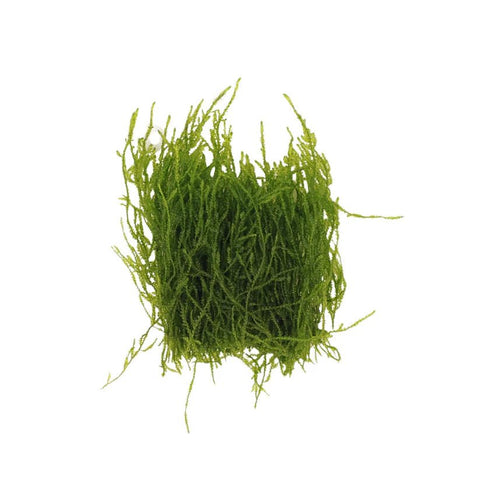

Moss
From $15.00

| Tasmania | NO |
| Western Australia | NO |
| Northern Territory | NO |
| All Other States | YES |
Bucephalandra ‘Pandora Queen’ is a stunning, slow-growing aquatic plant prized for its compact growth, attractive leaf shape and rich colouration. Its leaves can display deep green, bronze, purple and reddish tones depending on lighting, water conditions and plant maturity.
This variety is ideal for nano aquariums, aquascapes, shrimp tanks and planted community aquariums. Its small size and slow growth make it easy to position around rocks, driftwood and other hardscape features.
Like other Bucephalandra varieties, ‘Pandora Queen’ is best attached to hardscape rather than planted deeply into the substrate. The rhizome should remain exposed, as burying it can cause the plant to deteriorate.
Bucephalandra ‘Pandora Queen’ can grow in low to moderate lighting, although stronger lighting and carbon dioxide supplementation may encourage faster growth and more intense colouration. It is also well suited to low-maintenance aquariums.
Scientific Name: Bucephalandra sp. ‘Pandora Queen’
Common Name: Bucephalandra Pandora Queen
Type: Rhizome plant
Origin: Borneo
Growth Rate: Slow
Difficulty: Easy to Moderate
Lighting: Low to Moderate
CO₂: Optional, but beneficial
Placement: Attached to rocks or driftwood
Growth Height: Approximately 5–10 cm
Water Temperature: 20–28°C
pH: 6.0–7.5
Water Hardness: Soft to moderately hard
Propagation: Rhizome division
Suitable For: Community aquariums, nano tanks, shrimp tanks and aquascapes
It is best attached to rocks, driftwood or other hardscape. If planted, ensure the rhizome remains above the substrate.
No. CO₂ is not essential, but adding it can improve growth, overall health and colour development.
Low to moderate lighting is generally suitable. Higher lighting may encourage stronger colouration, but excessive light can increase algae growth.
Yes. Bucephalandra is an excellent choice for shrimp tanks and provides useful grazing surfaces for biofilm.
Propagation is achieved by carefully dividing the rhizome into smaller sections, ensuring each section has healthy roots and leaves.
Newly introduced Bucephalandra may experience leaf melt after being moved between growing conditions. Remove deteriorating leaves and allow the rhizome to produce new growth.
Burying the rhizome beneath the substrate.
Using excessive lighting without adequate nutrients or maintenance.
Expecting rapid growth from a slow-growing plant.
Failing to secure the plant properly to hardscape.
Overlooking algae buildup on the leaves.
Making major changes to water parameters too quickly.
Dispatched from our Melbourne facility, usually within 1-2 business days. Delivery time and cost are calculated at checkout based on your address.
We stand behind everything we sell. If something is not right, get in touch and we will make it right. See our returns policy for the details.