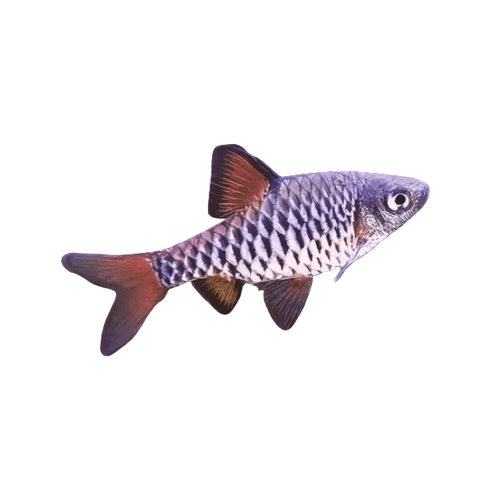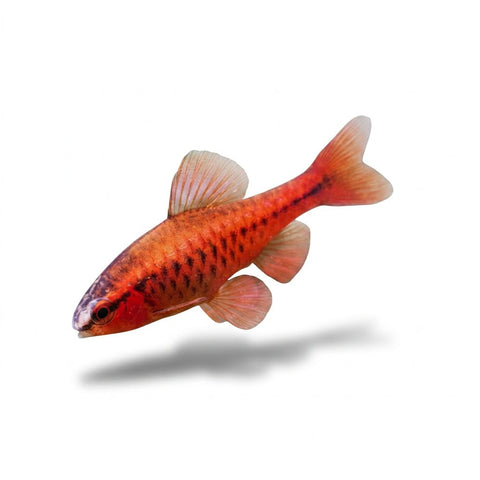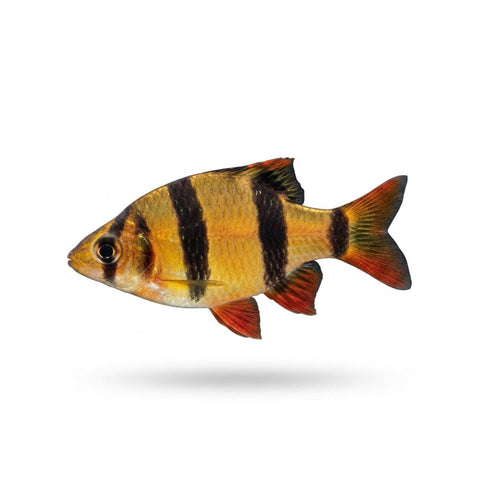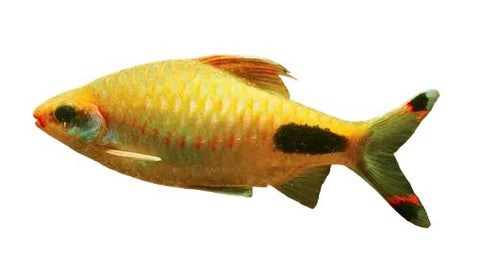
Mascara Barb
$50.00

Every fish passes through our dedicated quarantine system and strict biosecurity monitoring before sale - so it arrives healthy, settled and ready to thrive. How we quarantine →
| Tasmania | NO |
| Western Australia | NO |
| Northern Territory | NO |
| All Other States | YES |
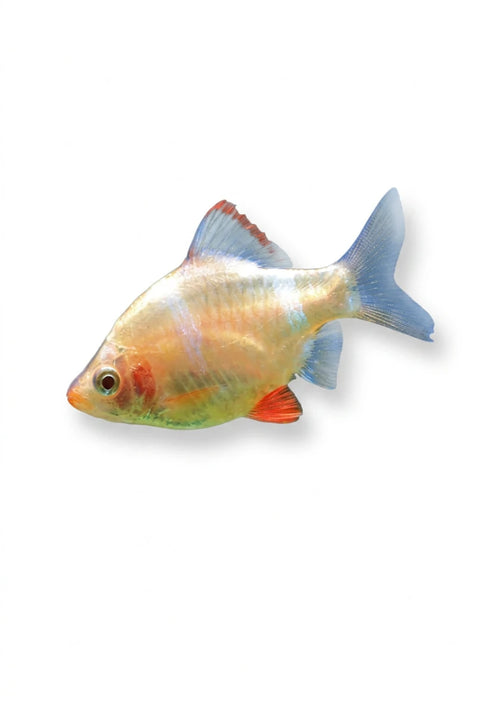
Moss Green Tiger Barbs are active, social fish that spend much of their time swimming through the middle levels of the aquarium. They are generally best kept in groups of at least six, with eight to twelve or more recommended where aquarium space allows. A larger shoal helps distribute chasing and can reduce attention directed towards other fish.
An aquarium of around 100–110 litres or larger is a sensible starting point for a group, with a longer tank preferred to provide plenty of swimming space. Add hardy live plants around the edges, driftwood or rocks for shelter, and open areas for swimming.
Although they can be kept in community aquariums, Moss Green Tiger Barbs are known for fin-nipping. Avoid slow-moving or long-finned fish such as bettas, angelfish and fancy guppies. Active, robust tankmates are a better choice.
Moss Green Tiger Barbs are omnivores and readily accept a varied diet. Offer quality tropical flakes or small pellets as their staple food, supplemented with frozen or live foods such as brine shrimp, daphnia and bloodworms.
Foods containing plant-based ingredients can also help provide balanced nutrition. Feed small portions once or twice daily, ensuring food is consumed promptly and removing leftovers to maintain good water quality.
These barbs generally suit aquariums containing active, similarly sized fish. Potential companions include suitable danios, robust tetras, rainbowfish and compatible loaches or catfish, provided their water requirements and adult sizes are appropriate.
Avoid aggressive tankmates, very timid species and fish with flowing fins. Maintain a fully cycled aquarium with effective filtration, good oxygenation and regular partial water changes. Moss Green Tiger Barbs are relatively hardy, making them a good option for aquarists who can accommodate their schooling needs and energetic temperament.
|
Care requirement |
Details |
|---|---|
|
Scientific name |
Puntigrus tetrazona |
|
Common names |
Moss Green Tiger Barb, Green Tiger Barb, Jade Tiger Barb |
|
Family |
Cyprinidae |
|
Origin |
Southeast Asia; green form selectively bred |
|
Care level |
Easy to moderate |
|
Adult size |
Approximately 6–7 cm |
|
Minimum aquarium size |
Around 100–110 litres for a group |
|
Temperature |
22–27°C |
|
pH |
6.0–7.5 |
|
General hardness (GH) |
Approximately 5–15 dGH |
|
Diet |
Omnivore |
|
Temperament |
Active; semi-aggressive and prone to fin-nipping |
|
Swimming level |
Mainly mid-water |
|
Social requirements |
At least 6; groups of 8–12 preferred |
|
Compatibility |
Active, robust community fish |
|
Aquarium type |
Freshwater tropical aquarium |
|
Lifespan |
Approximately 5–7 years with good care |
|
Special requirements |
Adequate shoal size, swimming space and careful tankmate selection |
Care parameters are practical guidelines for the Moss Green colour form of Puntigrus tetrazona.
They typically reach around 6–7 cm as adults. Provide enough swimming room for their full size and active schooling behaviour.
Keep at least six, with eight to twelve or more preferable when aquarium space permits. A larger group can help reduce persistent chasing of individual fish.
Yes, they are generally hardy and easy to feed. However, their fin-nipping behaviour means careful tankmate selection and an appropriately sized shoal are important.
They accept tropical flakes, small pellets, frozen foods and live foods. A varied omnivorous diet supports healthy growth and condition.
They are generally unsuitable companions for angelfish, bettas and other long-finned fish because their fins may be nipped. Choose active, robust species instead.
Yes. Their metallic green colour looks excellent against green plants and darker backgrounds. Use hardy plants around the edges while leaving plenty of open swimming space.
1. Keeping too few fish: Small groups can contribute to persistent chasing and fin-nipping. Maintain a suitable shoal rather than keeping just one or two.
2. Choosing unsuitable tankmates: Slow-moving or long-finned fish may be harassed. Select active, robust community species with compatible water requirements.
3. Using an undersized aquarium: These energetic fish need room to swim together. Choose a suitably long tank with adequate capacity for the whole group.
4. Feeding an unbalanced diet: Relying on one food type limits variety. Combine quality prepared foods with suitable frozen or live options.
5. Neglecting water quality: Overfeeding, inadequate filtration and infrequent water changes can cause harmful water conditions. Maintain biological filtration and regular maintenance.
6. Ignoring signs of aggression: Torn fins, hiding and persistent chasing can indicate stress or incompatibility. Review shoal size, tankmate selection and aquarium space when these behaviours occur.
Livestock is dispatched with heat/cool packs and oxygen from our Melbourne facility, timed for the safest transit. Live arrivals may be scheduled for the best shipping window. A live arrival guarantee applies - contact us within the required window if anything is not right.
We stand behind everything we sell. If something is not right, get in touch and we will make it right. See our returns policy for the details.
This fish has been through our dedicated quarantine system and is feeding, settled and health-checked before sale. We still recommend acclimating slowly and quarantining new additions at home. Our team is happy to talk you through the right setup - just ask.