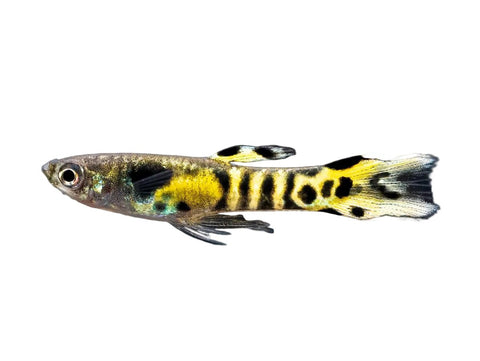
Guppy
From $7.00
Choose gender

Every fish passes through our dedicated quarantine system and strict biosecurity monitoring before sale - so it arrives healthy, settled and ready to thrive. How we quarantine →
| Tasmania | NO |
| Western Australia | NO |
| Northern Territory | NO |
| All Other States | YES |
The Pea Puffer, also known as the Dwarf Puffer, is the world's smallest pufferfish and one of the most charismatic freshwater fish available. Native to the slow-moving rivers, streams, and heavily vegetated waters of Kerala, India, this tiny species is famous for its curious personality, expressive eyes, and fascinating hunting behaviour.
Despite reaching only around 2.5 cm in length, Pea Puffers have enormous personalities. They actively explore every corner of the aquarium, recognise their owners, and often watch movement outside the tank with surprising intelligence. Their vibrant green body is covered with dark spots, providing excellent camouflage amongst aquatic plants.
Pea Puffers are best kept in heavily planted species-only aquariums or carefully selected community setups. While small, they can be territorial and may nip the fins of slow-moving fish. A densely planted aquarium with plenty of hiding places helps reduce aggression and allows natural territories to form.
As carnivores, they require a protein-rich diet of live and frozen foods including bloodworms, blackworms, daphnia, mosquito larvae, and small snails. Their unique personality, compact size, and interactive behaviour make them one of the most rewarding freshwater fish to keep.
Carinotetraodon travancoricus
Pea Puffer
Kerala, India
2–2.5 cm
Semi-aggressive and territorial
Carnivore
40 Litres (species aquarium)
24–28°C
6.5–7.5
5–15 dGH
Intermediate
4–5 Years
Species aquariums and carefully selected community tanks
They are best suited to aquarists with some experience, as they require specialised feeding and careful selection of tank mates.
Pea Puffers thrive on frozen bloodworms, blackworms, mosquito larvae, brine shrimp, daphnia, and small pest snails. They generally do not thrive on dry foods alone.
They can, but tank mates must be chosen carefully. Fast-moving, non-aggressive species work best, while long-finned fish should be avoided.
Yes. Small pest snails are a natural part of their diet and help keep their beak healthy.
Yes. Groups can be successful in heavily planted aquariums with plenty of hiding places. Keeping one male with multiple females generally helps reduce territorial disputes.
Pea Puffers require dense planting and plenty of cover to establish territories and reduce aggression.
A varied diet of live and frozen foods is essential for their long-term health.
They are known fin nippers and may harass species such as Bettas and fancy Guppies.
Despite their tiny size, Pea Puffers can be surprisingly assertive towards one another.
Stable water conditions and regular maintenance are essential, as Pea Puffers are sensitive to poor water quality.
Livestock is dispatched with heat/cool packs and oxygen from our Melbourne facility, timed for the safest transit. Live arrivals may be scheduled for the best shipping window. A live arrival guarantee applies - contact us within the required window if anything is not right.
We stand behind everything we sell. If something is not right, get in touch and we will make it right. See our returns policy for the details.
This fish has been through our dedicated quarantine system and is feeding, settled and health-checked before sale. We still recommend acclimating slowly and quarantining new additions at home. Our team is happy to talk you through the right setup - just ask.
Choose gender