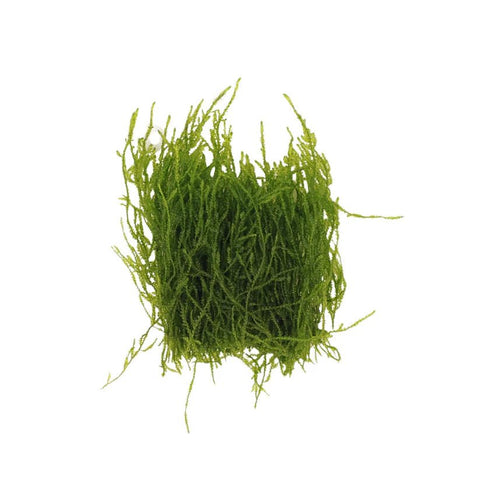

Moss
From $15.00
Choose type

| Tasmania | NO |
| Western Australia | NO |
| Northern Territory | NO |
| All Other States | YES |
Thin Vallisneria is a popular background plant recognised for its long, narrow, grass-like leaves that gently flow with the movement of the aquarium water. It creates a natural, flowing background without the broad leaves associated with larger Vallisneria varieties.
Often sold as Vallisneria nana, Thin Vallisneria is particularly useful for creating depth in planted aquariums. Its narrow leaves can form dense groups while still allowing light and water to pass through, making it an excellent choice behind rocks, driftwood, and shorter foreground plants.
It spreads naturally through runners, producing new plantlets around the parent plant. Once established, a small group can gradually develop into an attractive background stand.
Thin Vallisneria is highly adaptable and does not require CO₂. Moderate lighting and a nutrient-rich substrate are generally sufficient, although additional fertilisation and CO₂ can encourage faster growth.
It is particularly well suited to Nature Aquariums, community tanks, biotope-style setups, and larger planted aquariums where its flowing foliage can create a natural sense of movement.
Scientific Name: Vallisneria nana
Common Name: Thin Vallisneria / Narrow Leaf Vallis
Origin: Australia
Plant Type: Rosette / Runner Plant
Growth Rate: Moderate to Fast
Difficulty: Easy
Lighting: Low to Moderate
CO₂ Required: No
Temperature: 20–30°C
pH: 6.0–8.0
Water Hardness: Soft to Hard
Placement: Background
Suitable For: Community aquariums, Nature Aquariums, planted tanks, low-tech aquariums, and biotope-style setups
No. It is a hardy plant that can grow successfully without CO₂, making it an excellent option for low-tech aquariums.
It spreads through runners. New plantlets develop beside the parent plant and can eventually be separated and replanted.
It can develop long, flowing leaves, with final height depending on lighting, nutrients, tank depth, and individual growth.
It is generally better to remove damaged or unwanted leaves at the base rather than cutting them across the middle. Cut leaves can develop an unnatural appearance.
Yes. It is hardy, adaptable, and requires relatively little maintenance.
Burying the crown
Plant the roots into the substrate while keeping the crown exposed. Burying the crown can cause the plant to rot.
Cutting leaves halfway down
Remove damaged or excessively long leaves at the base instead of trimming across the leaf.
Not allowing room for runners
Give new plantlets space to develop and spread naturally.
Poor substrate nutrition
Vallisneria benefits from a nutrient-rich substrate and can make extensive use of root fertilisers.
Planting too densely
Allow space between plants for healthy growth and water circulation.
Dispatched from our Melbourne facility, usually within 1-2 business days. Delivery time and cost are calculated at checkout based on your address.
We stand behind everything we sell. If something is not right, get in touch and we will make it right. See our returns policy for the details.
Choose type


