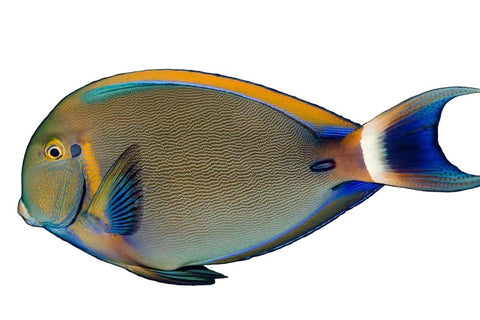
About Yellowfin Tang
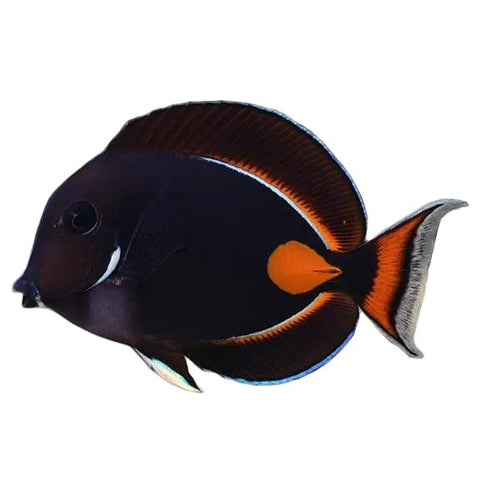
The Yellowfin Tang is a large and impressive marine surgeonfish recognised by its blue-grey to brownish body, vivid yellow pectoral fins and blue markings around the face and dorsal fin. Its bold colouration and substantial size make it an excellent feature fish for a large marine aquarium.
This active species requires plenty of open swimming space and mature live rock for grazing and shelter. Yellowfin Tangs are primarily herbivorous and should receive regular marine algae and seaweed-based foods as part of a varied diet.
They are generally peaceful towards unrelated fish but can become territorial towards other surgeonfish. They are considered reef safe with corals and can make an excellent addition to a large, established reef system.
Quick Care Guide
Scientific Name: Acanthurus xanthopterus
Common Name: Yellowfin Tang / Yellowfin Surgeonfish
Family: Acanthuridae
Type: Marine Fish / Surgeonfish
Adult Size: Up to approximately 50 cm
Temperament: Semi-Aggressive / Territorial
Care Level: Intermediate to Advanced
Minimum Aquarium: 750 L+
Temperature: Approximately 24–28°C
pH: Approximately 8.1–8.4
Salinity: Approximately 1.023–1.026 SG
Diet: Herbivore
Tank Level: All Levels
Reef Safe: Yes
Suitable For: Large Mature Marine and Reef Aquariums
Frequently Asked Questions
Are Yellowfin Tangs reef safe?
Yes. They are generally reef safe with corals and spend much of their time grazing algae from rockwork and other surfaces.
How big does a Yellowfin Tang get?
Yellowfin Tangs are a large surgeonfish and can reach approximately 50 cm. Their adult size makes a very large aquarium essential.
What do Yellowfin Tangs eat?
They are primarily herbivorous. Provide regular nori, marine algae and algae-based foods, supplemented with quality herbivore pellets and occasional meaty foods.
Are Yellowfin Tangs aggressive?
They are generally peaceful towards unrelated fish but can become territorial towards other tangs and surgeonfish, particularly when space is limited.
Can Yellowfin Tangs be kept with other tangs?
Potentially, but their large adult size means substantial aquarium space is required. Avoid overcrowding and carefully consider the temperament and body shape of other surgeonfish.
Do Yellowfin Tangs need live rock?
Yes. Mature rockwork provides grazing surfaces, shelter and enrichment, while also contributing to the natural environment they require.
Common Mistakes
Keeping them in an undersized aquarium
This is a very large and active tang that requires extensive swimming space.
Not providing enough vegetable matter
Regular algae and seaweed-based foods are essential for a healthy herbivorous tang.
Overcrowding with other tangs
Territorial aggression can become significant when multiple surgeonfish are confined together.
Providing too little open swimming space
Leave large unobstructed areas for the fish to cruise while maintaining suitable rockwork.
Adding one to an immature aquarium
A mature system with stable parameters and established biological filtration is strongly preferred.
Relying solely on naturally occurring algae
Even in an established reef, supplemental feeding with marine algae helps ensure adequate nutrition.