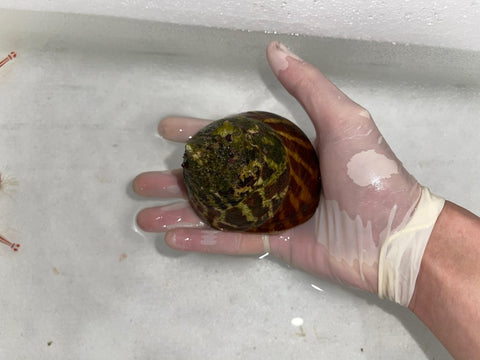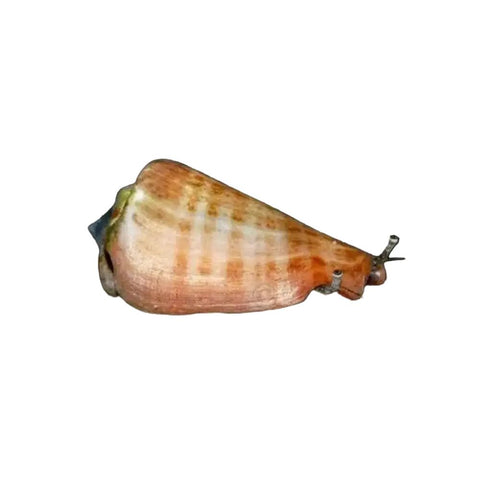
Strombus
$20.00

| Tasmania | NO |
| Western Australia | NO |
| Northern Territory | NO |
| All Other States | YES |
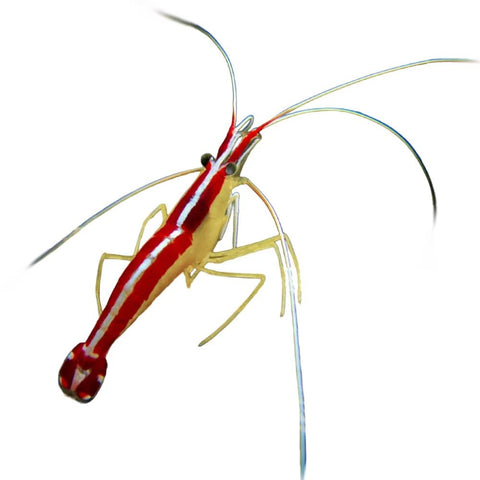
The Hinge-Beak Shrimp is a fascinating marine shrimp known for its unusual hinged, forward-pointing beak and striking red-and-white striped pattern. Also commonly known as the Camel Shrimp or Dancing Shrimp, it is an active and interesting addition to suitable marine aquariums.
Unlike cleaner shrimp, Hinge-Beak Shrimp are primarily scavengers and should not be confused with true cleaner species. They spend much of their time exploring live rock, caves and crevices in search of food.
They are best suited to peaceful fish-only or carefully selected marine systems and should be provided with plenty of hiding places and a varied diet.
The Hinge-Beak Shrimp (Rhynchocinetes durbanensis) is a small marine shrimp recognised by its red-and-white striped body and distinctive hinged rostrum.
They are generally considered less reef-safe than cleaner shrimp. They may potentially bother corals or other small invertebrates, particularly when food is scarce.
They can be kept together in suitable aquariums, but they may display territorial behaviour. Provide plenty of rockwork and hiding places.
They are opportunistic omnivores and scavengers. Offer a varied diet including marine pellets, flakes, frozen foods and small meaty foods.
Despite their similar appearance and common name "Dancing Shrimp", Hinge-Beak Shrimp should not be treated as a cleaner species.
They may compete aggressively with other small shrimp, especially in confined aquariums.
Live rock, caves and crevices are important for providing shelter and reducing stress.
Although they are scavengers, they should not be expected to survive solely on leftover food. Supplement their diet regularly.
Dispatched from our Melbourne facility, usually within 1-2 business days. Delivery time and cost are calculated at checkout based on your address.
We stand behind everything we sell. If something is not right, get in touch and we will make it right. See our returns policy for the details.