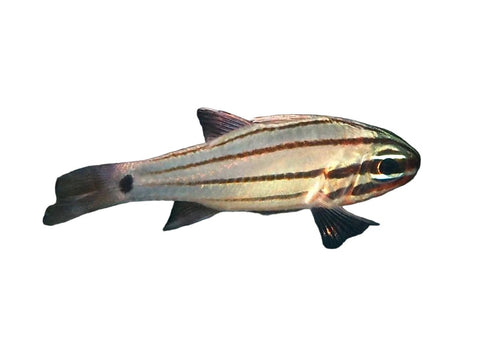
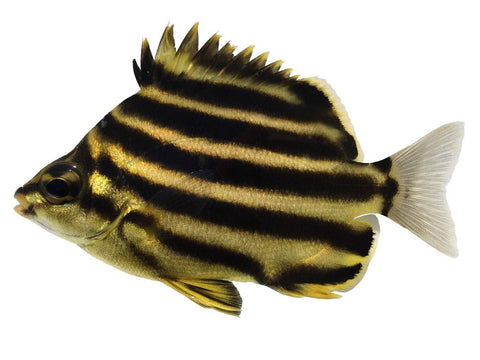
4 Lined Cardinal
$30.00

Every fish passes through our dedicated quarantine system and strict biosecurity monitoring before sale - so it arrives healthy, settled and ready to thrive. How we quarantine →
| Tasmania | YES |
| Western Australia | YES |
| Northern Territory | NO |
| All Other States | YES |
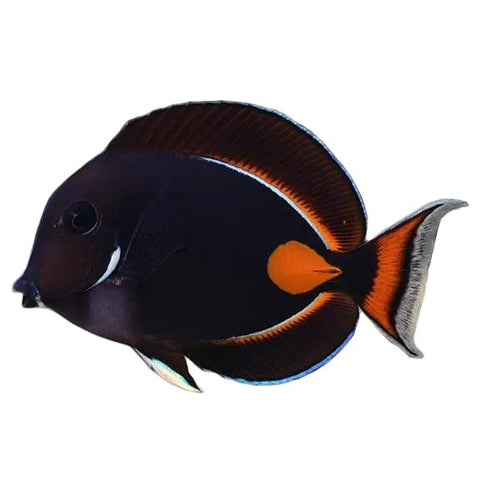
The Niger Trigger is a striking and highly recognisable triggerfish with a deep blue to blue-grey body, vivid blue markings around the mouth and a distinctive forked tail. Depending on lighting and mood, the body can display beautiful green, purple and turquoise tones.
Niger Triggers are active, intelligent and highly curious fish. They spend much of their time exploring the aquarium and can quickly learn to recognise their keeper and feeding routine.
They are generally less aggressive than some of the larger triggerfish species, but they can become territorial as they mature. They are best kept with appropriately sized, robust tank mates.
Niger Triggers are carnivores and benefit from a varied diet including prawns, squid, mussels, krill, chopped seafood and quality marine pellets. Hard-shelled foods are particularly useful for helping maintain their continuously growing teeth.
They are not considered reliably reef safe, as they may eat ornamental crustaceans and can rearrange rockwork or disturb corals.
Scientific Name: Odonus niger
Common Name: Niger Trigger / Niger Triggerfish
Family: Balistidae
Type: Marine Fish / Triggerfish
Adult Size: Approximately 30–40 cm
Temperament: Semi-Aggressive / Territorial
Care Level: Intermediate to Advanced
Minimum Aquarium: 500 L+
Temperature: 24–28°C
pH: 8.0–8.4
Salinity: 1.023–1.026 SG
Diet: Carnivore
Tank Level: All Levels
Reef Safe: With Caution
Suitable For: Large marine aquariums and fish-only systems
Niger Triggers can reach approximately 30–40 cm, so a large aquarium is essential for long-term care.
They are best considered reef safe with caution. While some individuals can be kept successfully with corals, they may eat ornamental shrimp, crabs and other small invertebrates and can disturb rockwork.
They are generally less aggressive than species such as Undulated or Titan Triggers, but they can become territorial as they mature.
They are carnivores and readily accept prawns, squid, mussels, krill, chopped seafood and quality marine pellets.
Yes, provided tank mates are appropriately sized and robust. Avoid very small or timid fish that may be bullied or eaten.
Keeping one in an undersized aquarium
Niger Triggers become large and active fish that require substantial swimming space.
Keeping them with small ornamental invertebrates
Shrimp, crabs and other small crustaceans may become prey.
Not securing rockwork
Triggers are powerful fish and can move rocks and decorations while exploring.
Not providing hard foods
Hard-shelled foods help naturally wear down their continuously growing teeth.
Underestimating their adult size
A juvenile Niger Trigger can look very manageable but eventually becomes a substantial fish.
Keeping them with timid tank mates
Their active and confident nature can stress smaller or more passive fish.
Livestock is dispatched with heat/cool packs and oxygen from our Melbourne facility, timed for the safest transit. Live arrivals may be scheduled for the best shipping window. A live arrival guarantee applies - contact us within the required window if anything is not right.
We stand behind everything we sell. If something is not right, get in touch and we will make it right. See our returns policy for the details.
This fish has been through our dedicated quarantine system and is feeding, settled and health-checked before sale. We still recommend acclimating slowly and quarantining new additions at home. Our team is happy to talk you through the right setup - just ask.
Choose type