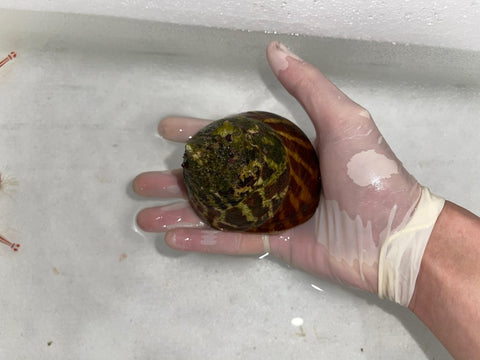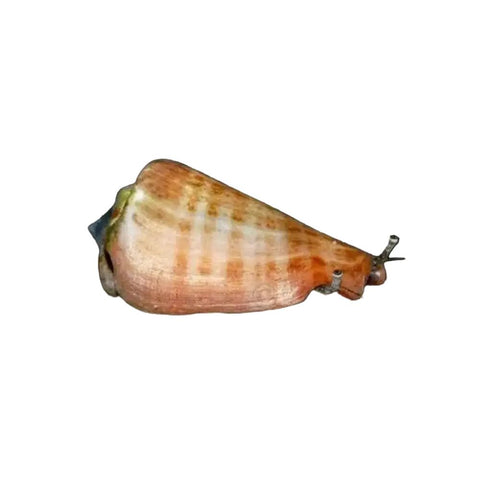
Strombus
$20.00

| Tasmania | YES |
| Western Australia | NO |
| Northern Territory | NO |
| All Other States | YES |
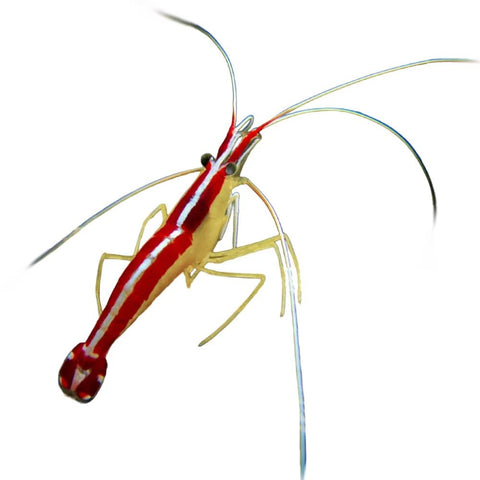
The Peppermint Shrimp is a popular and useful addition to marine aquariums, best known for its ability to prey on Aiptasia anemones. With its attractive red-and-white striped body and peaceful nature, it can be both an effective clean-up crew member and an interesting addition to a reef system.
Peppermint Shrimp are primarily nocturnal and will often spend the day hiding within rockwork before becoming active after lights out. They are generally peaceful and can be kept individually or in groups, with groups often being more effective when targeting Aiptasia outbreaks.
Provide plenty of caves and rockwork for shelter and supplement their natural scavenging with a varied diet of frozen marine foods and quality sinking foods.
Yes. Peppermint Shrimp are widely used as a biological control for smaller Aiptasia anemones. Results can vary between individual shrimp.
Yes. They are generally social and can be kept in groups, provided the aquarium has sufficient hiding places and food.
Generally yes, although individual behaviour can vary. They are commonly kept in reef aquariums.
They are primarily nocturnal and may spend much of the daylight period hiding in rockwork.
Individual shrimp vary in their willingness to eat Aiptasia, and larger infestations may require additional control methods.
Large wrasses, groupers and other predatory fish may view Peppermint Shrimp as food.
Caves and crevices are important, particularly when the shrimp are first introduced.
Even when eating Aiptasia, provide supplementary food when natural food sources are limited.
Shrimp can be sensitive to sudden changes in salinity. A careful acclimation is recommended.
Dispatched from our Melbourne facility, usually within 1-2 business days. Delivery time and cost are calculated at checkout based on your address.
We stand behind everything we sell. If something is not right, get in touch and we will make it right. See our returns policy for the details.