Sale
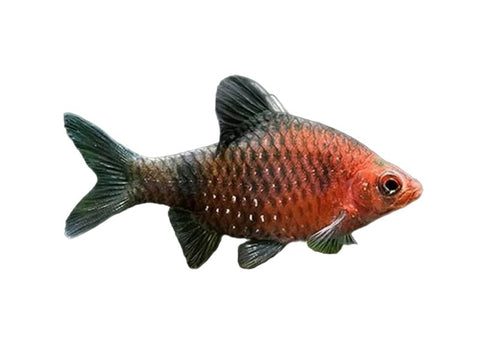
Black Ruby Barb
$7.00
$10.00

Every fish passes through our dedicated quarantine system and strict biosecurity monitoring before sale - so it arrives healthy, settled and ready to thrive. How we quarantine →
| Tasmania | NO |
| Western Australia | NO |
| Northern Territory | NO |
| All Other States | YES |
The Platinum Tiger Barb (Puntigrus tetrazona) is a selectively bred colour variation of the popular Tiger Barb, prized for its shimmering platinum-silver body and subtle greenish metallic sheen.
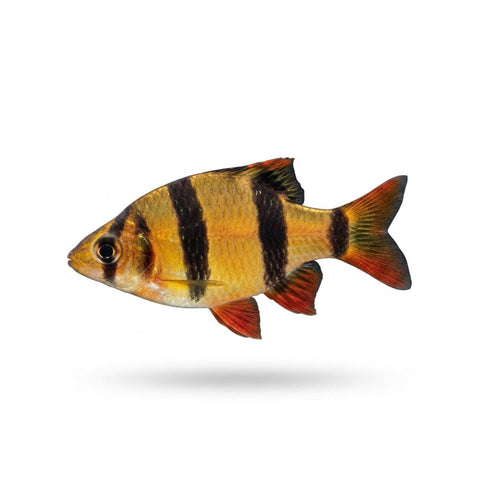
Unlike the traditional Tiger Barb, which displays distinctive black vertical stripes against a golden-orange body, the Platinum variety has a much lighter appearance, with pale metallic colouring and reduced or less visible markings.
Originally derived from wild Tiger Barbs native to Sumatra and Borneo in Southeast Asia, this ornamental variety retains the same active swimming behaviour and lively personality as its naturally coloured relatives.
Platinum Tiger Barbs are energetic schooling fish that spend most of their time swimming through the middle levels of the aquarium. They are best kept in groups of at least 6–8, with larger schools helping distribute chasing and reduce aggression between individuals.
Although relatively easy to care for, Tiger Barbs are well known for fin-nipping behaviour, particularly when kept in insufficient numbers. They should not be housed with slow-moving fish or species with long, flowing fins, such as Bettas, Guppies and Angelfish.
They are omnivorous and readily accept quality tropical flakes, micro pellets, frozen foods and occasional vegetable-based foods. A planted aquarium with open swimming areas, driftwood and plenty of cover provides an excellent environment.
The Platinum variety has the same care requirements as standard Tiger Barbs, making it a great choice for aquarists wanting an active schooling fish with a distinctive metallic appearance.
|
Care Requirement |
Details |
|---|---|
|
Scientific Name |
Puntigrus tetrazona |
|
Family |
Cyprinidae |
|
Origin |
Sumatra and Borneo, Southeast Asia |
|
Variety |
Selectively bred platinum colour morph |
|
Care Level |
Easy |
|
Maximum Size |
6–7 cm |
|
Minimum Aquarium |
100 litres recommended |
|
Temperature |
22–27°C |
|
pH |
6.0–7.5 |
|
Hardness |
5–15 dGH |
|
Diet |
Omnivore |
|
Temperament |
Semi-aggressive; fin-nipping tendencies |
|
Swimming Level |
Middle |
|
Group Size |
6–8 minimum; larger groups preferred |
|
Aquarium Type |
Freshwater community and planted aquariums |
|
Plant Compatible |
Generally yes |
|
Special Requirements |
Keep in a proper school and avoid long-finned tankmates |
1. How big does a Platinum Tiger Barb grow?
Platinum Tiger Barbs generally reach approximately 6–7 cm in adult size. They are active swimmers and benefit from a spacious aquarium.
2. Are Platinum Tiger Barbs aggressive?
They are semi-aggressive and can develop fin-nipping habits, particularly when kept in small groups. Maintaining a proper school helps distribute aggression between individuals.
3. How many Platinum Tiger Barbs should be kept together?
A group of at least 6–8 is recommended, although groups of 10 or more are often better for encouraging natural schooling behaviour and reducing harassment of individual fish.
4. What do Platinum Tiger Barbs eat?
They are omnivores and readily accept tropical flakes, micro pellets, frozen bloodworms, brine shrimp, daphnia and vegetable-based foods.
5. Can Platinum Tiger Barbs live with other tropical fish?
Yes, provided their tankmates are active, robust swimmers. Suitable companions can include larger Danios, Rainbowfish, other robust Barbs and compatible bottom-dwelling fish. Avoid Bettas, Guppies, Angelfish and other long-finned species.
6. Are Platinum Tiger Barbs suitable for planted aquariums?
Yes. They generally coexist well with aquatic plants and look particularly attractive against lush green planting. They appreciate open swimming areas between planted sections.
Keeping too few individuals: Small groups can increase aggression and cause individual fish to be constantly harassed.
Mixing them with long-finned fish: Their fin-nipping behaviour can seriously damage the fins of Bettas, Guppies and Angelfish.
Using an undersized aquarium: They are active swimmers and need adequate room to school naturally.
Overfeeding: Excess food can quickly deteriorate water quality and contribute to poor fish health.
Keeping them with very timid fish: Their energetic behaviour can stress slow-moving or easily intimidated tankmates.
Assuming the platinum variety has different care requirements: It is a colour morph of the standard Tiger Barb and requires the same group size, diet and aquarium conditions.
Livestock is dispatched with heat/cool packs and oxygen from our Melbourne facility, timed for the safest transit. Live arrivals may be scheduled for the best shipping window. A live arrival guarantee applies - contact us within the required window if anything is not right.
We stand behind everything we sell. If something is not right, get in touch and we will make it right. See our returns policy for the details.
This fish has been through our dedicated quarantine system and is feeding, settled and health-checked before sale. We still recommend acclimating slowly and quarantining new additions at home. Our team is happy to talk you through the right setup - just ask.