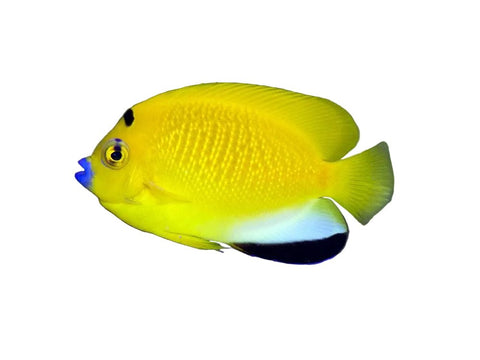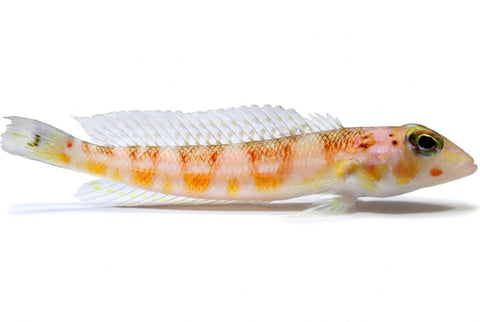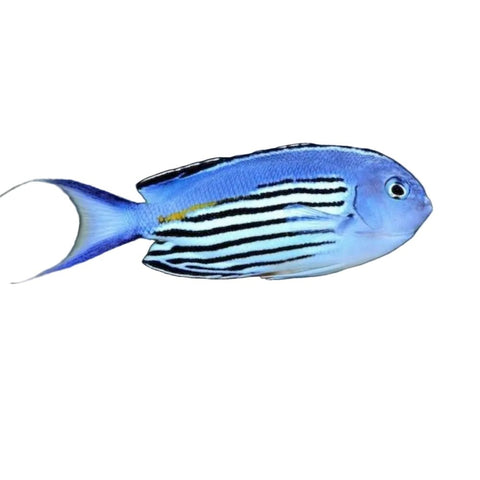
Watanabe Angelfish (Male)
$300.00

Every fish passes through our dedicated quarantine system and strict biosecurity monitoring before sale - so it arrives healthy, settled and ready to thrive. How we quarantine →
| Tasmania | YES |
| Western Australia | YES |
| Northern Territory | NO |
| All Other States | YES |
The Purple Masked Angel (Paracentropyge venusta), also known as the Venustus Angelfish or Purple Masked Angelfish, is a rare and exceptionally beautiful dwarf marine angelfish. It is highly sought after by experienced marine aquarists for its unusual combination of vibrant yellow, deep blue and purple markings.
Its most distinctive feature is the striking purple-blue mask across the head and eyes, contrasting against its bright yellow face and body. A deep blue saddle extends across the back, creating one of the most recognisable colour patterns among dwarf angelfish.
This species was historically classified as Centropyge venusta and is still commonly sold under that scientific name. It is now also classified as Paracentropyge venusta.
Natural Habitat and Behaviour
The Purple Masked Angel originates from the Western Pacific, with its natural distribution extending from southern Japan and the Ryukyu Islands to Taiwan and the northern Philippines.
In the wild, it inhabits steep outer reef slopes, rocky ledges and caves, often at considerable depths of up to approximately 40 metres. It is naturally a shy and secretive species, frequently retreating into caves and overhangs for protection.
Unlike some more outgoing dwarf angelfish, the Venustus Angel may initially be timid when introduced to an aquarium. Once established, however, it can become more confident and territorial, particularly towards similarly shaped fish.
Aquarium Suitability and Compatibility
The Purple Masked Angel is best suited to mature, established marine aquariums with extensive live rock, plenty of caves and shaded areas. Although relatively small, it requires sufficient swimming space and a well-established environment to thrive.
It is generally best maintained as a single specimen, particularly in smaller aquariums. Avoid housing it with other dwarf angelfish of similar shape or appearance, as territorial aggression can develop.
It can be maintained alongside suitable marine fish such as tangs, clownfish, anthias, wrasses, gobies and other appropriately selected tankmates.
Reef Compatibility
The Purple Masked Angel is considered reef safe with caution. Although some individuals adapt well to reef aquariums, dwarf angelfish naturally graze on a variety of organisms found on live rock.
There is a risk of picking at LPS corals, zoanthids, clams, sponges and other sessile invertebrates. Individual behaviour varies, so careful observation is essential when introducing this species into a coral aquarium.
Feeding and Nutrition
The Venustus Angel is an omnivore that naturally grazes on algae, sponges, tunicates and other small organisms found around reef structures.
Providing a varied and nutritious diet is particularly important, as this species can be reluctant to accept prepared foods when first introduced.
Suitable foods include:
Quality marine angelfish preparations containing sponge.
Frozen mysis shrimp.
Enriched brine shrimp.
Spirulina-based foods.
Marine algae and nori.
Finely chopped seafood.
High-quality marine pellets.
Feed small portions several times throughout the day. A varied diet helps maintain healthy body condition, supports its immune system and encourages natural feeding behaviour.
Specific Care Requirements
The Purple Masked Angel is considered a challenging species and is best suited to experienced aquarists. It benefits from a mature aquarium with stable water parameters, excellent water quality and plenty of established live rock for grazing.
Because it naturally inhabits deeper reef environments, it appreciates caves, shaded overhangs and areas where it can retreat from intense aquarium lighting.
Newly introduced specimens should be monitored closely to ensure they are eating consistently. Avoid introducing this species into immature aquariums or systems with aggressive tankmates that may prevent it from feeding.
With the right environment, careful feeding and stable conditions, the Purple Masked Angel is an extraordinary addition to a specialist marine aquarium.
|
Care Requirement |
Details |
|---|---|
|
Scientific Name |
Paracentropyge venusta |
|
Synonym |
Centropyge venusta |
|
Family |
Pomacanthidae |
|
Origin |
Western Pacific – Japan, Taiwan and Philippines |
|
Care Level |
Advanced |
|
Adult Size |
Approximately 12–13 cm |
|
Minimum Aquarium Size |
265 litres; larger preferred |
|
Temperature |
24–27°C |
|
pH |
8.1–8.4 |
|
Salinity |
1.023–1.026 SG |
|
Diet |
Omnivore |
|
Feeding Frequency |
2–3 times daily |
|
Temperament |
Semi-aggressive / Territorial |
|
Swimming Level |
Middle and lower levels |
|
Reef Compatibility |
Reef Safe With Caution |
|
Aquarium Type |
Marine fish-only and established reef aquariums |
Care references: Fishkeeper species guide and Australian Purple Mask Angel care guide.
1. Is the Purple Masked Angel reef safe?
It is considered reef safe with caution. Some individuals coexist with corals, while others may nip at LPS corals, zoanthids, sponges and clam mantles. Monitor carefully if keeping one in a reef aquarium.
2. How big does a Purple Masked Angel grow?
It reaches approximately 12–13 cm as an adult. Despite being a dwarf angelfish, it requires a reasonably spacious aquarium.
3. Why is the Purple Masked Angel considered difficult to keep?
This species can be shy, particularly when newly introduced, and may initially struggle to accept prepared foods. It also requires mature live rock, stable water parameters and frequent feeding.
4. What does a Purple Masked Angel eat?
It benefits from a varied omnivorous diet containing sponge-based angelfish preparations, mysis shrimp, enriched brine shrimp, marine algae, nori and quality marine pellets.
5. Can Purple Masked Angels be kept with other angelfish?
Caution is recommended. They can become territorial towards other dwarf angelfish, particularly species with similar body shapes. Keeping a single specimen is generally the safer option.
6. Does the Purple Masked Angel need hiding places?
Absolutely. In the wild, this species inhabits deep reef slopes, caves and rocky overhangs. Provide plenty of live rock, shaded areas and secure hiding places to help it feel comfortable.
1. Introducing it into a new aquarium: This species requires a mature, biologically established aquarium with plenty of natural grazing opportunities.
2. Providing an inadequate diet: Feeding only standard marine flakes or pellets may not meet its nutritional requirements. Include sponge-based angelfish foods and varied frozen foods.
3. Keeping it with aggressive tankmates: Shy specimens can struggle to compete for food. Avoid overly aggressive fish that may intimidate or outcompete it.
4. Assuming it is completely reef safe: Even well-fed individuals may occasionally nip at corals, clams and other sessile invertebrates.
5. Providing insufficient shelter: An aquarium without caves, crevices and shaded areas can leave this naturally secretive species stressed and exposed.
6. Allowing water parameters to fluctuate: Sudden changes in temperature, salinity and water chemistry can negatively affect this sensitive angelfish. Maintain consistent water conditions.
Livestock is dispatched with heat/cool packs and oxygen from our Melbourne facility, timed for the safest transit. Live arrivals may be scheduled for the best shipping window. A live arrival guarantee applies - contact us within the required window if anything is not right.
We stand behind everything we sell. If something is not right, get in touch and we will make it right. See our returns policy for the details.
This fish has been through our dedicated quarantine system and is feeding, settled and health-checked before sale. We still recommend acclimating slowly and quarantining new additions at home. Our team is happy to talk you through the right setup - just ask.