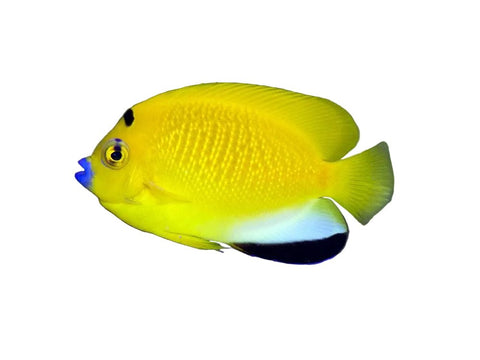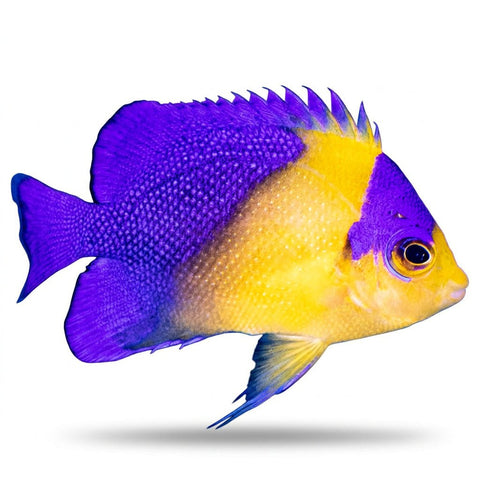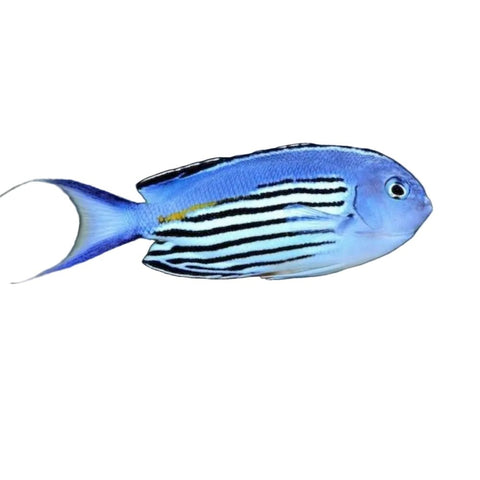
Watanabe Angelfish (Male)
$300.00

Every fish passes through our dedicated quarantine system and strict biosecurity monitoring before sale - so it arrives healthy, settled and ready to thrive. How we quarantine →
| Tasmania | YES |
| Western Australia | YES |
| Northern Territory | NO |
| All Other States | YES |
Randall's Sandperch (Parapercis randalli) is a particularly rare and unusual marine fish, highly desirable among specialist marine aquarists and collectors. Native to southern Taiwan, this distinctive sandperch is recognised for its elongated body, reddish-orange facial markings and attractive reddish-brown saddle patterns along its back.
Unlike many commonly available reef fish, Randall's Sandperch is rarely encountered in the aquarium trade, making it an interesting addition for aquarists looking for something genuinely different.
The species was formally described in 2010 by ichthyologists Ho and Shao and named in honour of renowned marine fish taxonomist Dr John E. Randall.
Appearance and Natural Habitat
Randall's Sandperch has an elongated, relatively cylindrical body with a pointed head, prominent eyes and a distinctive pattern of reddish-brown markings across its upper body. Its facial markings include reddish-orange colouring around the jaws and snout, complemented by a yellow bar with a red margin on the cheek.
One of its distinguishing characteristics is the arrangement of markings across the dorsal and tail fins, which helps separate it from other closely related sandperch species.
In the wild, this species is documented from southern Taiwan, where it inhabits marine reef environments. Recorded collection depths range from approximately 5 to 150 metres.
Behaviour and Temperament
Like other sandperches in the genus Parapercis, Randall's Sandperch is expected to spend much of its time close to the aquarium substrate, watching its surroundings and searching for food.
It is a carnivorous fish and should be considered a potential predator of small ornamental shrimp and sufficiently small fish. Suitable tankmates should be selected carefully, particularly in aquariums containing small gobies, shrimp or other delicate invertebrates.
Provide a sandy substrate and plenty of suitable rockwork to create sheltered areas where the fish can rest and retreat.
Aquarium Suitability and Compatibility
Randall's Sandperch is best suited to an established marine aquarium maintained by an experienced aquarist. Its rarity and limited published aquarium-care information make careful acclimatisation and observation particularly important.
A spacious aquarium with an open sandy area, stable water conditions and appropriate hiding places is recommended.
Choose tankmates that are peaceful but large enough not to be considered prey. Avoid aggressive feeders that may prevent it from accessing food.
Feeding and Nutrition
As a sandperch, Randall's Sandperch should be maintained on a varied carnivorous diet consisting of appropriately sized meaty marine foods.
Suitable offerings include:
Mysis shrimp.
Enriched brine shrimp.
Chopped marine seafood.
Small pieces of prawn and squid.
Other appropriately sized frozen marine foods.
Offer small portions regularly and monitor feeding behaviour, particularly after introduction. Newly imported or stressed specimens may need time to adjust before accepting prepared aquarium foods.
Specific Care Requirements
Because Randall's Sandperch is an uncommon species with limited published captive-care information, maintaining stable conditions and observing its individual behaviour are especially important.
Provide a fine sandy substrate, suitable shelter and plenty of open bottom space. Maintain excellent water quality and avoid sudden changes in temperature or salinity.
Allow newly introduced specimens time to acclimatise and establish a consistent feeding response before introducing additional competition for food.
With appropriate husbandry, a suitable environment and careful feeding, Randall's Sandperch can make an exceptional addition to a specialist marine aquarium.
|
Care Requirement |
Details |
|---|---|
|
Scientific Name |
Parapercis randalli |
|
Family |
Pinguipedidae |
|
Origin |
Southern Taiwan |
|
Care Level |
Moderate to Advanced |
|
Adult Size |
Approximately 11 cm |
|
Minimum Aquarium Size |
150 litres recommended |
|
Temperature |
24–27°C |
|
pH |
8.1–8.4 |
|
Salinity |
1.023–1.026 SG |
|
Diet |
Carnivore |
|
Feeding Frequency |
1–2 times daily |
|
Temperament |
Generally peaceful, predatory towards small animals |
|
Swimming Level |
Bottom dwelling |
|
Reef Compatibility |
Reef Compatible With Caution |
|
Aquarium Type |
Marine fish-only and suitable reef aquariums |
|
Substrate |
Fine sand |
|
Natural Habitat Depth |
Approximately 5–150 metres |
Note: Aquarium volume and husbandry parameters are practical recommendations for captive care, rather than experimentally established species-specific requirements. Maximum recorded size is approximately 10.7 cm standard length.
1. How big does Randall's Sandperch grow?
Randall's Sandperch reaches approximately 11 cm in standard length, making it a relatively small sandperch suitable for appropriately sized marine aquariums.
2. Is Randall's Sandperch reef safe?
It is generally suitable for aquariums containing corals, but caution is required with ornamental shrimp and very small fish. Its carnivorous feeding behaviour means smaller tank inhabitants may be at risk.
3. What does Randall's Sandperch eat?
It should be offered a varied carnivorous diet containing mysis shrimp, enriched brine shrimp, chopped prawn, squid and other suitable marine seafood.
4. Does Randall's Sandperch need a sand bed?
Yes, a fine sandy substrate is recommended to provide a natural bottom-dwelling environment. Open sandy areas alongside rockwork and sheltered spaces are ideal.
5. Can Randall's Sandperch live with other marine fish?
Yes, provided tankmates are appropriately sized and peaceful. Avoid very small fish, ornamental shrimp and aggressive feeders that may compete for food.
6. Is Randall's Sandperch a rare aquarium fish?
Yes. It is an uncommon species in the aquarium trade and is particularly interesting to collectors of unusual marine fish. Its scientific description was only published in 2010.
1. Keeping it without suitable substrate: Sandperches are bottom-oriented fish. Provide fine sand and open areas where they can comfortably rest and forage.
2. Keeping it with very small fish: Its carnivorous nature means sufficiently small fish may become prey. Choose tankmates carefully.
3. Introducing it into an immature aquarium: Maintain stable biological filtration and established water conditions before introduction.
4. Offering an unsuitable diet: Avoid relying exclusively on flakes or pellets. Provide a varied diet of appropriately sized frozen marine foods.
5. Allowing aggressive tankmates to outcompete it: Ensure it has sufficient opportunity to feed without competition or harassment.
6. Ignoring acclimatisation: Avoid sudden changes in temperature and salinity. Carefully acclimatise newly introduced specimens and monitor their feeding response.
Livestock is dispatched with heat/cool packs and oxygen from our Melbourne facility, timed for the safest transit. Live arrivals may be scheduled for the best shipping window. A live arrival guarantee applies - contact us within the required window if anything is not right.
We stand behind everything we sell. If something is not right, get in touch and we will make it right. See our returns policy for the details.
This fish has been through our dedicated quarantine system and is feeding, settled and health-checked before sale. We still recommend acclimating slowly and quarantining new additions at home. Our team is happy to talk you through the right setup - just ask.