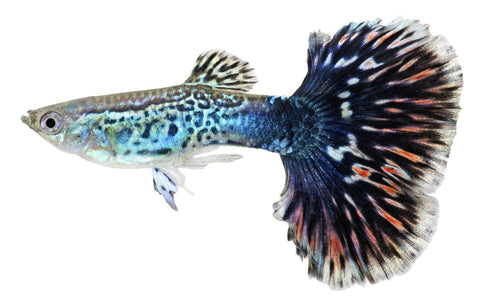
Assorted Guppy
From $7.00
Choose gender

Every fish passes through our dedicated quarantine system and strict biosecurity monitoring before sale - so it arrives healthy, settled and ready to thrive. How we quarantine →
The Rathburn Tetra, more commonly known as the Red Belly Tetra, is a lively and attractive South American schooling fish prized for its shimmering silver body, vibrant red belly, and active swimming behaviour. Native to the Paraguay and Paraná River systems of South America, this hardy tetra is an excellent choice for aquarists looking to add movement and colour to a freshwater community aquarium.
As the fish matures, the lower half of its body develops an increasingly vivid crimson-red colour, particularly in healthy males and during breeding displays. Combined with its reflective silver scales and transparent fins, the Red Belly Tetra creates a striking display, especially when kept in large schools.
Rathburn Tetras thrive in planted aquariums with open swimming areas, driftwood, and gentle water movement. They are highly social fish and should always be kept in groups of at least 8–10, where they exhibit natural schooling behaviour and become significantly more confident. Their peaceful temperament makes them excellent companions for Corydoras, Rummy Nose Tetras, Cardinal Tetras, Harlequin Rasboras, Rainbowfish, Gouramis, and other similarly sized community fish.
A varied diet of premium tropical flakes, micro pellets, frozen bloodworms, baby brine shrimp, daphnia, cyclops, and other live or frozen foods will maximise their colouration and maintain excellent health.
Hardy, colourful, and constantly active, the Rathburn (Red Belly) Tetra is an outstanding addition to planted aquariums and peaceful freshwater community tanks.
Aphyocharax rathbuni
Rathburn Tetra (Red Belly Tetra)
Paraguay and Paraná River Basins, South America
5–6 cm
Peaceful
Omnivore
75 Litres
22–28°C
6.0–7.5
2–15 dGH
Beginner
4–6 Years
Planted aquariums, community aquariums, and South American biotopes
Rathburn Tetras are schooling fish and should always be kept in groups of at least 8–10. Larger schools produce more natural behaviour and stronger colouration.
Yes. They are peaceful, active community fish that mix well with most similarly sized non-aggressive species.
They thrive on premium tropical flakes, micro pellets, frozen bloodworms, baby brine shrimp, daphnia, cyclops, mosquito larvae, and other small live or frozen foods.
Adult Cherry Shrimp and Amano Shrimp are generally safe, although very small shrimplets may occasionally be eaten.
Stress, poor water quality, an inadequate diet, or keeping too few fish together can cause the red colouration to fade. Clean water, quality nutrition, and larger schools help maintain their vibrant appearance.
Red Belly Tetras become nervous and less colourful when kept in groups smaller than eight.
Regular water changes and stable water parameters are essential for long-term health and vibrant colours.
A varied diet including frozen and live foods enhances colouration, immune health, and breeding condition.
Choose peaceful community species that won't harass or outcompete these active schooling fish.
These energetic fish appreciate long aquariums with plenty of open water to school naturally.
Livestock is dispatched with heat/cool packs and oxygen from our Melbourne facility, timed for the safest transit. Live arrivals may be scheduled for the best shipping window. A live arrival guarantee applies - contact us within the required window if anything is not right.
We stand behind everything we sell. If something is not right, get in touch and we will make it right. See our returns policy for the details.
This fish has been through our dedicated quarantine system and is feeding, settled and health-checked before sale. We still recommend acclimating slowly and quarantining new additions at home. Our team is happy to talk you through the right setup - just ask.
Choose gender
Choose size