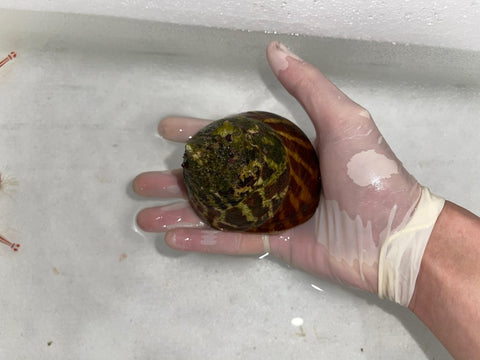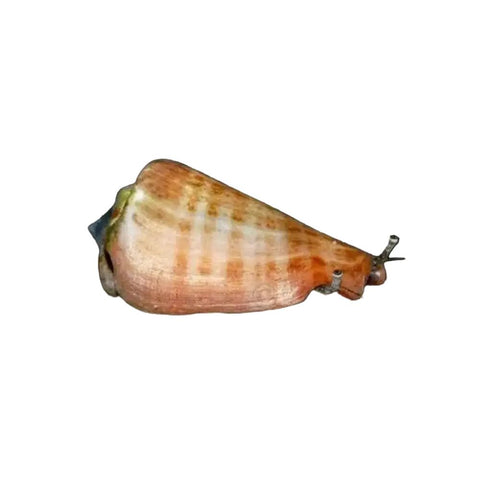
Strombus
$20.00

| Tasmania | YES |
| Western Australia | NO |
| Northern Territory | NO |
| All Other States | YES |
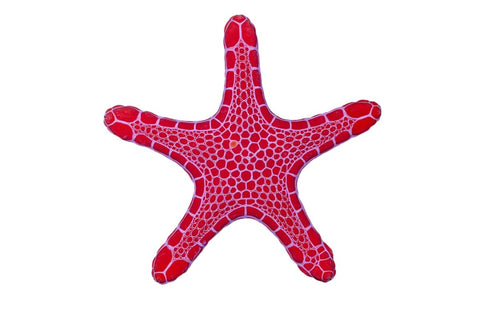
The Sand Sifting Starfish is a fascinating marine invertebrate that spends its time burrowing through the substrate in search of food. As it moves through the sand bed, it naturally turns over the upper layers of substrate while feeding on microorganisms, detritus and other organic matter.
With its distinctive five arms and pale markings, Archaster typicus makes an attractive addition to a mature marine aquarium. It is best suited to established aquariums with a large, mature sand bed, where natural food populations are plentiful.
Because it relies heavily on the organisms living within the substrate, it can struggle in new or very clean aquariums.
It feeds on microorganisms, detritus and organic material found throughout the sand bed.
Yes. Its burrowing and feeding behaviour helps turn over the substrate and consume organic material.
Generally yes. It does not normally bother healthy corals or fish.
It is best avoided in new aquariums. A mature sand bed with an established population of microorganisms is important for long-term survival.
New systems often don't have enough natural food within the sand bed.
Sand is essential to its natural feeding and burrowing behaviour.
Multiple starfish can quickly deplete the available food in the substrate.
Sand Sifting Starfish are primarily substrate feeders rather than algae grazers.
A visually clean sand bed may not contain enough microorganisms and organic matter to sustain the starfish.
Dispatched from our Melbourne facility, usually within 1-2 business days. Delivery time and cost are calculated at checkout based on your address.
We stand behind everything we sell. If something is not right, get in touch and we will make it right. See our returns policy for the details.