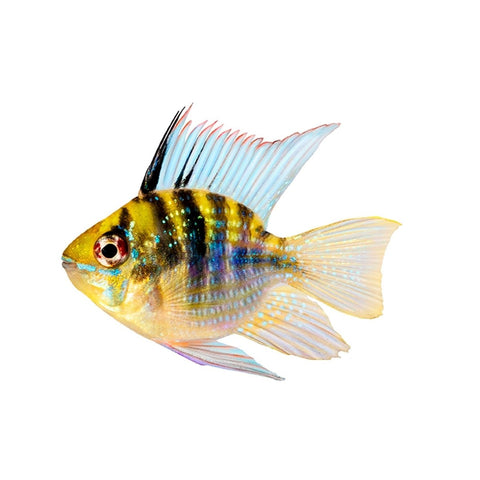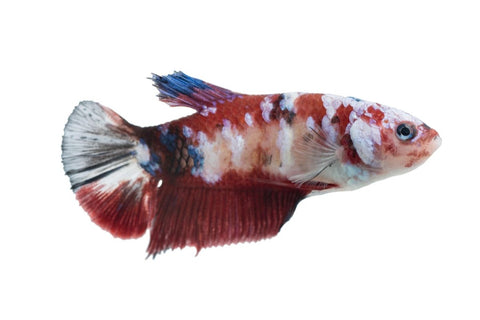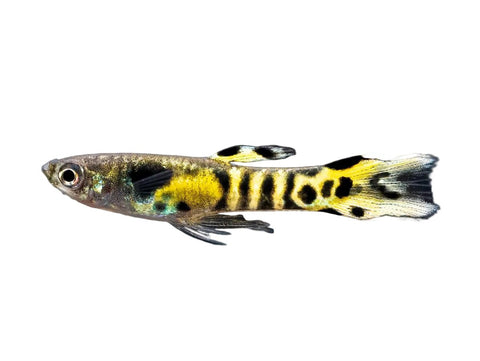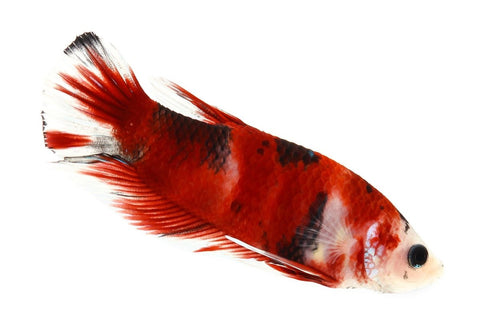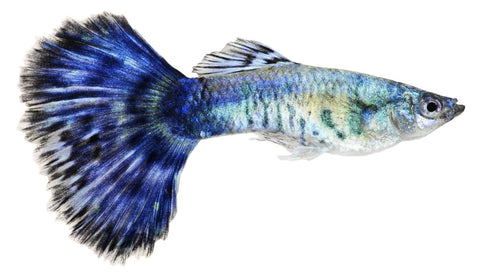
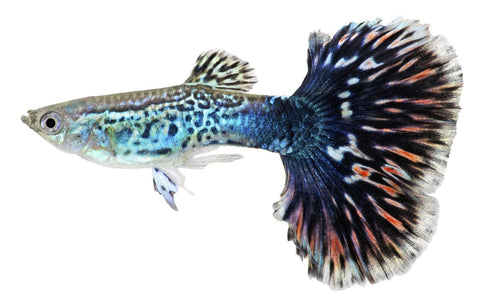
Assorted Guppy
From $7.00
Choose gender

Every fish passes through our dedicated quarantine system and strict biosecurity monitoring before sale - so it arrives healthy, settled and ready to thrive. How we quarantine →
| Tasmania | NO |
| Western Australia | NO |
| Northern Territory | NO |
| All Other States | YES |
The Sand Tiger Loach (Syncrossus hymenophysa) is a striking and highly active freshwater loach recognised for its bold tiger-like bands, elongated body and inquisitive personality. Native to the rivers and streams of Southeast Asia, this species is best suited to experienced aquarists who can provide a spacious aquarium and carefully selected tank mates.
Unlike many smaller loaches, the Sand Tiger Loach develops a semi-aggressive temperament as it matures and establishes a social hierarchy. It is best kept in groups of five or more to disperse aggression and encourage natural behaviour. A large aquarium with fine sand, smooth rocks, driftwood and plenty of hiding places will help these energetic fish feel secure while providing room to explore.
Sand Tiger Loaches are enthusiastic feeders, accepting sinking pellets, frozen foods, live foods and occasional vegetable matter. Excellent filtration, strong water movement and regular maintenance are essential, as they thrive in clean, well-oxygenated water.
With their impressive markings, intelligence and lively behaviour, the Sand Tiger Loach makes a fascinating centrepiece for large freshwater aquariums housing robust community species.
Syncrossus hymenophysa
Sand Tiger Loach
Thailand, Malaysia, Indonesia and surrounding regions of Southeast Asia
20–25 cm
Semi-aggressive, Social
Omnivore
400 Litres
24–28°C
6.0–7.5
2–12 dGH
Intermediate to Advanced
10–15 Years
Large freshwater aquariums with robust community fish
No. They are better suited to experienced aquarists due to their adult size, social hierarchy and semi-aggressive behaviour, as well as their need for a large, well-maintained aquarium.
Yes, but only with similarly sized, confident fish. Avoid slow-moving or timid species, as Sand Tiger Loaches can become dominant as they mature.
They are omnivores and readily accept quality sinking pellets, frozen bloodworms, brine shrimp, earthworms, live foods and occasional vegetable-based foods.
Adults commonly reach between 20 and 25 cm, making them unsuitable for small aquariums.
No. They are social fish and should be kept in groups of at least five whenever possible. Group living helps establish a natural hierarchy and reduces aggression towards individual fish.
Yes. They will readily consume small snails and are often used to help control pest snail populations, although they still require a balanced diet.
These active fish require plenty of swimming space. Cramped conditions often lead to stress, increased aggression and poor long-term health.
Small or shy tank mates can be bullied or outcompeted for food. Choose robust species with similar activity levels.
A single Sand Tiger Loach or pair may become overly aggressive. Maintaining a proper group helps spread dominance and encourages natural behaviour.
Their sensitive barbels can be damaged on coarse substrates. Fine sand or smooth gravel is the best choice.
They require clean, oxygen-rich water with efficient filtration and regular water changes to remain healthy.
A varied diet containing quality pellets, frozen foods and live foods supports healthy growth, vibrant colouration and overall wellbeing.
Livestock is dispatched with heat/cool packs and oxygen from our Melbourne facility, timed for the safest transit. Live arrivals may be scheduled for the best shipping window. A live arrival guarantee applies - contact us within the required window if anything is not right.
We stand behind everything we sell. If something is not right, get in touch and we will make it right. See our returns policy for the details.
This fish has been through our dedicated quarantine system and is feeding, settled and health-checked before sale. We still recommend acclimating slowly and quarantining new additions at home. Our team is happy to talk you through the right setup - just ask.
Choose gender