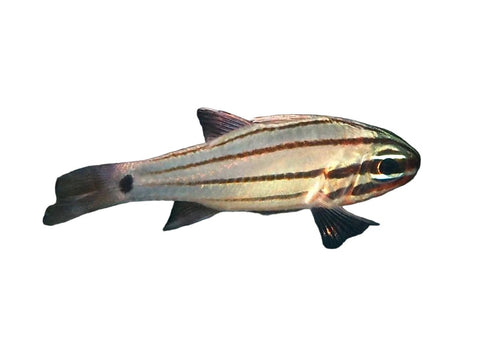
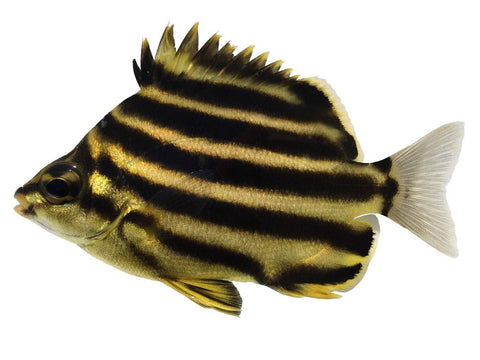
4 Lined Cardinal
$30.00

Every fish passes through our dedicated quarantine system and strict biosecurity monitoring before sale - so it arrives healthy, settled and ready to thrive. How we quarantine →
| Tasmania | YES |
| Western Australia | YES |
| Northern Territory | NO |
| All Other States | YES |
Silver Mullet are hardy, active fish recognised for their streamlined silver body, forked tail and distinctive dark markings around the eye and gill area. They are commonly found in coastal and estuarine environments and are well adapted to changing water conditions.
Juvenile Silver Mullet can sometimes be kept in suitable large aquariums or specialised systems, but they are not a typical freshwater aquarium fish. They are better suited to large marine, brackish or purpose-built systems with plenty of swimming space.
They are active schooling fish and can grow considerably larger than most aquarium species. Strong filtration and excellent oxygenation are important due to their active nature and eventual size.
Silver Mullet are primarily omnivorous and graze on algae, detritus and other organic material, but should also be offered a varied diet in captivity.
Scientific Name: Mugil cephalus
Common Name: Silver Mullet
Family: Mugilidae
Type: Coastal / Brackish Fish
Adult Size: Up to approximately 50 cm+
Temperament: Peaceful / Active
Care Level: Intermediate to Advanced
Minimum Aquarium: Very Large System
Temperature: 18–28°C
pH: 7.0–8.2
Water Hardness: Moderate to Hard
Diet: Omnivore / Algae Grazer
Tank Level: All Levels
Suitable For: Large marine or brackish systems and specialised aquaculture setups
Juveniles may tolerate freshwater for periods of time, but Silver Mullet are naturally associated with marine and estuarine environments. Long-term care should take their natural habitat and salinity requirements into consideration.
They can become very large, reaching 50 cm or more, making them unsuitable for normal home aquariums once mature.
Yes. They are active social fish and are commonly found in groups in their natural environment.
They are omnivorous grazers that consume algae, detritus and other organic material, supplemented with suitable prepared foods in captivity.
Keeping them in a standard aquarium
Silver Mullet can become far too large and active for most home aquariums.
Ignoring their salinity requirements
They are naturally coastal and estuarine fish and should not automatically be treated as freshwater fish.
Insufficient swimming space
They are powerful, active swimmers and require substantial open water.
Poor oxygenation
Large, active fish produce significant bioload and benefit from strong filtration and excellent oxygen exchange.
Livestock is dispatched with heat/cool packs and oxygen from our Melbourne facility, timed for the safest transit. Live arrivals may be scheduled for the best shipping window. A live arrival guarantee applies - contact us within the required window if anything is not right.
We stand behind everything we sell. If something is not right, get in touch and we will make it right. See our returns policy for the details.
This fish has been through our dedicated quarantine system and is feeding, settled and health-checked before sale. We still recommend acclimating slowly and quarantining new additions at home. Our team is happy to talk you through the right setup - just ask.
Choose type