Mascara Barb
$50.00

Every fish passes through our dedicated quarantine system and strict biosecurity monitoring before sale - so it arrives healthy, settled and ready to thrive. How we quarantine →
| Tasmania | NO |
| Western Australia | NO |
| Northern Territory | NO |
| All Other States | YES |
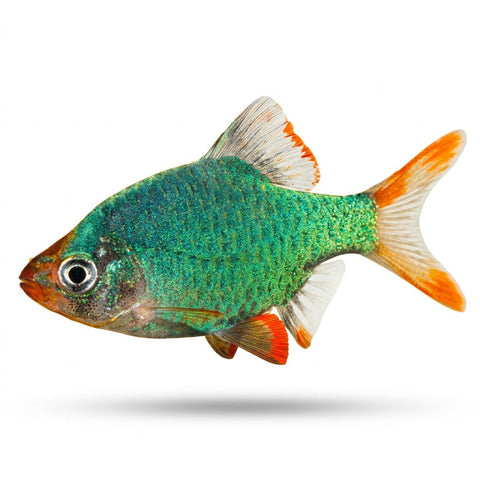
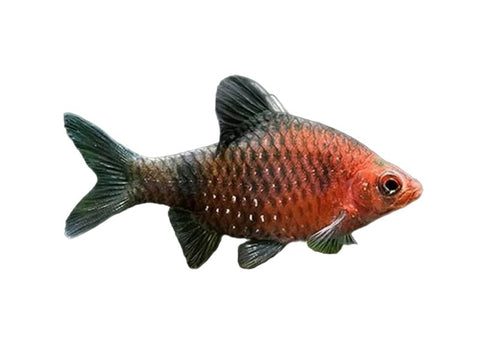
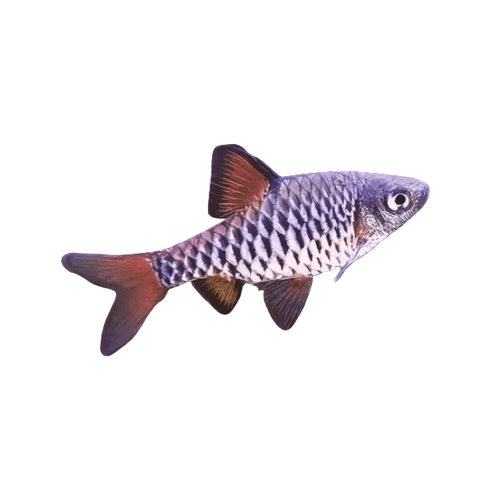
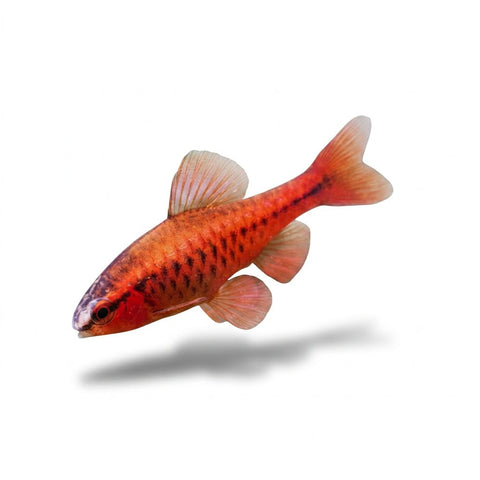
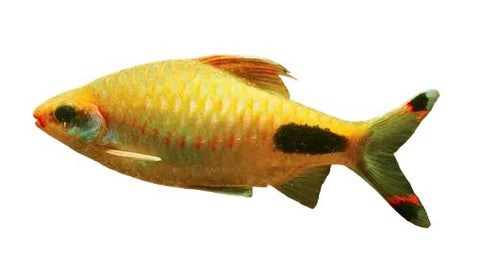
The Tri-Colour Gold Sushi Barb (Barbodes semifasciolatus) is a colourful freshwater fish known for its striking combination of golden-yellow, orange, black and pale markings. This selectively bred colour variety of the Gold Barb brings plenty of character and movement to a planted aquarium, with individual fish displaying unique patterns and colour combinations.
The original Gold Barb originates from southern China and neighbouring parts of Vietnam. The tri-colour variety has been selectively bred for its distinctive appearance, combining the golden tones of the original species with contrasting dark patches and lighter markings. Its colourful scales look particularly impressive against green aquatic plants and darker aquarium backgrounds.
Tri-Colour Gold Sushi Barbs are active, social fish that spend much of their time swimming through the middle levels of the aquarium. They are generally peaceful and suitable for community aquariums when kept in an appropriately sized group with compatible tankmates.
A group of at least six is recommended, with larger groups encouraging more natural shoaling behaviour. An aquarium of approximately 100 litres or larger is a sensible choice for a group, providing enough swimming space and helping maintain stable water quality.
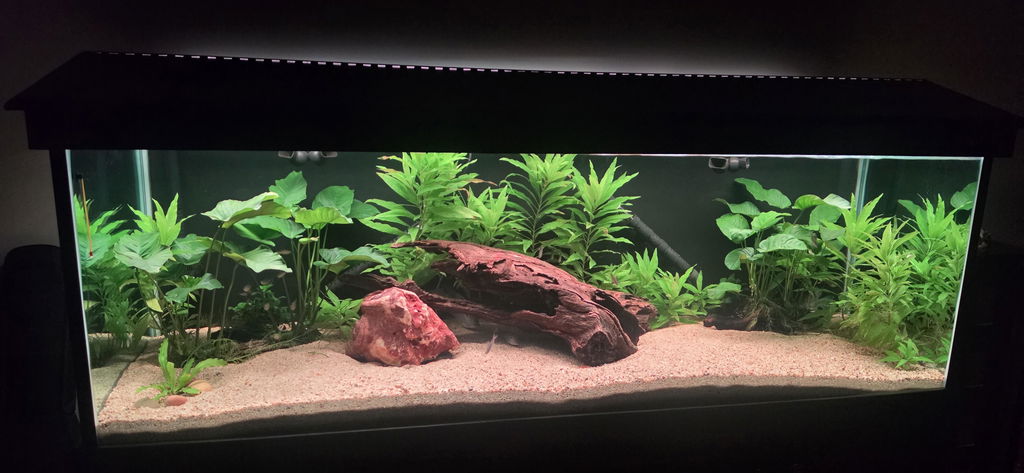
Create a balanced environment with live plants, open swimming areas, smooth gravel or sand, and driftwood or rocks for shelter. A secure lid is also advisable, as active fish may jump when startled.
Tri-Colour Gold Sushi Barbs are omnivores and readily accept a varied diet. Feed high-quality tropical flakes or small pellets, supplemented with frozen or live foods such as brine shrimp, daphnia and bloodworms. Foods containing plant and algal ingredients help provide a balanced diet.
Offer small portions once or twice daily, adjusting the quantity to ensure food is eaten promptly. A varied diet supports healthy growth, body condition and vibrant colouration.
These barbs generally make excellent community aquarium residents when kept with similarly sized, peaceful fish. Suitable companions may include corydoras catfish, larger peaceful rasboras, robust small tetras and other compatible barbs. Avoid housing them with aggressive fish or very delicate, long-finned species that may be harassed.
Tri-Colour Gold Sushi Barbs can tolerate a range of water conditions, but stable water quality and adequate swimming space remain important. They are egg-scattering fish, and breeding may occur in well-maintained aquariums with suitable conditions. Adults may eat their eggs, so separate spawning arrangements are beneficial if raising fry is the goal.
|
Care requirement |
Details |
|---|---|
|
Scientific name |
Barbodes semifasciolatus |
|
Common names |
Tri-Colour Gold Sushi Barb, Tri-Colour Golden Barb, Calico Gold Barb |
|
Family |
Cyprinidae |
|
Origin |
Southern China and surrounding parts of East Asia; tri-colour form selectively bred |
|
Care level |
Easy |
|
Adult size |
Approximately 5–7.5 cm |
|
Minimum aquarium size |
Around 100 litres for a group |
|
Temperature |
18–24°C |
|
pH |
6.0–8.0 |
|
General hardness (GH) |
Approximately 5–19 dGH |
|
Diet |
Omnivore |
|
Temperament |
Generally peaceful and active |
|
Swimming level |
Mainly mid-water |
|
Social requirements |
Keep in groups of at least 6 |
|
Compatibility |
Peaceful, similarly sized community fish |
|
Aquarium type |
Freshwater planted or community aquarium |
|
Lifespan |
Approximately 4–6 years with good care |
|
Special requirements |
Open swimming space, stable water quality and a suitable shoal |
Care parameters are based on the Gold Barb species profile; individual colour varieties may vary in appearance.
They typically reach around 5–7.5 cm as adults. Provide enough swimming room for their active behaviour and adult size.
Keep at least six together. Larger groups can encourage more natural social behaviour and help distribute minor chasing between individuals.
Yes. They are generally hardy and adaptable, making them a good choice for beginners with a fully cycled aquarium and consistent maintenance routine.
They accept tropical flakes, small pellets, frozen foods and live foods. A varied omnivorous diet helps maintain good condition and colour.
Yes. They generally suit aquariums containing peaceful fish of a similar size. Avoid aggressive tankmates and monitor interactions with delicate, long-finned species.
Yes. They look particularly attractive in planted aquariums with open swimming areas. They are generally considered plant-compatible, although individual fish may occasionally nibble soft plant material.
1. Keeping a single barb: These are social fish that should be kept in groups. Keeping too few can increase stress and unnatural chasing.
2. Using an aquarium that is too small: Juveniles may look small in the shop, but adults need room to swim. Plan for their full size and group requirements.
3. Keeping them with unsuitable tankmates: Aggressive fish or delicate long-finned species may not be suitable companions. Select tankmates based on adult size and behaviour.
4. Feeding only one type of food: A varied diet containing both animal-based and plant-based foods supports better overall nutrition.
5. Allowing water quality to deteriorate: Poor filtration, overfeeding and infrequent maintenance can lead to harmful ammonia and nitrite levels. Maintain biological filtration and regular water changes.
6. Ignoring their adult temperature requirements: These Gold Barbs generally prefer cooler conditions than many conventional tropical fish. Avoid keeping them permanently at excessively warm temperatures.
Livestock is dispatched with heat/cool packs and oxygen from our Melbourne facility, timed for the safest transit. Live arrivals may be scheduled for the best shipping window. A live arrival guarantee applies - contact us within the required window if anything is not right.
We stand behind everything we sell. If something is not right, get in touch and we will make it right. See our returns policy for the details.
This fish has been through our dedicated quarantine system and is feeding, settled and health-checked before sale. We still recommend acclimating slowly and quarantining new additions at home. Our team is happy to talk you through the right setup - just ask.