Sold out
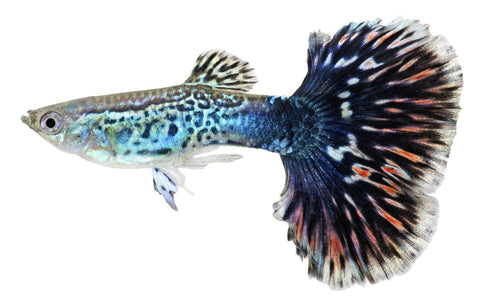
Assorted Guppy
From $7.00

Every fish passes through our dedicated quarantine system and strict biosecurity monitoring before sale - so it arrives healthy, settled and ready to thrive. How we quarantine →
| Tasmania | NO |
| Western Australia | NO |
| Northern Territory | NO |
| All Other States | YES |
The Balloon Molly is a popular and colourful livebearing fish, instantly recognised by its rounded body, graceful fins, and peaceful personality. Developed through selective breeding from the Common Molly (Poecilia sphenops), Balloon Mollies are available in an incredible range of colours including black, gold, silver, white, orange, dalmatian, marble, lyretail, and koi varieties.
Despite their compact, rounded appearance, Balloon Mollies are active swimmers that enjoy exploring every level of the aquarium. Their calm nature makes them an excellent choice for community aquariums, where they coexist happily with Guppies, Platies, Swordtails, Corydoras, peaceful Rainbowfish, Tetras, and other gentle tropical fish.
Balloon Mollies thrive in well-planted aquariums with plenty of open swimming space and stable water conditions. Like other livebearers, they appreciate slightly harder, alkaline water and benefit from a varied diet containing both vegetable matter and protein-rich foods. They readily breed in home aquariums, giving birth to free-swimming fry approximately every four to six weeks.
Hardy, colourful, and full of personality, the Balloon Molly is an ideal fish for beginner and experienced aquarists alike.
Poecilia sphenops
Balloon Molly
Captive-bred variety of a species native to Central America
5–8 cm
Peaceful
Omnivore
60 Litres
24–28°C
7.2–8.2
10–30 dGH
Beginner
3–5 Years
Community aquariums, planted tanks, and livebearer aquariums
Yes. Balloon Mollies are hardy, peaceful, and easy to care for, making them an excellent choice for beginner aquarists.
They thrive on quality tropical flakes, micro pellets, spirulina flakes, algae wafers, blanched vegetables, frozen bloodworms, brine shrimp, and daphnia.
Yes. Balloon Mollies make excellent tank mates for Guppies, Platies, Swordtails, Corydoras, and other peaceful community fish.
Yes. Like all mollies, they are livebearers and breed readily in the home aquarium. Females typically give birth every 4–6 weeks.
No. Salt is not required in a healthy freshwater aquarium. They thrive in freshwater provided the water is clean, stable, and moderately hard.
Balloon Mollies prefer hard, alkaline water and generally perform best when these conditions are maintained.
A varied diet containing vegetable matter and algae-based foods is essential for long-term health.
As prolific breeders, populations can increase quickly if males and females are kept together.
Stable water conditions, regular maintenance, and efficient filtration are essential for healthy Mollies.
Choose peaceful community species that won't nip fins or harass these gentle livebearers.
Livestock is dispatched with heat/cool packs and oxygen from our Melbourne facility, timed for the safest transit. Live arrivals may be scheduled for the best shipping window. A live arrival guarantee applies - contact us within the required window if anything is not right.
We stand behind everything we sell. If something is not right, get in touch and we will make it right. See our returns policy for the details.
This fish has been through our dedicated quarantine system and is feeding, settled and health-checked before sale. We still recommend acclimating slowly and quarantining new additions at home. Our team is happy to talk you through the right setup - just ask.
Choose size