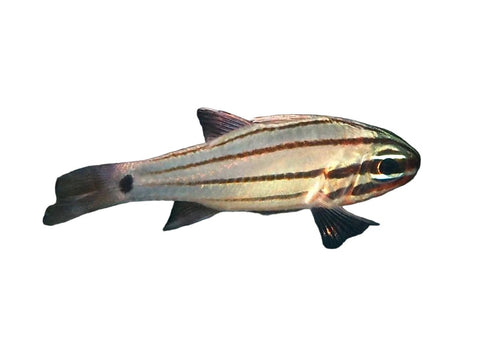
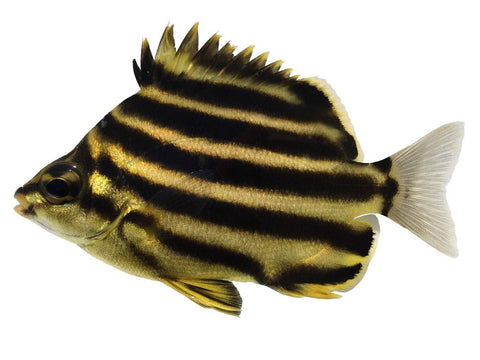
4 Lined Cardinal
$30.00

Every fish passes through our dedicated quarantine system and strict biosecurity monitoring before sale - so it arrives healthy, settled and ready to thrive. How we quarantine →
| Tasmania | YES |
| Western Australia | YES |
| Northern Territory | NO |
| All Other States | YES |
The Banded Pipefish is a striking marine fish recognised by its extremely elongated body, long tubular snout and contrasting red, white and dark bands. It is also commonly known as the Ringed Pipefish. The species reaches around 18–20 cm and occurs throughout tropical Indo-Pacific waters, including Australia.
Banded Pipefish naturally inhabit reef caves, crevices, overhangs and sheltered areas, where they spend much of their time searching for tiny crustaceans and other planktonic food. Their specialised mouth makes them slow, deliberate feeders rather than aggressive competitors at feeding time.
They are best suited to mature, peaceful marine aquariums with plenty of live rock, caves and established populations of copepods and amphipods. A refugium can be particularly beneficial as a continual source of natural prey.
Because they are slow feeders, Banded Pipefish should not be housed with highly aggressive or fast-feeding tank mates that can outcompete them for food. Gentle water movement and numerous sheltered areas help them settle and feed naturally.
Banded Pipefish can reach approximately 18–20 cm in length.
They naturally feed on small crustaceans and planktonic organisms, particularly copepods and amphipods. Established live rock and a refugium can help provide a continuous natural food source.
Yes, it is generally considered reef compatible and is not known for damaging corals. Its specialised feeding requirements are the main consideration when keeping it in a reef aquarium.
They can, but tank mates should be peaceful and non-competitive. Fast-feeding or aggressive fish can make it difficult for a pipefish to obtain enough food.
Live rock is highly beneficial because it provides caves and crevices for shelter as well as surfaces supporting natural populations of copepods and amphipods.
No. This is an advanced marine fish best suited to experienced aquarists with a mature aquarium and an established feeding system.
Livestock is dispatched with heat/cool packs and oxygen from our Melbourne facility, timed for the safest transit. Live arrivals may be scheduled for the best shipping window. A live arrival guarantee applies - contact us within the required window if anything is not right.
We stand behind everything we sell. If something is not right, get in touch and we will make it right. See our returns policy for the details.
This fish has been through our dedicated quarantine system and is feeding, settled and health-checked before sale. We still recommend acclimating slowly and quarantining new additions at home. Our team is happy to talk you through the right setup - just ask.
Choose type