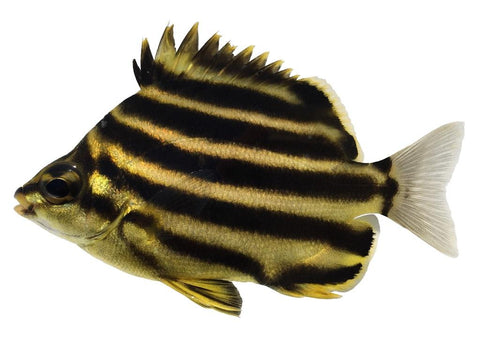
4 Lined Cardinal
$30.00

Every fish passes through our dedicated quarantine system and strict biosecurity monitoring before sale - so it arrives healthy, settled and ready to thrive. How we quarantine →
| Tasmania | YES |
| Western Australia | YES |
| Northern Territory | NO |
| All Other States | YES |
The Bennett's Puffer (Canthigaster bennetti), also known as Bennett's Sharpnose Puffer or Blackspot Toby, is a fascinating small marine pufferfish recognised for its distinctive markings, inquisitive personality and compact body shape. Belonging to the family Tetraodontidae, this attractive species is an excellent choice for marine aquarists seeking an entertaining fish with plenty of character.
Native to the Indo-West Pacific, including Australian coastal waters, Bennett's Puffers inhabit shallow reef flats, sheltered lagoons, rocky reefs and seagrass environments. They are often found exploring algae-covered rockwork and reef structures in search of food.
Their appearance features a greenish-brown to tan upper body, contrasting pale underside, delicate blue-green lines radiating from the eyes and attractive blue and orange spotting. A distinctive dark spot outlined with a lighter border near the dorsal fin helps distinguish this species from other sharpnose puffers. Colouration can vary between individuals and natural habitats.
Behaviour and Temperament
Bennett's Puffers are intelligent, curious fish that spend much of their time investigating their surroundings and grazing across rockwork. Their expressive faces, constantly moving eyes and distinctive swimming style make them particularly entertaining aquarium inhabitants.
Although generally less aggressive than many larger pufferfish, Bennett's Puffers can be territorial towards other puffers and may occasionally nip the fins of slower-moving tank mates.
They are best housed individually with compatible, moderately active marine fish such as selected tangs, rabbitfish, wrasses and peaceful damselfish.
Aquarium Suitability and Compatibility
Despite their relatively small adult size, Bennett's Puffers require an established marine aquarium with plenty of live rock, hiding places and open swimming space.
They are not considered reliably reef safe, as they may nip at corals, ornamental crustaceans and other invertebrates. Their natural feeding habits include grazing on algae and consuming small benthic invertebrates.
A fish-only-with-live-rock (FOWLR) aquarium is generally the safest environment for this species.
Feeding and Nutrition
Bennett's Puffers are omnivorous, feeding naturally on filamentous algae, other marine algae and small bottom-dwelling invertebrates.
In captivity, provide a varied diet including:
Frozen mysis shrimp and enriched brine shrimp.
Chopped prawns, squid and mussels.
Small pieces of shelled marine crustaceans.
Marine algae and nori.
Spirulina-based marine foods.
High-quality omnivore marine pellets.
Occasional appropriately sized hard-shelled foods help encourage natural chewing behaviour and assist with maintaining their continuously growing teeth.
Feed small portions once or twice daily, adjusting according to the fish's condition and appetite.
Aquarium Requirements
A mature aquarium with stable water conditions, established live rock and good biological filtration is essential. Provide caves, crevices and sheltered areas alongside open swimming space.
Like other pufferfish, Bennett's Puffers can inflate their bodies when frightened. This is a defensive response and should never be deliberately encouraged. When transferring the fish, use a submerged container rather than lifting it into the air.
With appropriate care, varied feeding and compatible tank mates, Bennett's Puffer makes an engaging addition to a dedicated marine fish aquarium.
Species Information
|
Care Requirement |
Details |
|---|---|
|
Common Name |
Bennett's Puffer |
|
Scientific Name |
Canthigaster bennetti |
|
Family |
Tetraodontidae |
|
Origin |
Indo-West Pacific, including Australia |
|
Care Level |
Moderate |
|
Adult Size |
Up to 10 cm |
|
Minimum Aquarium |
190 litres recommended |
|
Temperature |
24–27°C |
|
pH |
8.1–8.4 |
|
Specific Gravity |
1.023–1.026 |
|
Diet |
Omnivore |
|
Temperament |
Semi-aggressive |
|
Swimming Level |
All levels / Rockwork |
|
Reef Compatibility |
Not reliably reef safe |
|
Aquarium Type |
Marine Fish Only / FOWLR |
|
Social Behaviour |
Best kept singly |
Recommended Aquarium Setup
Established live rock with caves and crevices.
Open areas for swimming and exploring.
Moderate water movement and effective filtration.
Compatible, moderately active tank mates.
Natural algae growth for grazing.
Secure aquarium lid.
Minimum aquarium volume is a conservative husbandry recommendation rather than a scientifically established species-specific threshold. Water parameters reflect standard tropical marine aquarium conditions.
1. Is Bennett's Puffer reef safe?
No. Bennett's Puffers are not considered reliably reef safe. They may nip at corals, ornamental shrimp, snails and other invertebrates. They are best suited to fish-only marine aquariums.
2. How big does Bennett's Puffer grow?
Bennett's Puffers reach approximately 10 cm in total length, making them one of the smaller marine pufferfish species. Despite their compact size, they still require adequate swimming space and a well-established aquarium.
3. What should I feed my Bennett's Puffer?
Offer a varied diet of frozen mysis shrimp, chopped prawns, squid, mussels, marine algae and quality marine pellets. Occasional hard-shelled foods are beneficial for natural tooth wear.
4. Can Bennett's Puffers live with other fish?
Yes. They can coexist with appropriately sized, moderately active marine fish. However, they may nip at slow-moving or long-finned species and can become territorial towards other puffers.
5. Why does my Bennett's Puffer inflate its body?
Inflation is a natural defence mechanism used when the fish feels threatened. It should not be deliberately triggered, as repeated stress and inflation can negatively affect the fish's wellbeing.
6. Can I keep two Bennett's Puffers together?
Keeping two specimens together is not generally recommended unless they are a compatible pair in a suitably sized aquarium. Territorial disputes can occur, particularly between individuals of the same species.
1. Assuming they are reef safe: Bennett's Puffers may nip at corals and consume ornamental invertebrates, making them unsuitable for many reef aquariums.
2. Feeding only soft frozen foods: A diet lacking variety and appropriate hard-shelled foods may contribute to dental problems and nutritional deficiencies.
3. Keeping them with slow-moving fish: Species with long fins or timid feeding behaviour may be harassed or outcompeted.
4. Deliberately encouraging inflation: Puffing is a stress response and should never be triggered for entertainment or photography.
5. Keeping multiple puffers without planning: Territorial aggression can occur between Bennett's Puffers and other members of the Canthigaster genus.
6. Introducing them into immature aquariums: Poor water quality, unstable salinity and insufficient biological filtration can negatively affect their health.
Livestock is dispatched with heat/cool packs and oxygen from our Melbourne facility, timed for the safest transit. Live arrivals may be scheduled for the best shipping window. A live arrival guarantee applies - contact us within the required window if anything is not right.
We stand behind everything we sell. If something is not right, get in touch and we will make it right. See our returns policy for the details.
This fish has been through our dedicated quarantine system and is feeding, settled and health-checked before sale. We still recommend acclimating slowly and quarantining new additions at home. Our team is happy to talk you through the right setup - just ask.
Choose type