Sale
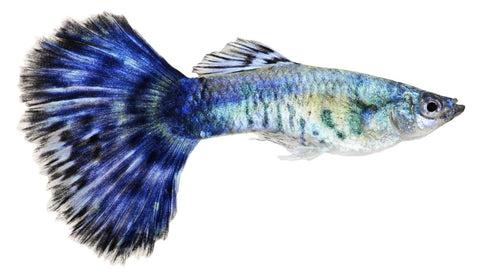
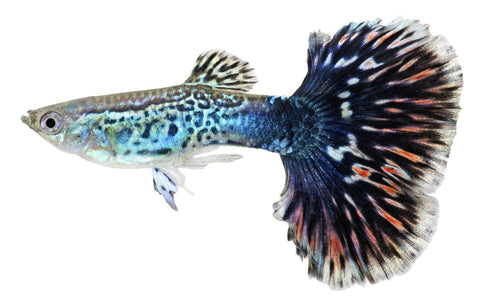
Assorted Guppy
From $4.90
$7.00
Choose gender
Every fish passes through our dedicated quarantine system and strict biosecurity monitoring before sale - so it arrives healthy, settled and ready to thrive. How we quarantine →
| Tasmania | NO |
| Western Australia | NO |
| Northern Territory | NO |
| All Other States | YES |
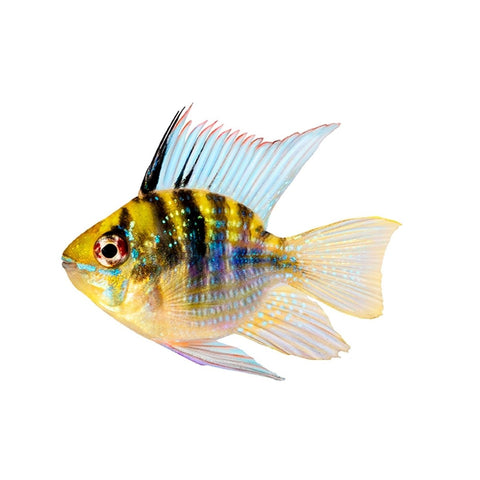
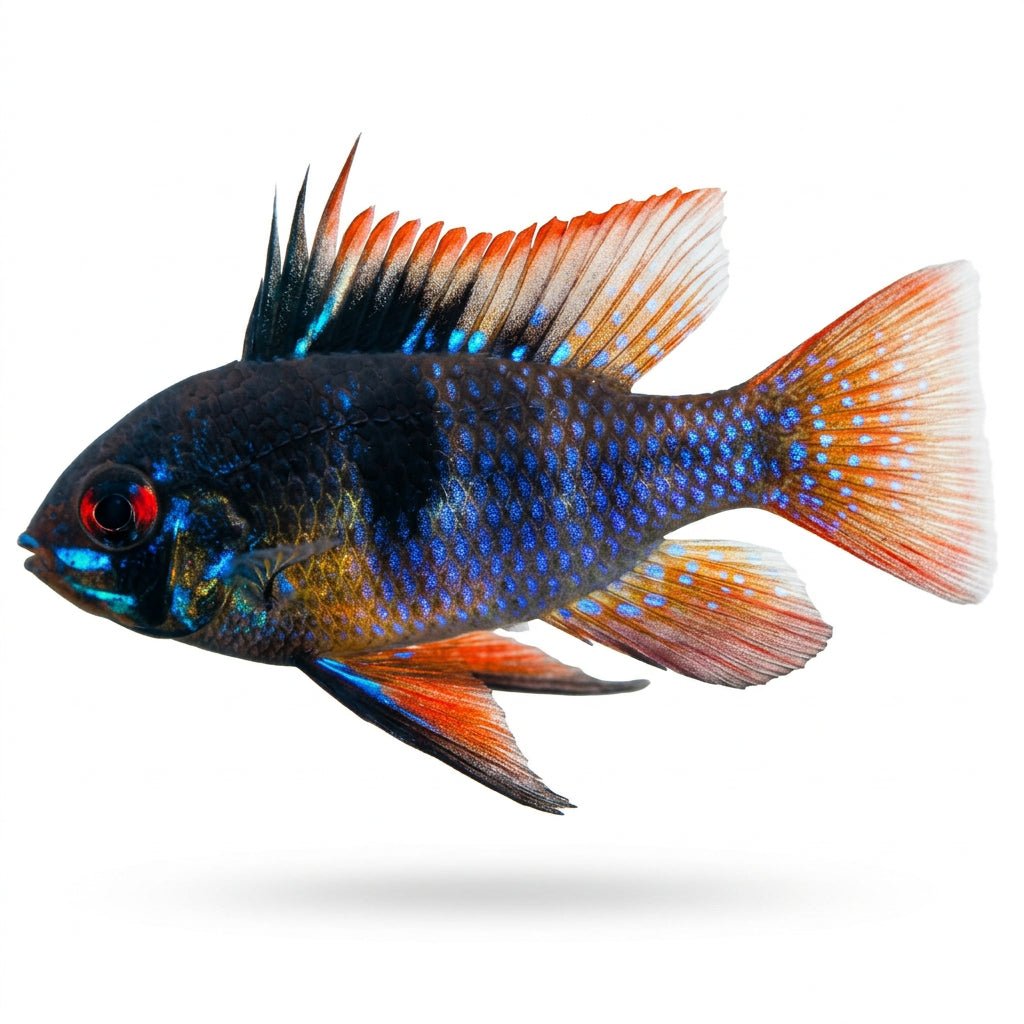
The Black Ram (Mikrogeophagus ramirezi), also known as the German Black Ram or Dark Knight Ram, is a striking selectively bred variety of the popular Ram Cichlid. It is admired for its deep charcoal to almost completely black body, often highlighted by subtle iridescent blue, silver and metallic markings.
Unlike the naturally occurring wild Ram Cichlid, the Black Ram has been developed through selective breeding to enhance its dark pigmentation. It retains the same species characteristics and general care requirements as other Ram varieties.
Originally native to the Orinoco River basin in Venezuela and Colombia, Ram Cichlids inhabit warm, slow-moving freshwater environments with sandy substrates, aquatic vegetation and natural shelter.
Despite their small size, Black Rams have plenty of personality. They are curious dwarf cichlids that spend much of their time exploring the lower and middle levels of the aquarium, searching through the substrate for food and interacting with their surroundings.
Black Rams are generally peaceful but can become territorial when breeding. Compatible pairs may establish a spawning territory and defend it against other fish.
They require consistently warm water, preferably around 26–30°C, with soft, slightly acidic conditions and excellent water quality. They are sensitive to ammonia, nitrite and deteriorating water conditions, making a mature, fully cycled aquarium essential.
A natural-style aquarium with fine sand, driftwood, aquatic plants and sheltered areas provides an excellent environment. Suitable tankmates include peaceful warm-water species such as Cardinal Tetras, small rasboras, pencilfish and compatible Corydoras. Avoid aggressive, boisterous or fast-feeding fish.
As omnivorous micro-predators, Black Rams benefit from a varied diet of quality micro pellets, fine flakes, frozen bloodworms, brine shrimp and daphnia. Small, regular meals help maintain their condition and support healthy development.
With their dramatic dark appearance and engaging behaviour, Black Rams make an excellent centrepiece fish for established warm-water freshwater aquariums.
|
Care Information |
Details |
|---|---|
|
Scientific Name |
Mikrogeophagus ramirezi (Black variety) |
|
Family |
Cichlidae |
|
Origin |
Captive-bred variety; wild species originates from Venezuela and Colombia |
|
Care Level |
Moderate |
|
Maximum Size |
Approximately 5–7 cm |
|
Minimum Aquarium |
60 litres; 75 litres or larger recommended |
|
Temperature |
26–30°C |
|
pH |
5.0–7.0 |
|
Water Hardness |
Soft, approximately 2–8 dGH |
|
Salinity |
Freshwater |
|
Diet |
Omnivore / micro-predator |
|
Temperament |
Peaceful; territorial when breeding |
|
Swimming Level |
Bottom and middle |
|
Reef Compatible |
Not applicable – freshwater species |
|
Plant Compatible |
Yes |
|
Aquarium Type |
Warm freshwater planted community aquarium |
|
Special Requirements |
Mature aquarium, soft water, consistently warm temperatures and excellent water quality |
1. How big do Black Rams grow?
Black Rams typically reach approximately 5–7 cm in length when fully grown.
2. Are Black Rams suitable for beginners?
They are better suited to aquarists with some experience. They require warm, stable water conditions and are sensitive to poor water quality.
3. What makes a Black Ram different from a German Blue Ram?
The main difference is their colouration. Black Rams have been selectively bred for deep, dark pigmentation, while German Blue Rams display the familiar blue, yellow and orange colour pattern.
4. What do Black Rams eat?
They enjoy quality micro pellets, fine tropical flakes, frozen bloodworms, brine shrimp and daphnia. A varied diet is important for maintaining their health.
5. Can Black Rams live with other fish?
Yes. They can be kept with peaceful warm-water species such as Cardinal Tetras, small rasboras and suitable Corydoras. Avoid aggressive or overly active tankmates.
6. Can Black Rams be kept in pairs?
Yes. They can form compatible pairs and display interesting breeding behaviour. They are open-substrate spawners, typically laying eggs on flat stones or other suitable surfaces.
Adding them to immature aquariums: Black Rams are sensitive to unstable water conditions. Only introduce them to fully cycled, established aquariums.
Keeping them in water that is too cool: They require consistently warm conditions, ideally around 26–30°C.
Allowing water quality to deteriorate: Maintain excellent filtration, regular partial water changes and zero ammonia and nitrite.
Keeping them with aggressive tankmates: Their peaceful temperament makes them vulnerable to larger or boisterous fish.
Providing an inadequate diet: Feed a varied selection of quality micro pellets, frozen foods and occasional live foods.
Ignoring breeding behaviour: Pairs can become territorial when spawning. Provide sufficient space, hiding places and visual barriers.
Livestock is dispatched with heat/cool packs and oxygen from our Melbourne facility, timed for the safest transit. Live arrivals may be scheduled for the best shipping window. A live arrival guarantee applies - contact us within the required window if anything is not right.
We stand behind everything we sell. If something is not right, get in touch and we will make it right. See our returns policy for the details.
This fish has been through our dedicated quarantine system and is feeding, settled and health-checked before sale. We still recommend acclimating slowly and quarantining new additions at home. Our team is happy to talk you through the right setup - just ask.
Choose gender