Sale
Sold out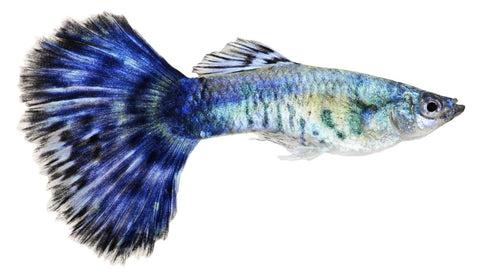
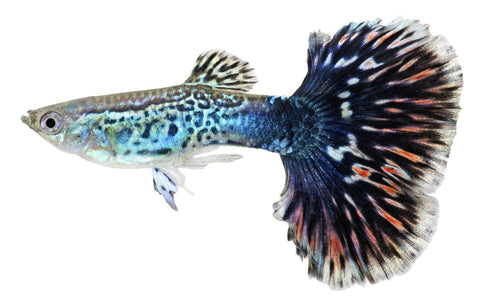
Assorted Guppy
From $4.90
$7.00

Every fish passes through our dedicated quarantine system and strict biosecurity monitoring before sale - so it arrives healthy, settled and ready to thrive. How we quarantine →
| Tasmania | NO |
| Western Australia | NO |
| Northern Territory | NO |
| All Other States | YES |
The Blue Neon Guppy (Poecilia reticulata) is a stunning selectively bred variety of the popular guppy, prized for its vibrant iridescent blue colouring and striking metallic appearance. Its neon-blue body and flowing tail shimmer under aquarium lighting, creating an eye-catching display in freshwater community aquariums.
Blue Neon Guppies are peaceful, active and relatively easy to care for, making them an excellent choice for beginner and experienced aquarists alike. Males are generally smaller and more colourful, displaying brighter blue tones and more elaborate tails, while females are larger with more subdued colouring.
Guppies originate from northern South America and the Caribbean, although many ornamental varieties available in the aquarium trade are commercially bred. They prefer stable, clean water with moderate to high hardness and a neutral to slightly alkaline pH.
These active fish spend much of their time swimming through the upper and middle levels of the aquarium. They look particularly impressive in planted aquariums with dark backgrounds, where their metallic blue colouring stands out.
Blue Neon Guppies are compatible with other peaceful community fish, including Corydoras, small rasboras, peaceful tetras and other livebearers. Avoid aggressive fish and fin-nippers that may damage their flowing tails. They are generally plant-safe, although they may eat very small shrimp fry.
As livebearers, guppies give birth to fully developed free-swimming fry rather than laying eggs. Mixed-sex groups can reproduce readily, with females capable of producing multiple broods. If breeding is not desired, consider keeping a male-only group.
Feed a varied omnivorous diet consisting of quality tropical flakes, micro pellets and occasional frozen or live foods such as brine shrimp and daphnia. Good nutrition, clean water and appropriate tankmates help maintain their vibrant colour and flowing fins.
|
Care Information |
Details |
|---|---|
|
Scientific Name |
Poecilia reticulata |
|
Family |
Poeciliidae |
|
Origin |
Northern South America and Caribbean; ornamental strains are selectively bred |
|
Care Level |
Easy |
|
Maximum Size |
Males 3–4 cm; females up to 5–6 cm |
|
Minimum Aquarium |
40 litres for a small group |
|
Temperature |
22–28°C |
|
pH |
7.0–8.0 |
|
Water Hardness |
Moderately hard to hard, approximately 8–20 dGH |
|
Salinity |
Freshwater |
|
Diet |
Omnivore |
|
Temperament |
Peaceful |
|
Swimming Level |
Upper and middle |
|
Reef Compatible |
Not applicable – freshwater species |
|
Plant Compatible |
Yes |
|
Aquarium Type |
Freshwater community aquarium |
|
Special Requirements |
Stable water conditions, gentle filtration and suitable tankmates for flowing fins |
1. How big do Blue Neon Guppies grow?
Males generally reach around 3–4 cm, while females can grow to approximately 5–6 cm.
2. Are Blue Neon Guppies suitable for beginners?
Yes. They are relatively hardy, peaceful and easy to feed, making them an excellent choice for beginner freshwater aquariums.
3. Can Blue Neon Guppies live with other fish?
Yes. They can be kept with peaceful community species such as Corydoras, small tetras, rasboras and other livebearers. Avoid aggressive fish and fin-nippers.
4. What do Blue Neon Guppies eat?
They enjoy quality tropical flakes, micro pellets, brine shrimp, daphnia and other small frozen or live foods. A varied diet helps maintain their colour and condition.
5. Do Blue Neon Guppies breed easily?
Yes. They are livebearers and reproduce readily in suitable conditions. Females can produce multiple broods, so populations can increase quickly.
6. Can Blue Neon Guppies live in planted aquariums?
Absolutely. They are safe with most aquarium plants and look particularly impressive against green plants and darker aquarium backgrounds.
Keeping them with fin-nipping fish: Their flowing fins can be damaged by aggressive tankmates such as tiger barbs.
Keeping too many males and too few females: In mixed-sex groups, excessive male attention can stress females. Aim for approximately two to three females per male.
Allowing water quality to deteriorate: Guppies need clean, well-filtered water with no detectable ammonia or nitrite.
Keeping them in very soft, acidic water: They generally do better in moderately hard to hard water with a neutral to slightly alkaline pH.
Overfeeding: Excess food can quickly affect water quality. Feed small portions that they can consume within a few minutes.
Underestimating breeding: Mixed-sex groups can produce large numbers of fry. Plan for population growth before introducing both sexes.
Livestock is dispatched with heat/cool packs and oxygen from our Melbourne facility, timed for the safest transit. Live arrivals may be scheduled for the best shipping window. A live arrival guarantee applies - contact us within the required window if anything is not right.
We stand behind everything we sell. If something is not right, get in touch and we will make it right. See our returns policy for the details.
This fish has been through our dedicated quarantine system and is feeding, settled and health-checked before sale. We still recommend acclimating slowly and quarantining new additions at home. Our team is happy to talk you through the right setup - just ask.