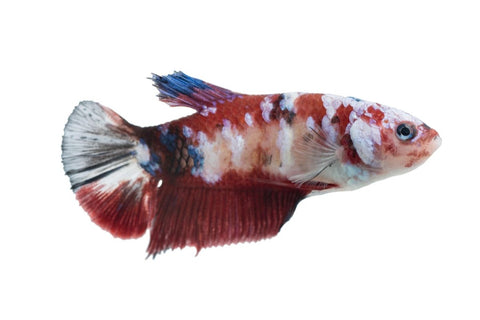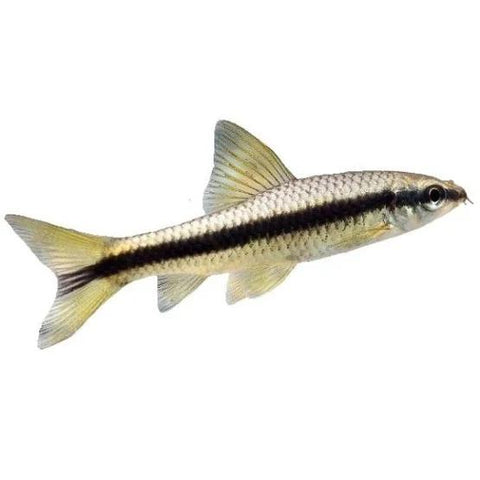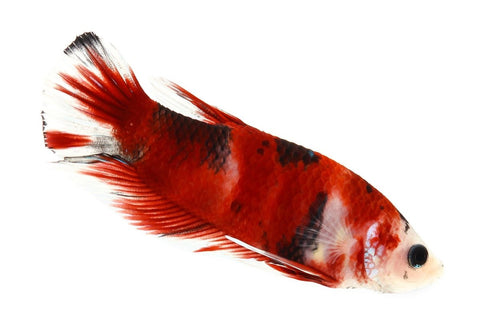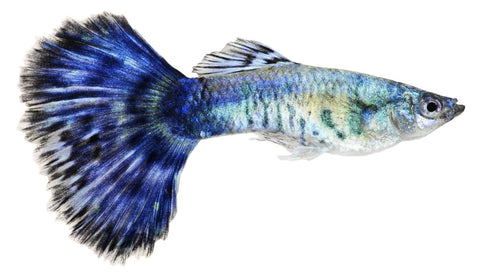
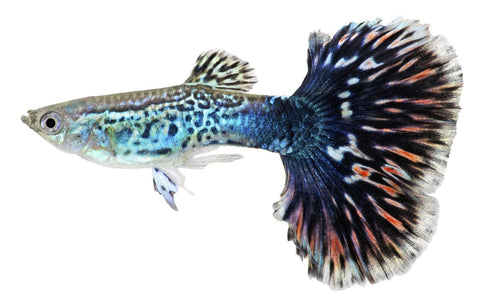
Assorted Guppy
From $7.00
Choose gender

Every fish passes through our dedicated quarantine system and strict biosecurity monitoring before sale - so it arrives healthy, settled and ready to thrive. How we quarantine →
| Tasmania | NO |
| Western Australia | NO |
| Northern Territory | NO |
| All Other States | YES |
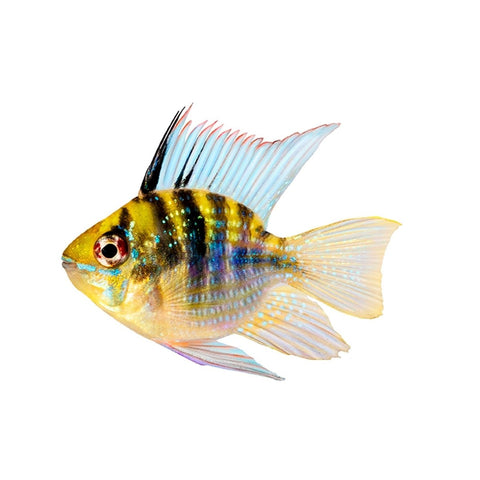
The Bolivian Butterfly Ram, also known as the Bolivian Ram or Ruby Crown Cichlid, is a beautiful South American dwarf cichlid admired for its golden body, iridescent blue highlights, dark markings and elegant fins edged with red. Its attractive colouration and engaging personality make it a standout addition to a peaceful freshwater aquarium.
Compared with the more delicate German Blue Ram, the Bolivian Butterfly Ram is generally hardier and more adaptable, making it an excellent option for aquarists interested in keeping dwarf cichlids. It is native to river systems in Bolivia and Brazil, where it inhabits freshwater environments with natural cover and areas of soft substrate.
These fish spend much of their time exploring the lower and middle levels of the aquarium, searching through the substrate for food. They are generally peaceful with suitable tank mates, although they may become territorial when breeding. A compatible pair can display fascinating courtship and parental behaviour.
Provide a mature, well-filtered aquarium with fine sand, aquatic plants, driftwood and sheltered areas. Open swimming space is also important, while stable water conditions help keep these fish healthy and active.
Bolivian Butterfly Rams are omnivores and readily accept quality sinking pellets, micro pellets and flakes. Supplement their diet with frozen or live foods such as brine shrimp, daphnia and bloodworms for variety and condition. With suitable care, they make rewarding centrepiece fish for a planted community aquarium.
Scientific Name: Mikrogeophagus altispinosus
Common Names: Bolivian Butterfly Ram, Bolivian Ram, Ruby Crown Cichlid
Origin: Bolivia and Brazil, South America
Care Level: Easy to moderate
Adult Size: Approximately 6–8 cm
Minimum Aquarium: Around 75–80 litres for a suitable setup
Temperature: 23–28°C
pH: Approximately 6.0–7.5
Diet: Omnivore
Temperament: Generally peaceful; territorial when breeding
Swimming Level: Bottom to middle
Aquarium Type: Freshwater tropical
Lifespan: Around 3–5 years, potentially longer with good care
They can be a good choice for beginners who have a fully cycled aquarium and can maintain stable water quality. They are generally hardier than German Blue Rams.
Yes. They generally do well with peaceful fish such as appropriately sized tetras, rasboras and Corydoras. Avoid aggressive or predatory tank mates.
Yes. A compatible pair can do well together, but provide enough space and hiding areas, particularly during breeding when they may defend a territory.
They accept quality sinking pellets, micro pellets and flakes, supplemented with frozen or live foods such as brine shrimp, daphnia and bloodworms.
Fine sand is ideal because they naturally forage through the substrate. Smooth, fine gravel can also work if it is safe for bottom-feeding fish.
They are generally peaceful for cichlids, but may become territorial during spawning. Providing adequate space and visual barriers helps minimise conflict.
Introducing them into an immature or uncycled aquarium.
Allowing ammonia or nitrite to accumulate.
Keeping them with aggressive fish or unsuitable tank mates.
Providing insufficient hiding places and open substrate.
Feeding only one type of food instead of a varied diet.
Making sudden changes to temperature or water chemistry.
Livestock is dispatched with heat/cool packs and oxygen from our Melbourne facility, timed for the safest transit. Live arrivals may be scheduled for the best shipping window. A live arrival guarantee applies - contact us within the required window if anything is not right.
We stand behind everything we sell. If something is not right, get in touch and we will make it right. See our returns policy for the details.
This fish has been through our dedicated quarantine system and is feeding, settled and health-checked before sale. We still recommend acclimating slowly and quarantining new additions at home. Our team is happy to talk you through the right setup - just ask.
Choose gender
Choose size