Sale

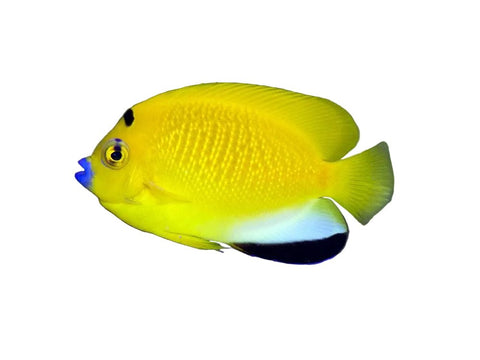
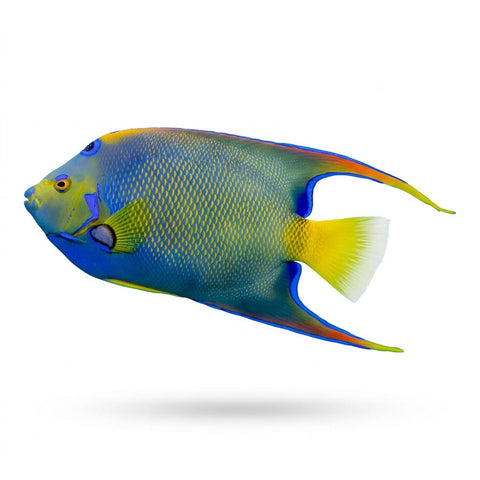
Koran Angel
$126.00
$180.00

Every fish passes through our dedicated quarantine system and strict biosecurity monitoring before sale - so it arrives healthy, settled and ready to thrive. How we quarantine →
| Tasmania | YES |
| Western Australia | YES |
| Northern Territory | NO |
| All Other States | YES |
The French Angelfish (Pomacanthus paru) is a magnificent large marine angelfish recognised by its deep, dark body covered in golden-yellow scale markings, bright yellow eye ring and distinctive white mouth.
Native to the tropical Western Atlantic, Caribbean Sea and Gulf of Mexico, this species inhabits coral reefs, rocky areas and sponge-rich environments. It is commonly found swimming around reef structures in search of food.
One of the most interesting features of the French Angelfish is the dramatic transformation it undergoes as it matures. Juveniles are predominantly black with several bright yellow vertical bands running along their body. As they grow, these bands gradually disappear and are replaced by the characteristic golden-edged scales of the adult.
French Angelfish are active swimmers that require a very large, mature aquarium with substantial live rock, caves and open swimming areas. They are naturally territorial and can become dominant towards other angelfish and similarly shaped fish.
Their natural diet consists largely of sponges, tunicates, algae and other marine organisms. In captivity, they require a varied diet containing sponge-based angelfish preparations, marine algae, spirulina, mysis shrimp and other quality meaty foods.
Important: French Angelfish are not reef safe. They will naturally graze on sponges and may nip at corals, clam mantles, zoanthids and other sessile invertebrates. They are best suited to large fish-only marine aquariums.
|
Care Requirement |
Details |
|---|---|
|
Scientific Name |
Pomacanthus paru |
|
Family |
Pomacanthidae |
|
Origin |
Western Atlantic, Caribbean and Gulf of Mexico |
|
Care Level |
Advanced |
|
Maximum Size |
Approximately 41 cm |
|
Minimum Aquarium |
800–1,000 litres recommended |
|
Temperature |
24–27°C |
|
pH |
8.1–8.4 |
|
Salinity |
1.020–1.026 SG |
|
Diet |
Omnivore, sponge specialist |
|
Temperament |
Semi-aggressive to aggressive |
|
Swimming Level |
All levels |
|
Reef Compatible |
No |
|
Aquarium Type |
Large fish-only marine aquarium |
|
Special Requirements |
Mature live rock, caves and varied sponge-based diet |
1. How big does a French Angelfish grow?
French Angelfish can reach approximately 40–41 cm in length. Their large adult size means they require a substantial aquarium with plenty of swimming space.
2. Are French Angelfish reef safe?
No. They naturally feed on sponges and other reef organisms and may nip at hard corals, soft corals, zoanthids, clam mantles and other invertebrates.
3. What do French Angelfish eat?
They require a varied diet containing sponge-based angelfish foods, marine algae, spirulina, mysis shrimp, krill and finely chopped seafood. Regular feeding is important for maintaining their condition.
4. Why does a juvenile French Angelfish look different?
Juveniles have black bodies with bright yellow vertical stripes. As they mature, these stripes disappear and the scales develop distinctive golden-yellow edges.
5. Can French Angelfish be kept with other angelfish?
They can be territorial towards other large angelfish, particularly similar species. Keeping them with other angelfish requires a very large aquarium and careful consideration of compatibility.
6. Where do French Angelfish come from?
They are native to the Western Atlantic, including Florida, the Bahamas, the Caribbean, the Gulf of Mexico and coastal waters extending towards Brazil. They are not native to Australian reefs.
Keeping them in undersized aquariums: Their adult size and active swimming behaviour require a very large aquarium.
Assuming they are reef safe: They naturally graze on sponges and may damage corals and ornamental invertebrates.
Providing an inadequate diet: They need sponge-based angelfish preparations alongside algae and other nutritious marine foods.
Introducing them into immature aquariums: They require stable water conditions and an established environment with plenty of live rock.
Mixing them with incompatible angelfish: Territorial behaviour can result in serious aggression and stress.
Underestimating their adult appearance: Juveniles look dramatically different from adults, so their mature colouration and size should be considered before purchase.
Livestock is dispatched with heat/cool packs and oxygen from our Melbourne facility, timed for the safest transit. Live arrivals may be scheduled for the best shipping window. A live arrival guarantee applies - contact us within the required window if anything is not right.
We stand behind everything we sell. If something is not right, get in touch and we will make it right. See our returns policy for the details.
This fish has been through our dedicated quarantine system and is feeding, settled and health-checked before sale. We still recommend acclimating slowly and quarantining new additions at home. Our team is happy to talk you through the right setup - just ask.