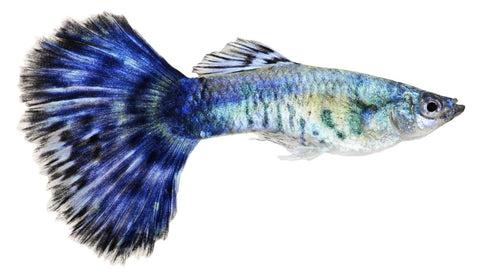
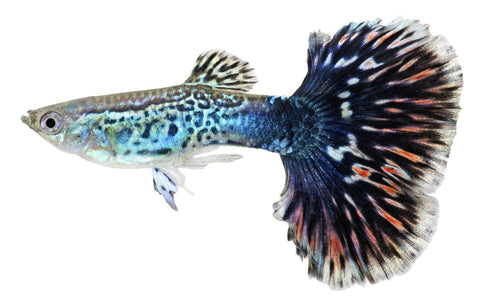
Assorted Guppy
From $7.00
Choose gender

Every fish passes through our dedicated quarantine system and strict biosecurity monitoring before sale - so it arrives healthy, settled and ready to thrive. How we quarantine →
| Tasmania | NO |
| Western Australia | NO |
| Northern Territory | NO |
| All Other States | YES |
The Ghost Knife Fish (Apteronotus albifrons), commonly known as the Black Ghost Knifefish, is a fascinating freshwater species recognised for its smooth, elongated black body, distinctive white markings and unusual swimming style. Rather than relying on a conventional tail fin for propulsion, it moves gracefully by rippling its long anal fin, allowing it to glide forwards and backwards with remarkable precision.
Native to freshwater river systems across parts of South America, including the Amazon and Orinoco basins, this nocturnal fish naturally inhabits shaded waters with submerged roots, driftwood and sheltered hiding places. Its dark body and unusual movement make it a captivating feature in a spacious, carefully maintained aquarium.
Black Ghost Knifefish use a weak electrical field to navigate their surroundings and detect nearby objects in dark or murky water. This specialised sense is one of their most distinctive adaptations and helps explain their preference for sheltered environments and subdued lighting.
Ghost Knife Fish are shy, predominantly nocturnal fish that tend to hide during the day and become more active after the aquarium lights dim. They appreciate a calm environment with caves, driftwood, PVC shelters or other secure hiding places where they can retreat without being disturbed.
Although juveniles may appear suitable for smaller aquariums, adults grow considerably larger. A large aquarium of at least 400–500 litres is a more appropriate long-term target, with additional space required for larger specimens or community setups. Prioritise aquarium length, floor space and sheltered areas rather than relying on volume alone.
Ghost Knife Fish are generally peaceful towards fish they cannot swallow, but they are predatory and may eat smaller tankmates. They can also become territorial towards other knifefish, particularly when hiding places are limited. Avoid housing them with aggressive fin-nippers or very small fish.
Ghost Knife Fish are carnivorous and prefer meaty foods. Suitable options include earthworms, bloodworms, mysis shrimp, prawns and appropriately sized frozen or live foods. Some individuals can be trained to accept sinking carnivore pellets.
Feed when the fish is active, often in the evening, and ensure food reaches its hiding area. Newly introduced specimens may be shy or reluctant to eat while adjusting to their surroundings, so monitor feeding closely and remove uneaten food to prevent water quality problems.
Black Ghost Knifefish can live with appropriately sized, peaceful fish that are too large to be considered prey. Potential companions may include larger peaceful tetras, suitable medium-to-large catfish and compatible South American species, provided their environmental requirements match.
Avoid tiny schooling fish, ornamental shrimp and other small invertebrates that may be eaten. Multiple Ghost Knife Fish require careful planning because territorial conflict can develop, especially in aquariums without enough separate shelters.
Maintain stable, warm freshwater conditions, excellent filtration and good oxygenation. Provide subdued lighting and plenty of cover, while leaving enough open space for swimming. With suitable space and a consistent diet, the Ghost Knife Fish is a remarkable addition for experienced aquarists who can accommodate its adult size and specialised behaviour.
|
Care requirement |
Details |
|---|---|
|
Scientific name |
Apteronotus albifrons |
|
Common names |
Ghost Knife Fish, Black Ghost Knifefish |
|
Family |
Apteronotidae |
|
Origin |
South America, including Amazon and Orinoco river systems |
|
Care level |
Moderate to advanced |
|
Adult size |
Commonly 30–45 cm; potentially larger |
|
Minimum aquarium size |
Approximately 400–500 litres for long-term adult care |
|
Temperature |
23–28°C |
|
pH |
Approximately 6.0–7.5 |
|
Water hardness |
Soft to moderately hard |
|
Diet |
Carnivore |
|
Temperament |
Shy; potentially territorial and predatory |
|
Swimming level |
Bottom and middle levels, often near shelters |
|
Activity |
Mainly nocturnal |
|
Compatibility |
Peaceful, appropriately sized fish |
|
Aquarium type |
Large freshwater tropical aquarium |
|
Lifespan |
Often 10 years or longer with good care |
|
Special requirements |
Shelters, subdued lighting, stable water and suitable meaty foods |
Care figures are general guidelines. Aquarium size should account for the individual fish's adult size, swimming space and tankmates.
Black Ghost Knifefish commonly reach around 30–45 cm, with some specimens growing larger. Their adult size makes them unsuitable for most small aquariums.
They are better suited to aquarists with some experience. Their eventual size, nocturnal behaviour, feeding requirements and need for secure hiding places require careful planning.
They eat meaty foods such as earthworms, bloodworms, mysis shrimp and prawns. Some individuals learn to accept sinking carnivore pellets.
Yes, with appropriately sized and peaceful tankmates. Small fish may be eaten, while aggressive or fin-nipping species can cause stress and injury.
This is normal behaviour. Black Ghost Knifefish are predominantly nocturnal and naturally shelter in dark, protected areas. Provide hiding places and observe feeding activity in the evening.
It is possible in a sufficiently large, carefully arranged aquarium, but it is not always successful. Territorial behaviour can develop, so provide separate shelters and plenty of space, and be prepared to separate them if conflict occurs.
1. Buying a juvenile without planning for its adult size: These fish grow much larger than they initially appear. Choose an aquarium suitable for long-term adult care.
2. Providing insufficient hiding places: An exposed aquarium can leave the fish stressed. Add caves, driftwood or secure shelters with appropriate entrances.
3. Keeping them with very small fish: Ghost Knife Fish are predators and may consume tankmates that fit into their mouths. Choose companions based on adult size.
4. Offering only dry flakes: Their carnivorous feeding habits require appropriate meaty foods. Provide a varied diet and monitor whether the fish is eating.
5. Using excessively bright lighting without cover: Strong lighting can discourage natural behaviour. Use subdued lighting or floating plants and shaded shelters.
6. Ignoring water quality: Large carnivorous fish produce waste that can strain filtration. Maintain effective biological filtration, monitor ammonia and nitrite, and perform regular partial water changes.
Livestock is dispatched with heat/cool packs and oxygen from our Melbourne facility, timed for the safest transit. Live arrivals may be scheduled for the best shipping window. A live arrival guarantee applies - contact us within the required window if anything is not right.
We stand behind everything we sell. If something is not right, get in touch and we will make it right. See our returns policy for the details.
This fish has been through our dedicated quarantine system and is feeding, settled and health-checked before sale. We still recommend acclimating slowly and quarantining new additions at home. Our team is happy to talk you through the right setup - just ask.
Choose gender
Choose size