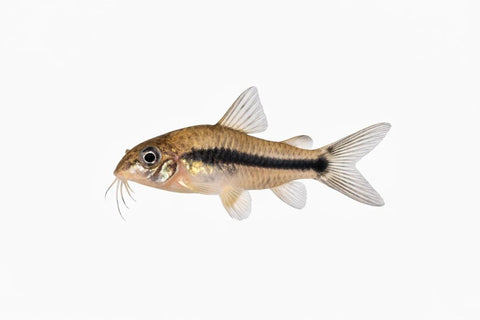
Pygmy Corydora
$15.00

Every fish passes through our dedicated quarantine system and strict biosecurity monitoring before sale - so it arrives healthy, settled and ready to thrive. How we quarantine →
| Tasmania | NO |
| Western Australia | NO |
| Northern Territory | NO |
| All Other States | YES |
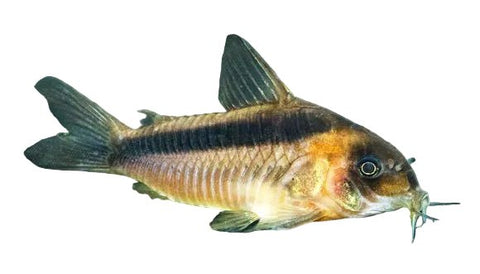
The Gold Laser Corydoras is one of the most eye-catching Corydoras available, prized for its brilliant metallic gold stripe that runs from the top of its head along its back. Combined with its bronze-green body and iridescent sheen, this beautiful catfish is a standout addition to planted aquariums and peaceful community tanks.
Believed to originate from Peru, the Gold Laser Corydoras is an undescribed species commonly referred to by its collection number, CW010. Like all Corydoras, these peaceful bottom dwellers are highly social and should always be kept in groups of at least six. They spend their day actively sifting through the substrate in search of insects, worms, and other small food items, making them fascinating fish to observe.
A fine sand substrate is highly recommended to protect their sensitive barbels and allow natural foraging behaviour. They thrive in aquariums with driftwood, rocks, leaf litter, and dense aquatic plants where they feel secure and display their best colours.
Hardy, peaceful, and exceptionally beautiful, the Gold Laser Corydoras is an excellent choice for community aquariums alongside tetras, rasboras, gouramis, dwarf cichlids, rainbowfish, and peaceful shrimp.
Corydoras sp. CW010
Gold Laser Corydoras
Peru (Upper Amazon Basin)
6–7 cm
Peaceful
Omnivore
60 Litres
22–28°C
6.0–7.5
2–12 dGH
Beginner
5–10 Years
Community aquariums, planted tanks, and shrimp-safe aquariums
Their name comes from the brilliant metallic gold stripe that runs from the head along the back, resembling a laser beam under aquarium lighting.
Gold Laser Corydoras are schooling fish and should always be kept in groups of at least six. Larger groups promote natural behaviour and reduce stress.
They readily accept quality sinking pellets, Corydoras wafers, frozen bloodworms, blackworms, brine shrimp, and other sinking foods.
Yes. They are completely peaceful and make excellent companions for Cherry Shrimp, Amano Shrimp, and other dwarf shrimp species.
Yes. Fine sand is the preferred substrate as it allows natural foraging while protecting their delicate barbels.
Gold Laser Corydoras are highly social and should always be kept in groups of six or more.
Sharp gravel can damage their barbels and prevent natural feeding behaviour.
Provide dedicated sinking foods to ensure a complete and balanced diet.
Excellent filtration and regular water changes are essential for maintaining healthy Corydoras.
Choose peaceful community fish that won't harass or outcompete these gentle bottom dwellers.
Livestock is dispatched with heat/cool packs and oxygen from our Melbourne facility, timed for the safest transit. Live arrivals may be scheduled for the best shipping window. A live arrival guarantee applies - contact us within the required window if anything is not right.
We stand behind everything we sell. If something is not right, get in touch and we will make it right. See our returns policy for the details.
This fish has been through our dedicated quarantine system and is feeding, settled and health-checked before sale. We still recommend acclimating slowly and quarantining new additions at home. Our team is happy to talk you through the right setup - just ask.