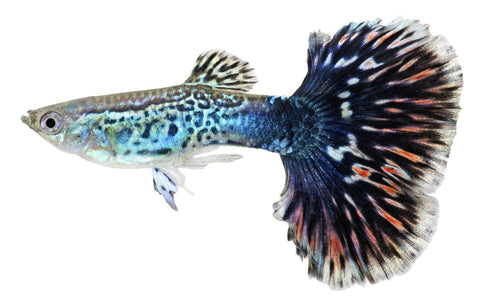
Assorted Guppy
From $7.00
Choose gender

Every fish passes through our dedicated quarantine system and strict biosecurity monitoring before sale - so it arrives healthy, settled and ready to thrive. How we quarantine →
| Tasmania | NO |
| Western Australia | NO |
| Northern Territory | NO |
| All Other States | YES |
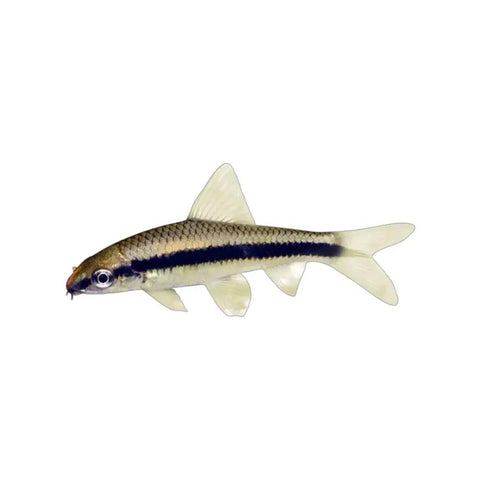
The Lizard Loach (Homaloptera orthogoniata), also known as the Saddleback Loach, Gecko Loach or Orchid Loach, is a fascinating freshwater fish adapted to life in fast-flowing, oxygen-rich streams across Southeast Asia. Its flattened body, broad fins and unusual crawling movements make it a standout addition to a specialist river-style aquarium.
Unlike many common aquarium bottom dwellers, this species is built to cling to rocks and navigate strong currents. It spends much of its time exploring stone surfaces and grazing on the natural algae, biofilm and tiny organisms growing across them.
The Lizard Loach is best suited to experienced aquarists who can provide a mature aquarium with excellent filtration, strong water movement and consistently high oxygen levels. A newly established tank with clean, bare rocks may not provide enough natural food to keep this species healthy.
This is a generally peaceful, bottom-dwelling fish that prefers rocky environments with plenty of crevices and sheltered resting places. A river-style aquarium with smooth stones, rounded pebbles and strong directional flow is ideal.
Provide a spacious tank with a secure lid, as hillstream loaches can climb surfaces and may escape through gaps. Choose peaceful tank mates that tolerate similar temperatures and water movement, and avoid aggressive fish or species that outcompete the loach for food.
The Lizard Loach naturally grazes on algae, biofilm and tiny invertebrates. In the aquarium, a mature rockscape with established biofilm is essential, but natural grazing should be supplemented with suitable foods.
Offer algae wafers, quality sinking foods and small frozen or live foods such as Daphnia, Artemia and bloodworm. Ensure food reaches the bottom and that the loach gets its share without competition from faster fish.
Maintain clean, well-oxygenated water with a strong current across the aquarium. Use smooth stones and boulders to create grazing surfaces while leaving open areas for movement. Regular water changes are important, but avoid disrupting the established biofilm across every surface at once.
This species is not ideal for a typical warm, low-flow community aquarium. It is best kept with carefully selected peaceful fish that enjoy cooler, highly oxygenated conditions.
|
Care requirement |
Details |
|---|---|
|
Scientific name |
Homaloptera orthogoniata |
|
Common names |
Lizard Loach, Saddleback Loach, Gecko Loach |
|
Care level |
Moderate to advanced |
|
Origin |
Southeast Asia, including Borneo |
|
Adult size |
Up to approximately 10–13 cm |
|
Minimum aquarium |
A mature, spacious setup; around 100–120 L or larger is a sensible starting point |
|
Temperature |
20–25.5°C |
|
pH |
6.0–7.5 |
|
Water hardness |
Soft to moderately hard |
|
Water flow |
Strong current with excellent oxygenation |
|
Diet |
Biofilm, algae, sinking foods and small invertebrates |
|
Temperament |
Generally peaceful |
|
Aquarium position |
Bottom-dweller and rock grazer |
|
Lifespan |
Several years with suitable care |
Care parameters are approximate; mature tank conditions, oxygenation and food availability are especially important for this species.
It is better suited to aquarists with experience maintaining stable water quality, strong flow and mature aquariums. Its specialised feeding needs can make it challenging in a standard community tank.
Yes. It naturally inhabits flowing streams and needs well-oxygenated water with a strong current. Use filtration and, if necessary, additional circulation to create suitable conditions.
It grazes on algae, biofilm and tiny organisms. Supplement this with algae wafers, sinking foods and small frozen or live invertebrates.
Yes, with peaceful tank mates that prefer similar cooler, oxygen-rich conditions. Avoid aggressive fish and species that monopolise food or require warmer water.
It can reach approximately 10–13 cm, depending on the individual and the source. Plan for its adult size rather than buying a tank based on its juvenile size.
It is not recommended. A mature aquarium with established algae and biofilm provides important natural grazing opportunities that a new tank may lack.
Keeping it in low-flow water: Insufficient circulation can compromise oxygen levels and overall health.
Adding it to a new aquarium: Immature tanks often lack the biofilm and natural food it needs.
Relying only on algae wafers: Provide a varied diet with suitable supplementary foods.
Keeping it in overly warm water: Temperatures outside its suitable range can cause stress.
Choosing incompatible tank mates: Fast-feeding or aggressive fish may prevent it from getting enough food.
Leaving gaps in the aquarium lid: This species may climb surfaces, so secure the tank against escape.
Livestock is dispatched with heat/cool packs and oxygen from our Melbourne facility, timed for the safest transit. Live arrivals may be scheduled for the best shipping window. A live arrival guarantee applies - contact us within the required window if anything is not right.
We stand behind everything we sell. If something is not right, get in touch and we will make it right. See our returns policy for the details.
This fish has been through our dedicated quarantine system and is feeding, settled and health-checked before sale. We still recommend acclimating slowly and quarantining new additions at home. Our team is happy to talk you through the right setup - just ask.
Choose gender
Choose size