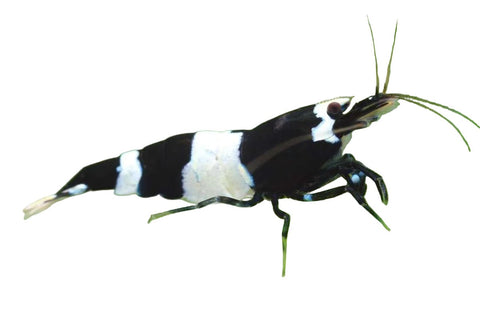
Shadow Panda Shrimp
From $15.00
Choose quantity

| Tasmania | NO |
| Western Australia | NO |
| Northern Territory | NO |
| All Other States | YES |
The Ocean Blue Shrimp is a striking freshwater ornamental shrimp prized for its deep ocean-blue colouring, sparkling body and distinctive patterns. With shades ranging from rich navy and steel blue to pale blue and white, individual shrimp can display beautiful variations in colour and markings, making them a standout addition to a specialist shrimp aquarium.
This selectively bred Caridina variety is popular with shrimp enthusiasts who appreciate unusual colour forms and detailed close-up aquascapes. Its small size and peaceful nature make it ideal for a dedicated shrimp tank filled with mosses, aquatic plants, driftwood and natural grazing surfaces.
Ocean Blue Shrimp are more demanding than common Cherry Shrimp and are best suited to mature, fully cycled aquariums with soft, stable water conditions. A well-established environment encourages the growth of biofilm, which provides an important natural food source.
Ocean Blue Shrimp are peaceful, active invertebrates that spend their time grazing on biofilm, algae and tiny organic particles across plants, rocks and aquarium décor.
Provide plenty of moss, fine-leaved plants and crevices where shrimp can hide, particularly during moulting. A mature planted aquarium with stable parameters is essential, as sudden changes in water chemistry can be harmful.
They are best kept in a dedicated shrimp aquarium or with very small, peaceful tank mates that will not prey on adults or shrimplets. Avoid aggressive fish and any treatments containing copper unless specifically confirmed safe for shrimp.
Ocean Blue Shrimp naturally graze throughout the day on biofilm, algae and decomposing plant material. Supplement this with a quality shrimp-specific food, algae-based pellets and occasional suitable foods such as blanched vegetables.
Feed small portions and remove uneaten food to prevent water-quality problems. In a mature aquarium, natural grazing can contribute substantially to their diet, so frequent heavy feeding is unnecessary.
Ocean Blue Shrimp thrive in a stable, mature aquarium with soft, slightly acidic water. Active shrimp soil, reverse-osmosis water remineralised with appropriate shrimp minerals, and reliable temperature control can help maintain the conditions they need.
Provide gentle filtration with a sponge pre-filter to protect tiny shrimplets, along with mosses and porous hardscape for grazing. Acclimate new arrivals slowly, particularly when their transport water differs from the aquarium's temperature or dissolved mineral content.
These shrimp can interbreed with compatible Caridina varieties, potentially affecting offspring colour and patterns. For predictable breeding results, keep them with compatible shrimp lines and avoid mixing them with unrelated colour varieties unless you are comfortable with mixed-colour offspring.
|
Care requirement |
Details |
|---|---|
|
Scientific name |
Caridina cf. cantonensis |
|
Common name |
Ocean Blue Shrimp |
|
Care level |
Intermediate to advanced |
|
Adult size |
Approximately 2.5–3 cm |
|
Suggested aquarium |
Mature shrimp tank; 20 litres or larger is a practical starting point |
|
Temperature |
18–24°C |
|
pH |
5.5–6.5 |
|
General hardness (GH) |
4–6 dGH |
|
Carbonate hardness (KH) |
0–1 dKH |
|
Total dissolved solids (TDS) |
Approximately 100–150 ppm |
|
Diet |
Biofilm, algae and specialist shrimp foods |
|
Temperament |
Peaceful |
|
Aquarium position |
All levels, primarily grazing on surfaces |
|
Lifespan |
Approximately 1–2 years, sometimes longer |
|
Breeding |
Egg-carrying female; young hatch as miniature shrimp |
|
Best setup |
Mature planted aquarium with moss and stable, soft water |
These parameters are a starting guide for Ocean Blue Caridina lines. Confirm the conditions used by the supplier and avoid sudden changes, especially in TDS, GH and temperature.
They typically reach around 2.5–3 cm as adults, making them suitable for compact, carefully maintained shrimp aquariums.
They are better suited to aquarists with some shrimp-keeping experience because they require stable, soft water and a mature aquarium.
They graze on biofilm, algae and organic matter. Supplement their natural grazing with specialist shrimp foods and occasional plant-based treats.
They are safest in a dedicated shrimp aquarium. Very small, peaceful fish may coexist with adults, but many fish will eat shrimplets and some may prey on adult shrimp.
Yes. Females carry eggs beneath their abdomen until they hatch into miniature shrimp. A mature aquarium with abundant moss and biofilm improves the chances of young shrimp surviving.
They can sometimes share an aquarium if their water requirements overlap, but they belong to different shrimp groups with different preferred conditions. For breeding and colour consistency, keeping them separately is recommended.
Adding shrimp to a newly established tank: Immature aquariums may lack stable conditions and sufficient biofilm.
Changing water parameters too quickly: Sudden shifts in temperature, pH or dissolved minerals can cause serious stress.
Using unsuitable tap water: Check hardness and TDS, and use appropriately remineralised water where necessary.
Overfeeding: Excess food decomposes and can quickly deteriorate water quality.
Keeping them with predatory fish: Adults and especially baby shrimp may be eaten.
Using copper-containing treatments: Copper can be toxic to shrimp, so check medication ingredients before treating the aquarium.
Dispatched from our Melbourne facility, usually within 1-2 business days. Delivery time and cost are calculated at checkout based on your address.
We stand behind everything we sell. If something is not right, get in touch and we will make it right. See our returns policy for the details.
Choose quantity

Choose quantity
Choose quantity