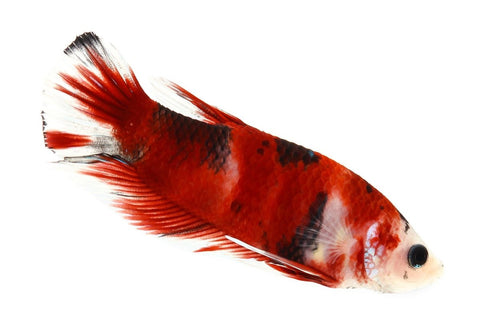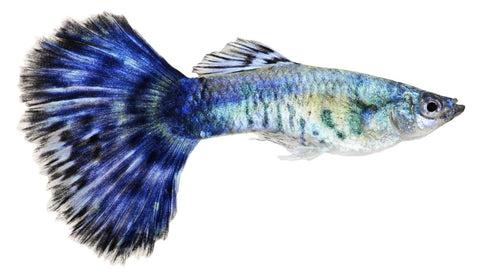
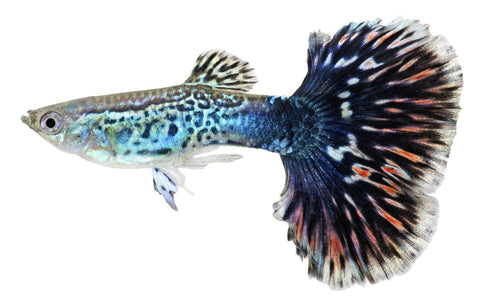
Assorted Guppy
From $7.00
Choose gender

Every fish passes through our dedicated quarantine system and strict biosecurity monitoring before sale - so it arrives healthy, settled and ready to thrive. How we quarantine →
| Tasmania | NO |
| Western Australia | NO |
| Northern Territory | NO |
| All Other States | YES |
The Paradise Fish (Macropodus opercularis) is a striking freshwater aquarium fish famous for its vivid red-orange and iridescent blue stripes, flowing fins and bold personality. One of the earliest ornamental fish kept in aquariums, it remains a favourite among hobbyists looking for a colourful species with fascinating behaviour.
Native to East Asia, including parts of China, Taiwan and northern Vietnam, Paradise Fish inhabit shallow ponds, rice fields, ditches and slow-moving waterways with abundant vegetation. They are adaptable labyrinth fish, meaning they can breathe atmospheric oxygen directly from the surface as well as using their gills.
Males typically display the most intense colours, with alternating blue and red-orange bands, elongated fins and a more pronounced tail. Females are generally smaller-looking, with shorter fins and less vivid colouration. Colour intensity varies with age, condition and individual genetics.
Paradise Fish are hardy, intelligent and territorial, particularly mature males. Unlike many peaceful community fish, they can be aggressive towards other Paradise Fish and may chase or attack smaller or slow-moving tankmates. They are best suited to carefully planned aquariums where their temperament can be managed.
An aquarium of 75 litres or larger is a practical starting point for a single fish, with a larger tank recommended for multiple specimens or community setups. Provide dense planting, driftwood, sheltered areas and open swimming space. Floating plants are particularly useful because they provide cover near the water surface.
Paradise Fish tolerate a broader temperature range than many tropical aquarium species. They can be maintained in cooler conditions, although stable temperatures appropriate to their needs are important. A secure lid is recommended, as they may jump when startled.
Paradise Fish are omnivores and readily accept quality tropical pellets and flakes. Supplement their diet with frozen or live foods such as bloodworms, brine shrimp, daphnia and small insect larvae.
Offer small portions once or twice daily, adjusting the quantity to prevent overfeeding. A varied diet supports healthy growth, strong body condition and vibrant colouration.
Paradise Fish are not ideal for every community aquarium. Suitable companions, where individual temperament allows, include robust fish of similar size that prefer compatible temperatures and are not easily intimidated. Avoid housing them with bettas, gouramis, delicate nano fish or long-finned species that may trigger aggression.
Keeping males together is particularly risky, as territorial fighting can result in serious injuries. Females may also experience harassment, so multiple fish should only be housed together with careful planning, sufficient space and visual barriers.
Maintain good water quality, effective filtration and regular partial water changes. Paradise Fish can breathe atmospheric oxygen using their labyrinth organ, so they must always have access to the water surface.
With their brilliant colours, unusual breathing adaptation and engaging behaviour, Paradise Fish are a rewarding choice for aquarists who appreciate a fish with plenty of personality.
|
Care requirement |
Details |
|---|---|
|
Scientific name |
Macropodus opercularis |
|
Common names |
Paradise Fish, Chinese Paradise Fish |
|
Family |
Osphronemidae |
|
Origin |
East Asia, including China, Taiwan and northern Vietnam |
|
Care level |
Easy to moderate |
|
Adult size |
Approximately 8–10 cm |
|
Minimum aquarium size |
Around 75 litres for one fish |
|
Temperature |
16–26°C; avoid sudden fluctuations |
|
pH |
Approximately 6.0–8.0 |
|
Water hardness (GH) |
Soft to moderately hard; adaptable |
|
Diet |
Omnivore |
|
Temperament |
Semi-aggressive to aggressive; territorial |
|
Swimming level |
Upper and middle levels |
|
Social requirements |
Often best kept singly unless carefully planned |
|
Compatibility |
Select robust, compatible fish cautiously |
|
Aquarium type |
Freshwater temperate or tropical setup |
|
Lifespan |
Approximately 5–8 years with good care |
|
Special requirements |
Surface access, secure lid and sheltered areas |
Care parameters are general guidelines. Temperature tolerance and compatibility depend on the individual fish, acclimatisation and aquarium conditions.
Paradise Fish typically reach around 8–10 cm as adults. Their flowing fins can make them appear larger, so allow sufficient swimming space.
Yes, they are generally hardy and adaptable. However, their territorial behaviour requires careful tankmate selection and makes them less suitable for conventional peaceful community aquariums.
They can tolerate cooler water than many tropical fish, making them suitable for some indoor unheated setups. However, avoid extreme temperatures and sudden changes, and consider the temperature requirements of any tankmates.
They accept quality flakes and pellets, supplemented with frozen or live foods such as daphnia, brine shrimp and bloodworms.
This is generally not recommended. Males can be highly territorial and may fight seriously, even in larger aquariums. Separate housing is usually the safest option.
Yes. They look excellent in planted aquariums, particularly those with floating plants and sheltered areas. Leave open swimming space and ensure they can reach the surface easily.
1. Assuming they are peaceful community fish: Paradise Fish can be territorial and aggressive. Research compatibility before introducing them to existing stock.
2. Keeping multiple males together: Males may fight and cause serious injuries. Separate them unless a specialist setup and careful management are available.
3. Choosing unsuitable tankmates: Small, slow-moving or long-finned fish may be harassed. Choose robust species with compatible environmental needs.
4. Blocking access to the water surface: Paradise Fish need to breathe atmospheric oxygen. Keep the surface accessible even in heavily planted aquariums.
5. Overfeeding: Excess food can deteriorate water quality. Feed measured portions and remove uneaten food.
6. Making sudden temperature changes: Although adaptable, Paradise Fish can still experience stress from abrupt changes. Maintain stable conditions and acclimatise new fish carefully.
Livestock is dispatched with heat/cool packs and oxygen from our Melbourne facility, timed for the safest transit. Live arrivals may be scheduled for the best shipping window. A live arrival guarantee applies - contact us within the required window if anything is not right.
We stand behind everything we sell. If something is not right, get in touch and we will make it right. See our returns policy for the details.
This fish has been through our dedicated quarantine system and is feeding, settled and health-checked before sale. We still recommend acclimating slowly and quarantining new additions at home. Our team is happy to talk you through the right setup - just ask.
Choose gender
Choose size