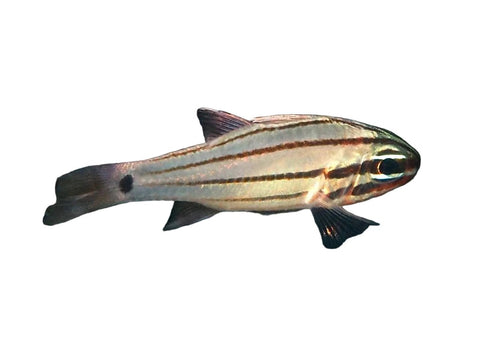
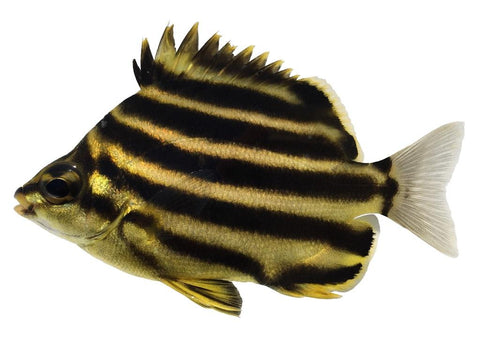
4 Lined Cardinal
$30.00

Every fish passes through our dedicated quarantine system and strict biosecurity monitoring before sale - so it arrives healthy, settled and ready to thrive. How we quarantine →
| Tasmania | YES |
| Western Australia | YES |
| Northern Territory | NO |
| All Other States | YES |
The Randall's Assessor (Assessor randalli) is a beautiful and relatively uncommon marine fish belonging to the family Plesiopidae. Also known as Randall's Basslet, this small reef-associated species is admired for its vibrant orange to reddish-orange body, subtle markings and peaceful nature.
Native to the western Pacific, this species is associated with coral reef environments, particularly areas containing caves, overhangs and shaded rockwork. It is a secretive fish that often spends time close to the reef structure, retreating into crevices when disturbed.
Unlike many larger and more boisterous marine species, Randall's Assessor has a generally peaceful temperament. It is an excellent consideration for suitably established community aquariums containing other small, non-aggressive marine fish.
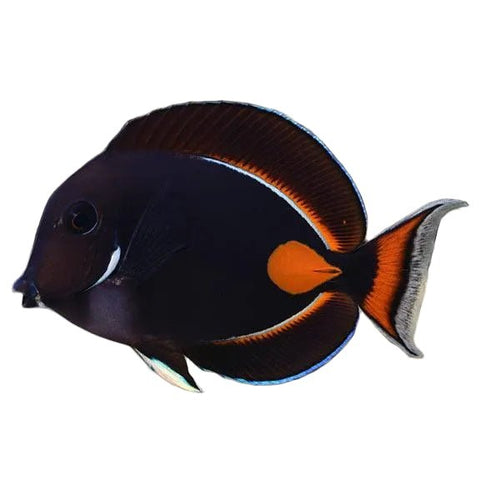
The Randall's Assessor has a predominantly deep blue to blue-black body, with attractive contrasting colouration and subtle red or orange accents around its fins. Its appearance can change depending on lighting and viewing angle, making it an especially interesting species to observe.
One of its most unusual characteristics is its ability to swim upside down beneath rock ledges and overhangs. This distinctive behaviour is shared with other members of the Assessor genus and makes it a fascinating addition to a marine aquarium.
Randall's Assessors are well suited to peaceful reef aquariums. They generally coexist well with other small, non-aggressive marine fish and are considered reef safe, making them suitable for aquariums containing corals and most ornamental invertebrates.
They are naturally shy and secretive, particularly when first introduced. Providing plenty of caves, crevices and shaded areas will help them settle in and become more confident.
Although relatively peaceful towards other species, they can display territorial behaviour towards other assessors, particularly when competing for preferred hiding places. Keeping a single specimen is generally the safest option unless attempting a carefully planned group in a suitably sized aquarium.
Randall's Assessors are carnivorous and naturally feed on small planktonic organisms and invertebrates.
In captivity, they generally accept a range of suitably sized frozen and prepared foods, including:
Frozen mysis shrimp.
Enriched brine shrimp.
Copepods and other small crustaceans.
Finely chopped marine seafood.
Quality marine carnivore pellets.
Small frozen plankton preparations.
Offer small portions at least twice daily. Because of their naturally shy feeding behaviour, ensure they have an opportunity to receive food without competition from larger, more aggressive tank mates.
A mature, stable marine aquarium with plenty of established live rock is ideal. Rockwork should include caves, narrow crevices and overhangs where the fish can shelter and display its characteristic upside-down swimming behaviour.
A tight-fitting aquarium lid is recommended, as assessors can jump when startled or disturbed.
With appropriate tank mates, stable water conditions and a suitable feeding routine, the Randall's Assessor can make a fascinating addition to a peaceful reef aquarium.
Species information
|
Care requirement |
Details |
|---|---|
|
Common Name |
Randall's Assessor |
|
Scientific Name |
Assessor randalli |
|
Family |
Plesiopidae |
|
Origin |
Western Pacific |
|
Care Level |
Moderate |
|
Adult Size |
Approximately 5–8 cm |
|
Minimum Aquarium |
115 litres |
|
Temperature |
24–27°C |
|
pH |
8.1–8.4 |
|
Specific Gravity |
1.023–1.026 |
|
Diet |
Carnivore |
|
Temperament |
Peaceful / Territorial towards its own kind |
|
Swimming Level |
Mid-level / Rockwork |
|
Reef Compatibility |
Reef safe |
|
Aquarium Type |
Marine Reef |
|
Social Behaviour |
Best kept singly |
Recommended aquarium setup
Established live rock with caves and overhangs.
Plenty of shaded hiding places.
Peaceful community tank mates.
Secure aquarium lid.
Stable water quality and regular feeding.
1. Is Randall's Assessor reef safe?
Yes. Randall's Assessor is considered reef safe and can be kept alongside corals and most ornamental invertebrates.
2. How big does Randall's Assessor grow?
It is a relatively small marine fish, generally reaching around 5–8 cm depending on the specimen and source.
3. Why does Randall's Assessor swim upside down?
This is natural behaviour associated with the Assessor genus. They frequently swim upside down beneath rock ledges and overhangs, where they feel comfortable and protected.
4. Can Randall's Assessor live with other fish?
Yes. They are generally peaceful and suitable for community reef aquariums. Avoid housing them with aggressive predators or larger fish that may intimidate or outcompete them for food.
5. What does Randall's Assessor eat?
They are carnivorous and should receive a varied diet of mysis shrimp, enriched brine shrimp, copepods, small marine crustaceans and quality marine pellets.
6. Can I keep multiple Randall's Assessors together?
They can be territorial towards their own kind, particularly around preferred hiding places. Keeping one specimen is generally recommended unless you have a sufficiently large aquarium and carefully planned introduction.
1. Keeping them with aggressive tank mates: Their naturally shy behaviour makes them unsuitable for aquariums containing highly aggressive or dominant fish.
2. Insufficient hiding places: Without caves, crevices and overhangs, they may remain stressed and spend excessive time hiding.
3. Keeping multiple specimens without planning: Assessors can become territorial towards one another, especially in smaller aquariums.
4. Allowing larger fish to outcompete them for food: Their smaller size and shy feeding habits mean they can easily miss meals when housed with aggressive feeders.
5. Leaving the aquarium uncovered: Randall's Assessors can jump when startled, so a secure lid is recommended.
6. Introducing them into unstable aquariums: They benefit from established biological filtration and consistent marine water parameters.
Livestock is dispatched with heat/cool packs and oxygen from our Melbourne facility, timed for the safest transit. Live arrivals may be scheduled for the best shipping window. A live arrival guarantee applies - contact us within the required window if anything is not right.
We stand behind everything we sell. If something is not right, get in touch and we will make it right. See our returns policy for the details.
This fish has been through our dedicated quarantine system and is feeding, settled and health-checked before sale. We still recommend acclimating slowly and quarantining new additions at home. Our team is happy to talk you through the right setup - just ask.

Choose type