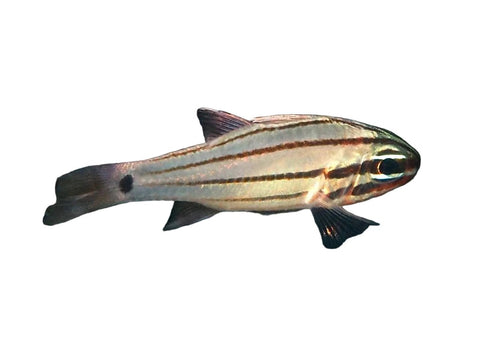
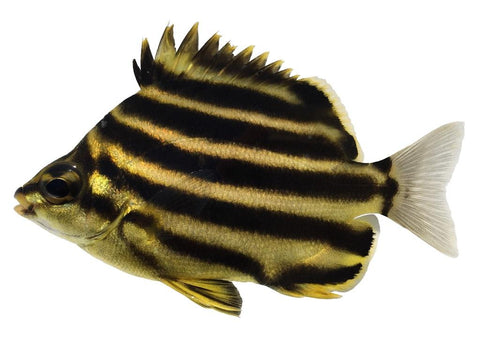
4 Lined Cardinal
$30.00

Every fish passes through our dedicated quarantine system and strict biosecurity monitoring before sale - so it arrives healthy, settled and ready to thrive. How we quarantine →
| Tasmania | YES |
| Western Australia | YES |
| Northern Territory | NO |
| All Other States | YES |
The Red Elongated Dottyback (Pseudochromis elongatus) is a beautiful and relatively uncommon dottyback from the Western Pacific. It displays a predominantly deep rosy-red to pink body, with a brighter reddish-orange head and a distinctive dark spot on the caudal fin.
Growing to around 6–7 cm, this is one of the smaller members of the Pseudochromis group. It is an active and intelligent fish that spends much of its time exploring rockwork, caves and crevices.
Although generally considered one of the more manageable dottybacks, it can still become territorial, particularly in smaller aquariums. Providing plenty of rockwork and hiding places helps it establish a territory and feel secure.
The Red Elongated Dottyback is reef safe with caution. It generally leaves corals alone but, like other dottybacks, may prey upon small crustaceans and ornamental shrimp.
Yes, they are generally reef safe with respect to corals. However, they may prey on small shrimp and other tiny crustaceans.
They reach approximately 6–7 cm as adults.
They can be territorial, particularly toward smaller, timid fish and other dottybacks. Plenty of rockwork helps reduce conflict.
Caution is recommended. While some specimens may coexist with larger cleaner shrimp, small ornamental shrimp can potentially become prey.
Offer a varied carnivorous diet including Mysis shrimp, enriched brine shrimp, finely chopped seafood and quality marine pellets.
Yes. Provide plenty of caves, cracks and crevices within the live rock for shelter and territory.
Livestock is dispatched with heat/cool packs and oxygen from our Melbourne facility, timed for the safest transit. Live arrivals may be scheduled for the best shipping window. A live arrival guarantee applies - contact us within the required window if anything is not right.
We stand behind everything we sell. If something is not right, get in touch and we will make it right. See our returns policy for the details.
This fish has been through our dedicated quarantine system and is feeding, settled and health-checked before sale. We still recommend acclimating slowly and quarantining new additions at home. Our team is happy to talk you through the right setup - just ask.
Choose type