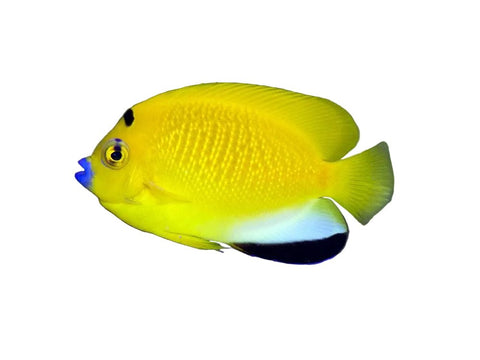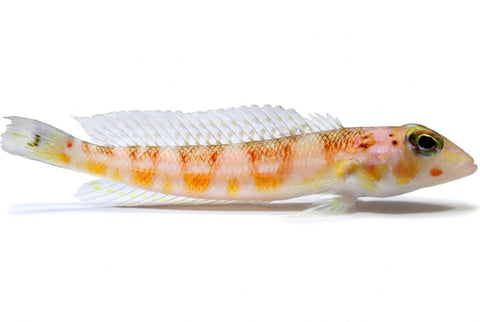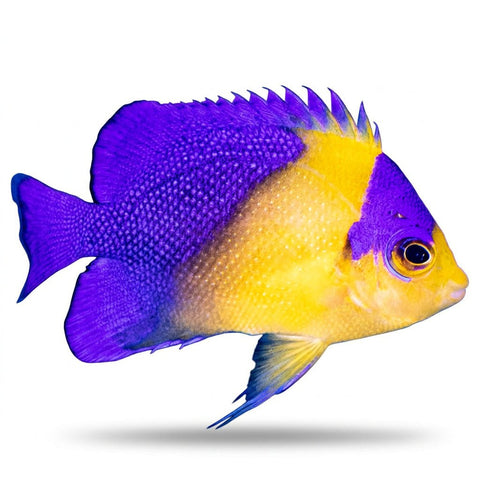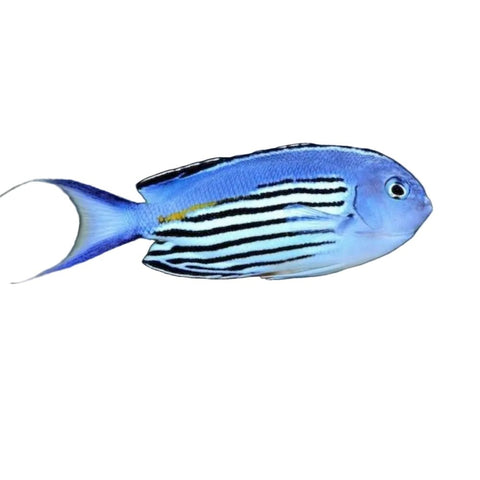
Watanabe Angelfish (Male)
$300.00

Every fish passes through our dedicated quarantine system and strict biosecurity monitoring before sale - so it arrives healthy, settled and ready to thrive. How we quarantine →
| Tasmania | YES |
| Western Australia | YES |
| Northern Territory | NO |
| All Other States | YES |
The Storm Clownfish (Amphiprion ocellaris) is a highly sought-after designer variety of the popular Ocellaris Clownfish, recognised for its distinctive irregular white markings and unique storm-like patterns. Developed through selective captive breeding, Storm Clownfish display dramatic variations in colour and pattern, making every individual visually unique.
Unlike traditional Ocellaris Clownfish, which typically display three clearly defined white vertical bands, Storm varieties feature irregular, broken or swirling white patterns across their bodies. Depending on the breeding line, individuals may display combinations of orange, black, brown and white.
Storm Clownfish are particularly popular among marine aquarists and collectors looking for something different from traditional clownfish varieties, while retaining the hardy nature and entertaining personality of standard Ocellaris Clownfish.
Appearance and Colour Variations
Storm Clownfish are available in several designer variations, with individual appearance depending on their breeding lineage.
Common variations include:
Orange Storm: Orange body with distinctive irregular white storm-like markings.
Black Storm: Dark brown to black body with contrasting white patterning.
White Storm: Extensive white markings with reduced orange or dark pigmentation.
Super Storm: Selectively bred for particularly extensive and dramatic white pattern coverage.
No two Storm Clownfish necessarily display identical markings. Pattern coverage, symmetry and colour intensity can vary considerably between individuals.
Natural Habitat and Behaviour
Although Storm Clownfish are selectively bred aquarium varieties, their underlying species, Amphiprion ocellaris, naturally occurs throughout the Indo-Pacific region.
Wild Ocellaris Clownfish inhabit sheltered lagoons and coral reef environments, where they form close associations with certain sea anemones. They are naturally territorial around their chosen host and generally remain close to a preferred area of the aquarium.
In captivity, Storm Clownfish are active, inquisitive and relatively confident fish. They frequently interact with their surroundings and can develop recognisable behaviours towards their keepers.
Aquarium Suitability and Compatibility
Storm Clownfish are an excellent choice for both beginner and experienced marine aquarists. As captive-bred Ocellaris varieties, they are generally hardy, adaptable and readily accept a range of prepared aquarium foods.
They can be maintained individually or as compatible pairs. When kept together, clownfish establish a social hierarchy in which the dominant individual becomes female and the subordinate fish remains male.
They are generally compatible with peaceful community marine fish, including gobies, blennies, cardinalfish, wrasses, tangs and other suitable reef inhabitants.
However, established pairs can become territorial, particularly around a preferred host. Avoid mixing multiple clownfish pairs in smaller aquariums.
Reef Compatibility
Storm Clownfish are considered fully reef safe and are suitable for aquariums containing SPS, LPS and soft corals, as well as most ornamental invertebrates.
They may develop a hosting relationship with suitable sea anemones, particularly Bubble Tip Anemones. In captivity, they may also choose corals such as hammer, frogspawn and torch corals as alternative hosts.
An anemone is not required for their long-term health or wellbeing. They can thrive in a reef aquarium without one.
Feeding and Nutrition
Storm Clownfish are omnivorous and readily accept a varied selection of prepared and frozen marine foods.
Suitable foods include:
High-quality marine pellets.
Marine flakes.
Frozen mysis shrimp.
Enriched brine shrimp.
Finely chopped seafood.
Spirulina-based foods.
Quality marine omnivore preparations.
Feed small portions once or twice daily, ensuring food is consumed without leaving excessive waste in the aquarium.
A varied diet supports healthy growth, strong colouration and successful breeding behaviour.
Specific Care Requirements
Storm Clownfish are relatively straightforward to maintain when provided with stable marine water conditions and an established biological filter.
They benefit from live rock, suitable swimming space and areas where they can establish a territory. Moderate water movement and good filtration will help maintain a healthy environment.
For aquarists interested in breeding, established pairs may regularly spawn on suitable hard surfaces near their chosen territory. Raising the young requires a separate larval-rearing system and specialised feeding.
With their unusual patterns, entertaining personalities and adaptable nature, Storm Clownfish are an excellent addition to a wide range of marine aquariums.
|
Care Requirement |
Details |
|---|---|
|
Scientific Name |
Amphiprion ocellaris |
|
Family |
Pomacentridae |
|
Origin |
Indo-Pacific; designer captive-bred variety |
|
Care Level |
Easy |
|
Adult Size |
Approximately 8–10 cm |
|
Minimum Aquarium Size |
75 litres |
|
Recommended Pair Aquarium |
100–120 litres or larger |
|
Temperature |
24–27°C |
|
pH |
8.1–8.4 |
|
Salinity |
1.023–1.026 SG |
|
Diet |
Omnivore |
|
Feeding Frequency |
1–2 times daily |
|
Temperament |
Peaceful to semi-aggressive |
|
Swimming Level |
Middle and lower levels |
|
Reef Compatibility |
Reef Safe |
|
Aquarium Type |
Marine fish-only and reef aquariums |
|
Social Behaviour |
Individual or compatible pairs |
|
Lifespan |
Approximately 6–10 years or longer with good care |
1. What is a Storm Clownfish?
A Storm Clownfish is a selectively bred designer variety of Ocellaris Clownfish (Amphiprion ocellaris). It is recognised by its irregular white markings, which create a distinctive storm-like appearance.
2. Are Storm Clownfish reef safe?
Yes. Storm Clownfish are reef safe and can be kept with SPS, LPS and soft corals, along with most suitable marine invertebrates.
3. Do Storm Clownfish need an anemone?
No. Although they may naturally host in sea anemones, they do not require one to thrive in captivity. Some individuals may also host in corals or other aquarium structures.
4. Can Storm Clownfish be kept in pairs?
Yes. They can be maintained as compatible pairs. Ideally, introduce two appropriately sized juveniles or an established compatible pair. Monitor aggression as their social hierarchy develops.
5. What is the difference between Orange Storm and Black Storm Clownfish?
Orange Storm varieties retain an orange base colour with irregular white markings, while Black Storm varieties display much darker brown or black pigmentation with contrasting white patterns.
6. Can Storm Clownfish breed in an aquarium?
Yes. Like standard Ocellaris Clownfish, Storm varieties can spawn in captivity. They lay eggs on a cleaned hard surface, with the male guarding and aerating the eggs. Raising the young requires specialised larval-rearing equipment and live foods.
1. Assuming every Storm Clownfish looks identical: These are selectively bred designer fish, and individual markings, pattern coverage and colouration can vary considerably.
2. Keeping multiple established pairs in small aquariums: Clownfish can become territorial, particularly once they mature and establish breeding territories.
3. Assuming an anemone is essential: Storm Clownfish can thrive without an anemone. Only introduce one if the aquarium is suitable for its specific care requirements.
4. Feeding only one type of food: Provide a varied omnivorous diet containing quality pellets, frozen mysis, enriched brine shrimp and other suitable marine foods.
5. Introducing them into an uncycled aquarium: Although hardy, clownfish still require established biological filtration and stable water conditions.
6. Ignoring territorial behaviour: Established pairs may defend their chosen territory against other fish. Provide sufficient space and carefully select tankmates.
Livestock is dispatched with heat/cool packs and oxygen from our Melbourne facility, timed for the safest transit. Live arrivals may be scheduled for the best shipping window. A live arrival guarantee applies - contact us within the required window if anything is not right.
We stand behind everything we sell. If something is not right, get in touch and we will make it right. See our returns policy for the details.
This fish has been through our dedicated quarantine system and is feeding, settled and health-checked before sale. We still recommend acclimating slowly and quarantining new additions at home. Our team is happy to talk you through the right setup - just ask.