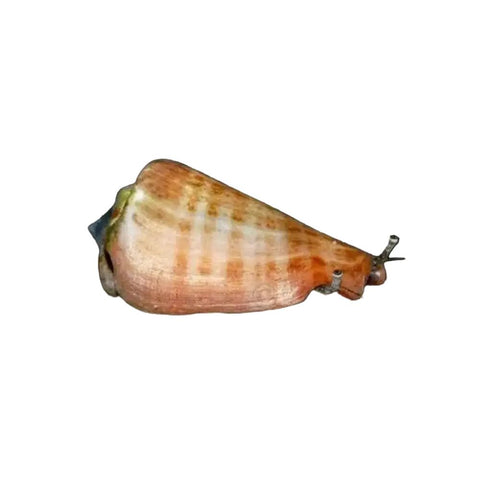
Strombus
$10.00

| Tasmania | NO |
| Western Australia | NO |
| Northern Territory | NO |
| All Other States | YES |
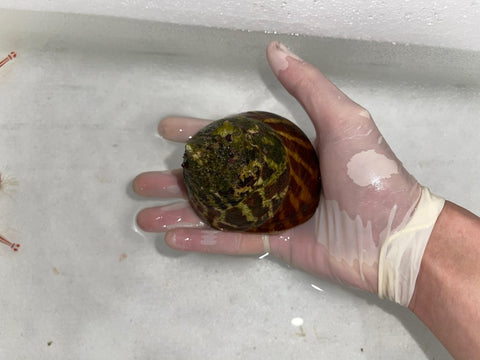
Tropical Abalone are fascinating marine gastropods that are valued in reef aquariums for their grazing behaviour and unusual appearance. They have a flattened, oval shell and a strong muscular foot that allows them to cling tightly to rockwork and aquarium surfaces.
They are primarily nocturnal and will often remain hidden during the day before becoming active after the aquarium lights go out. Once established, they move across live rock and other hard surfaces searching for algae and natural growth.
Tropical Abalone are particularly useful in mature reef aquariums with established algae growth. They should not be considered a replacement for regular aquarium maintenance, as their available food supply needs to be monitored carefully.
They are peaceful toward fish, corals and other invertebrates and are generally reef safe. Provide plenty of mature live rock and natural grazing surfaces, along with stable marine water parameters.
Yes. They are generally considered reef safe and primarily graze algae and biofilm from hard surfaces.
They mainly feed on algae and biofilm growing naturally on live rock and other aquarium surfaces.
They are primarily nocturnal and often become much more active after the aquarium lights go out.
Yes. A mature aquarium with established algae and biofilm is preferable because it provides a natural food source.
Yes. They generally do not eat healthy corals and can be suitable additions to reef aquariums.
If natural algae is limited, supplementary marine algae may be required. Avoid adding one to an aquarium where there is insufficient food available.
Dispatched from our Melbourne facility, usually within 1-2 business days. Delivery time and cost are calculated at checkout based on your address.
We stand behind everything we sell. If something is not right, get in touch and we will make it right. See our returns policy for the details.
Choose size