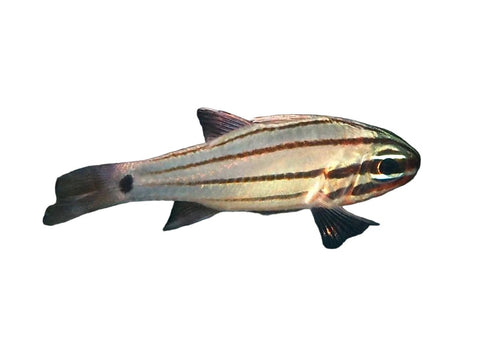
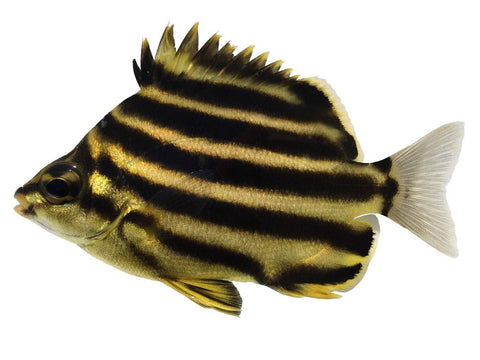
4 Lined Cardinal
$30.00

Every fish passes through our dedicated quarantine system and strict biosecurity monitoring before sale - so it arrives healthy, settled and ready to thrive. How we quarantine →
| Tasmania | YES |
| Western Australia | YES |
| Northern Territory | NO |
| All Other States | YES |
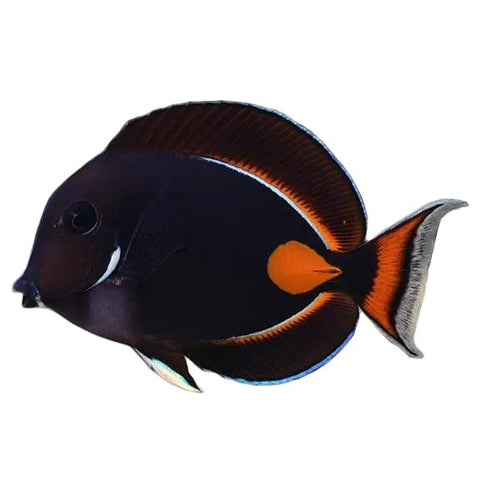
The Vampire Tang, also known as Tennent's Surgeonfish, Lieutenant Tang or Doubleband Surgeonfish, is a striking surgeonfish recognised for its olive-grey to blue-grey body, dark markings behind the eyes and vivid blue edging around the tail and fins.
One of the most interesting features of this species is its juvenile-to-adult colour transformation. Young fish have a very different appearance, gradually developing the distinctive double-band facial markings as they mature.
Vampire Tangs are active swimmers and natural algae grazers. They require a large, mature aquarium with plenty of open swimming space and established live rock for grazing and shelter.
Like other surgeonfish, they possess a sharp caudal spine and should be handled carefully. They can also become territorial towards other tangs, particularly similarly shaped Acanthurus species.
They are generally reef safe and make excellent additions to large established reef aquariums.
Scientific Name: Acanthurus tennentii
Common Name: Vampire Tang / Tennent's Surgeonfish / Lieutenant Tang / Doubleband Surgeonfish
Family: Acanthuridae
Type: Marine Fish / Surgeonfish
Adult Size: Approximately 30–31 cm
Temperament: Semi-Aggressive / Territorial
Care Level: Intermediate
Minimum Aquarium: 600 L+
Temperature: 24–28°C
pH: 8.0–8.4
Salinity: 1.023–1.026 SG
Diet: Herbivore / Omnivore
Tank Level: All Levels
Reef Safe: Yes
Suitable For: Large mature reef aquariums and marine systems
Vampire Tangs can reach approximately 30–31 cm, making a large aquarium essential for long-term care.
Yes. They are generally considered reef safe and are excellent algae grazers for established reef aquariums.
Their natural diet is primarily algae and other plant material. Provide regular nori, marine algae, Spirulina-based foods and quality herbivore pellets, while allowing them to graze naturally on mature rockwork.
They can become territorial, particularly towards other Acanthurus tangs and similarly shaped surgeonfish. A large aquarium and careful selection of tank mates are important.
Yes. Mature live rock provides natural algae and biofilm for grazing, as well as shelter and areas to explore.
Buying one without planning for its adult size
A small juvenile can eventually become a 30 cm+ surgeonfish.
Not providing enough swimming space
Vampire Tangs are active swimmers and require substantial open water.
Not providing enough algae-based food
Regular nori and other marine algae should supplement natural grazing.
Keeping incompatible tangs together
Territorial behaviour can become significant between surgeonfish.
Ignoring the caudal spine
The sharp "scalpel" near the tail can cause serious injury when handling the fish.
Adding one to an immature aquarium
An established aquarium with mature live rock provides valuable natural grazing opportunities.
Livestock is dispatched with heat/cool packs and oxygen from our Melbourne facility, timed for the safest transit. Live arrivals may be scheduled for the best shipping window. A live arrival guarantee applies - contact us within the required window if anything is not right.
We stand behind everything we sell. If something is not right, get in touch and we will make it right. See our returns policy for the details.
This fish has been through our dedicated quarantine system and is feeding, settled and health-checked before sale. We still recommend acclimating slowly and quarantining new additions at home. Our team is happy to talk you through the right setup - just ask.
Choose type