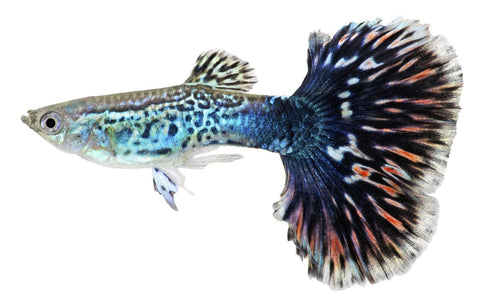
Assorted Guppy
From $7.00
Choose gender

Every fish passes through our dedicated quarantine system and strict biosecurity monitoring before sale - so it arrives healthy, settled and ready to thrive. How we quarantine →
| Tasmania | NO |
| Western Australia | NO |
| Northern Territory | NO |
| All Other States | YES |
The White Cloud Minnow, also known as the White Cloud Mountain Minnow, is a hardy, peaceful freshwater schooling fish known for its shimmering silver-green body, iridescent blue stripe and vibrant red-tipped fins. Its small size and active swimming behaviour make it an excellent choice for planted aquariums and cool-water community setups.
Native to southern China, White Cloud Minnows are particularly popular because they thrive in cooler water than many commonly kept tropical fish. They can often be kept in an unheated aquarium when room temperatures remain suitable, making them a great option for aquarists looking for a colourful, low-maintenance species.
These lively fish are social and should be kept in groups of at least six, with larger schools often displaying more natural behaviour. They spend much of their time swimming through the middle and upper levels of the aquarium, creating constant movement and colour.
A well-planted aquarium with open swimming space, gentle water movement and good oxygenation provides an ideal environment. They generally coexist well with other peaceful fish that share their cooler water requirements, but they are not suitable companions for species that need consistently warm tropical temperatures.
White Cloud Minnows are easy to feed and readily accept quality tropical flakes, micro pellets and small frozen or live foods such as daphnia and brine shrimp. A varied diet and stable water quality help maintain their colour, activity and overall health.
Scientific Name: Tanichthys albonubes
Common Names: White Cloud Minnow, White Cloud Mountain Minnow
Origin: Southern China
Care Level: Easy
Adult Size: Approximately 3–4 cm
Minimum Aquarium: Around 40–55 litres for a small group
Temperature: 16–24°C
pH: Approximately 6.0–8.0
Diet: Omnivore
Temperament: Peaceful and active
Swimming Level: Middle to upper
Group Size: At least 6; ideally 8–12 or more
Aquarium Type: Freshwater cool-water or subtropical
Lifespan: Approximately 3–5 years, sometimes longer
Not necessarily. They naturally prefer cooler water and can often be kept without a heater in a suitable indoor aquarium. Monitor temperatures carefully, particularly during hot Australian summers.
Keep at least six together. A larger group of eight to twelve or more provides better opportunities for natural schooling behaviour.
Only with species that tolerate the same cooler temperature range. Many tropical fish require warmer water, so a dedicated cool-water community is often the better choice.
They readily accept flakes, micro pellets and small frozen or live foods such as brine shrimp and daphnia.
Yes. They are hardy, peaceful and relatively easy to care for when kept in a suitable aquarium with stable water quality.
They may coexist with adult shrimp, but very small shrimplets can be eaten. Provide plenty of moss and dense plant cover if keeping them together.
Keeping White Cloud Minnows individually rather than in a group.
Maintaining them permanently in excessively warm tropical water.
Housing them with fish that require substantially higher temperatures.
Keeping them in aquariums with insufficient swimming space.
Overfeeding and neglecting regular water changes.
Allowing summer heat to raise aquarium temperatures excessively.
Livestock is dispatched with heat/cool packs and oxygen from our Melbourne facility, timed for the safest transit. Live arrivals may be scheduled for the best shipping window. A live arrival guarantee applies - contact us within the required window if anything is not right.
We stand behind everything we sell. If something is not right, get in touch and we will make it right. See our returns policy for the details.
This fish has been through our dedicated quarantine system and is feeding, settled and health-checked before sale. We still recommend acclimating slowly and quarantining new additions at home. Our team is happy to talk you through the right setup - just ask.
Choose gender
Choose size