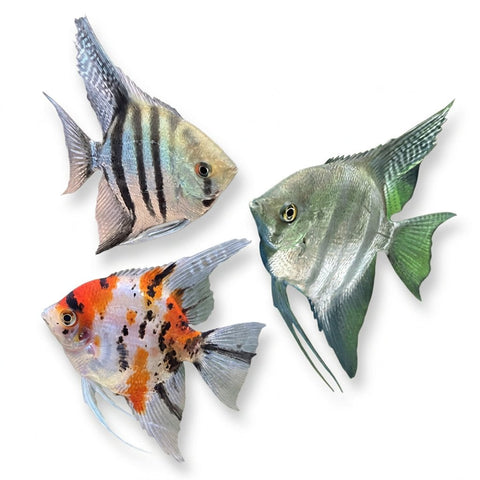
Assorted Angelfish
From $12.00
Choose size

Every fish passes through our dedicated quarantine system and strict biosecurity monitoring before sale - so it arrives healthy, settled and ready to thrive. How we quarantine →
| Tasmania | NO |
| Western Australia | NO |
| Northern Territory | NO |
| All Other States | YES |
The Red Devil Angel (Pterophyllum scalare) is a striking selectively bred freshwater angelfish, prized for its intense red and orange colouration, contrasting pale markings and elegant, flowing fins. Its distinctive tall, laterally compressed body gives it the graceful appearance that has made angelfish one of the most recognisable and popular freshwater aquarium fish.
As the Red Devil Angel matures, its red colouration becomes increasingly prominent, creating an impressive display fish for larger tropical aquariums. Individual colour patterns and intensity can vary between specimens.
The Red Devil Angel originates from the captive-bred ornamental strains of the common freshwater angelfish. Its wild ancestors come from the Amazon Basin and surrounding South American river systems, where angelfish inhabit slow-moving waters, flooded forests and densely vegetated waterways.
Red Devil Angels are generally semi-aggressive, particularly as they mature and establish territories. They are usually manageable in appropriately sized community aquariums, although breeding pairs can become considerably more territorial.
They are best kept with peaceful to moderately assertive tank mates of a suitable size. Small fish, particularly tiny schooling species and newly hatched fry, may eventually be viewed as food.
Angelfish have a fascinating swimming style and generally occupy the middle and upper areas of the aquarium. Their tall fins and body shape make aquariums with plenty of vertical swimming space particularly important.
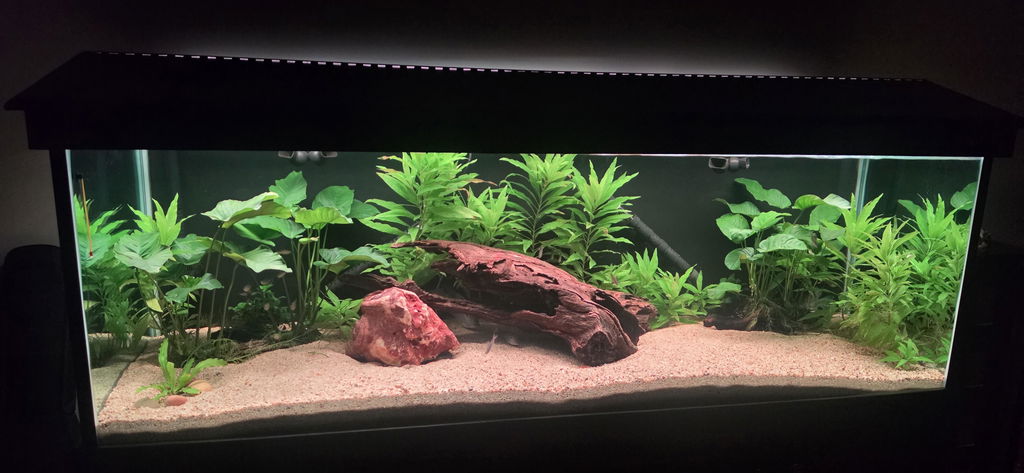
A spacious, well-established freshwater aquarium with good filtration and stable water conditions is ideal. Red Devil Angels appreciate planted aquariums with driftwood, roots and natural hiding areas, while still requiring open swimming space.
Tall aquariums are particularly beneficial because of their extended dorsal and anal fins. A minimum aquarium capacity of approximately 200 litres is recommended for adult specimens, with additional space required for groups or multiple breeding pairs.
Maintain consistent tropical temperatures and avoid sudden fluctuations in pH, temperature or water quality. Regular water changes and good filtration will help maintain their long-term health.
Red Devil Angels are enthusiastic feeders and readily accept a varied diet. They are omnivorous, with a preference for protein-rich foods, and benefit from a combination of quality prepared foods and frozen or live options.
Recommended foods include:
High-quality tropical flakes and angelfish pellets.
Frozen brine shrimp.
Mysis shrimp.
Bloodworms as an occasional supplementary food.
Daphnia and other suitable small aquatic invertebrates.
Feed small portions once or twice daily, ensuring all aquarium inhabitants receive adequate food. A varied diet supports healthy development, condition and colouration.
Red Devil Angels can be kept in community aquariums with appropriately selected tank mates. Suitable companions include medium-sized peaceful tetras, larger rasboras, Corydoras catfish and compatible peaceful South American species.
Avoid fin-nipping fish, highly aggressive cichlids and very small fish that may be eaten as the angelfish grows.
When keeping multiple angelfish together, provide sufficient aquarium space and visual barriers to reduce territorial disputes.
Important: Red Devil Angels are freshwater fish and are not suitable for marine or reef aquariums.
|
Care requirement |
Details |
|---|---|
|
Scientific Name |
Pterophyllum scalare |
|
Common Name |
Red Devil Angel |
|
Origin |
Captive-bred ornamental strain; wild ancestors from South America |
|
Care Level |
Easy to Moderate |
|
Adult Size |
Approximately 15cm body length; taller including fins |
|
Minimum Aquarium Size |
200 litres |
|
Temperature |
25–29°C |
|
pH |
6.0–7.5 |
|
Water Hardness |
Soft to moderately hard |
|
Diet |
Omnivore; quality flakes, pellets, frozen and live foods |
|
Temperament |
Semi-aggressive |
|
Swimming Level |
Middle to upper |
|
Reef Compatibility |
Not applicable – freshwater species |
|
Aquarium Type |
Tropical freshwater, planted community or species aquarium |
|
Social Behaviour |
Can be kept individually, in compatible groups or established pairs |
1. How big does a Red Devil Angel grow?
Red Devil Angels can reach approximately 15cm in body length. Their extended dorsal and anal fins make them considerably taller, so a suitably tall aquarium is important.
2. Are Red Devil Angels aggressive?
They are generally semi-aggressive. Younger fish are often relatively peaceful, but adults can become territorial, particularly when forming breeding pairs or protecting eggs.
3. Can Red Devil Angels live with other angelfish?
Yes. They can be kept with other angelfish provided there is sufficient space. However, territorial behaviour can develop as they mature, especially when pairs form.
4. Can Red Devil Angels live with tetras?
Yes, provided the tetras are an appropriate size. Larger species are generally safer choices, as very small tetras may be eaten by adult angelfish.
5. What do Red Devil Angels eat?
They accept quality tropical flakes, pellets, frozen brine shrimp, mysis shrimp and other suitable frozen or live foods. A varied diet is recommended.
6. Are Red Devil Angels suitable for planted aquariums?
Yes. They look particularly impressive in planted aquariums with driftwood and natural hiding areas. Choose plants that tolerate tropical temperatures and leave sufficient open swimming space.
1. Keeping them in aquariums that are too small: Their adult size and territorial behaviour require adequate swimming space. Avoid undersized aquariums, particularly when keeping multiple angelfish.
2. Choosing unsuitable tank mates: Very small fish may become prey, while aggressive or fin-nipping species can cause stress and damage their delicate fins.
3. Using aquariums that are too shallow: Angelfish have tall bodies and extended fins. A taller aquarium provides considerably better swimming conditions.
4. Overfeeding: Excess food can quickly deteriorate water quality. Feed controlled portions and remove uneaten food.
5. Ignoring water quality: Poor filtration, accumulated waste and inconsistent water conditions can lead to stress and health problems. Maintain regular water changes and monitor water parameters.
6. Ignoring breeding aggression: Established pairs can become territorial and aggressively defend their spawning area. Provide enough space and hiding areas to minimise conflict.
Livestock is dispatched with heat/cool packs and oxygen from our Melbourne facility, timed for the safest transit. Live arrivals may be scheduled for the best shipping window. A live arrival guarantee applies - contact us within the required window if anything is not right.
We stand behind everything we sell. If something is not right, get in touch and we will make it right. See our returns policy for the details.
This fish has been through our dedicated quarantine system and is feeding, settled and health-checked before sale. We still recommend acclimating slowly and quarantining new additions at home. Our team is happy to talk you through the right setup - just ask.
Choose size