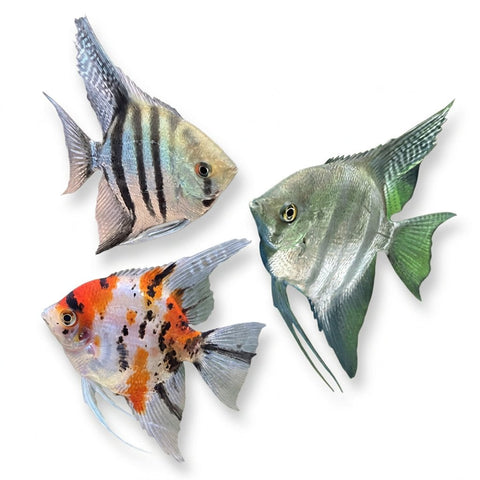
Assorted Angelfish
From $12.00
Choose size

Every fish passes through our dedicated quarantine system and strict biosecurity monitoring before sale - so it arrives healthy, settled and ready to thrive. How we quarantine →
| Tasmania | YES |
| Western Australia | YES |
| Northern Territory | NO |
| All Other States | YES |
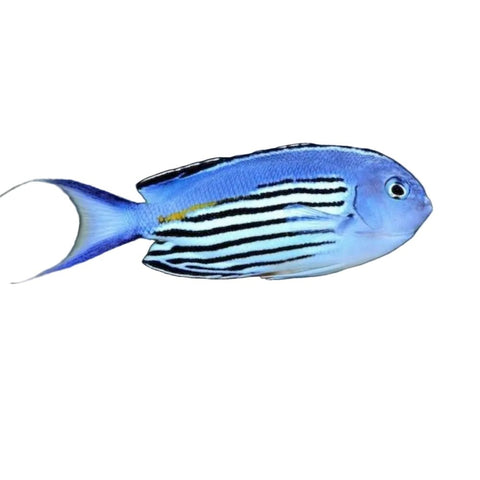
The female Watanabe Angelfish is a stunning, peaceful reef fish recognised by its elegant blue, black and white patterning. As a member of the Genicanthus genus, it differs from many traditional angelfish by being primarily a zooplankton feeder and is generally considered reef safe.
Are female Watanabe Angelfish reef safe?
Yes. Watanabe Angelfish are among the more reef-compatible angelfish and generally do not bother corals. Individual behaviour can still vary.
How big does a female Watanabe Angelfish get?
Females generally reach around 15 cm and require a spacious aquarium with plenty of swimming room.
Can a female Watanabe Angelfish be kept with other Watanabe Angelfish?
Yes. They can be kept as part of a compatible group or pair in an appropriately sized aquarium. Watanabe Angelfish are protogynous hermaphrodites, meaning females can change sex and become males.
What should I feed a female Watanabe Angelfish?
Provide a varied diet including frozen mysis, finely chopped seafood, quality marine pellets and other suitable meaty foods. Regular feeding is recommended.
Livestock is dispatched with heat/cool packs and oxygen from our Melbourne facility, timed for the safest transit. Live arrivals may be scheduled for the best shipping window. A live arrival guarantee applies - contact us within the required window if anything is not right.
We stand behind everything we sell. If something is not right, get in touch and we will make it right. See our returns policy for the details.
This fish has been through our dedicated quarantine system and is feeding, settled and health-checked before sale. We still recommend acclimating slowly and quarantining new additions at home. Our team is happy to talk you through the right setup - just ask.
Choose size


Choose quantity