Sold out
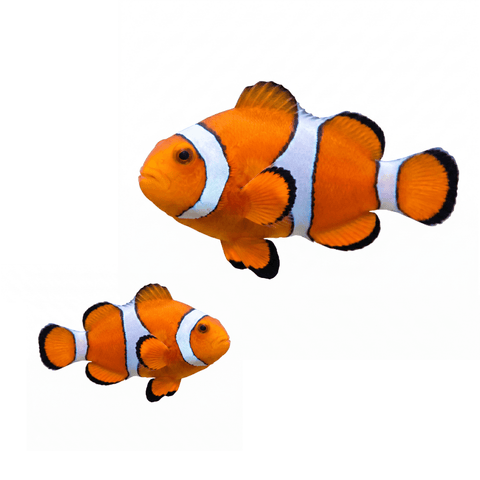
Orange Ocellaris Clown
From $35.00

Every fish passes through our dedicated quarantine system and strict biosecurity monitoring before sale - so it arrives healthy, settled and ready to thrive. How we quarantine →
| Tasmania | YES |
| Western Australia | YES |
| Northern Territory | NO |
| All Other States | YES |
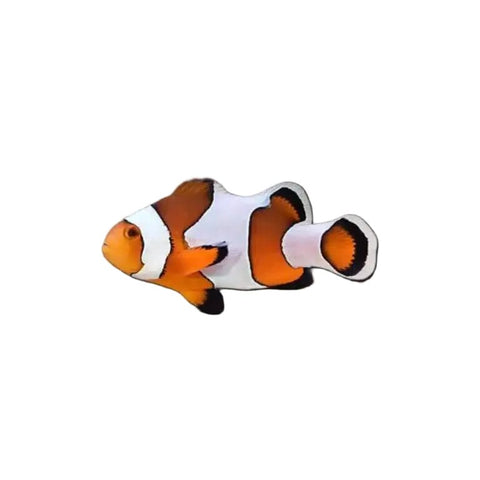
Black Ice Ocellaris Clownfish are a selectively bred designer variety of Ocellaris Clownfish, recognised for their striking combination of black, white and orange colouration. Their dark body, irregular white markings and orange facial and fin colour create a dramatic appearance that makes them highly desirable in reef aquariums.
Like standard Ocellaris Clownfish, Black Ice varieties are hardy, adaptable and generally peaceful. They are an excellent choice for both beginner and experienced marine aquarists.
The exact pattern can vary considerably between individual fish. Some specimens develop extensive black colouration, while others retain more orange and display larger or more irregular white patches.
Black Ice Ocellaris can be kept individually or as a pair. Once established, a pair will usually develop a territory and may eventually spawn.
An anemone is not required. They may host in an anemone, coral, rockwork or even aquarium equipment depending on the individual fish.
Scientific Name: Amphiprion ocellaris
Common Name: Black Ice Ocellaris Clownfish
Family: Pomacentridae
Type: Marine Fish / Clownfish
Adult Size: Approximately 8–10 cm
Temperament: Peaceful to Semi-Territorial
Care Level: Easy
Minimum Aquarium: 60 L+
Temperature: 24–28°C
pH: 8.0–8.4
Salinity: 1.023–1.026 SG
Diet: Omnivore
Tank Level: All Levels
Reef Safe: Yes
Suitable For: Reef aquariums, marine community tanks and beginner marine systems
Black Ice is a selectively bred designer Ocellaris variety with a combination of black, white and orange markings. The pattern is highly variable between individual fish.
Yes. They are generally reef safe and are suitable for coral aquariums.
No. An anemone is not required. They may choose to host in corals, rockwork or other structures instead.
Yes. They can be kept as pairs and may eventually form a breeding pair once mature and settled.
They readily accept quality marine pellets and flakes along with frozen foods such as mysis shrimp and brine shrimp. A varied diet helps maintain colour and condition.
Expecting every Black Ice to have the same pattern
Designer clownfish patterns can vary significantly between individual specimens.
Assuming an anemone is essential
Black Ice Ocellaris can thrive without an anemone.
Keeping them with aggressive fish
Their generally peaceful nature makes them better suited to peaceful reef communities.
Overfeeding
Clownfish are enthusiastic feeders. Feed controlled portions and maintain excellent water quality.
Expecting immediate hosting behaviour
Some individuals host quickly while others may never host an anemone or coral.
Livestock is dispatched with heat/cool packs and oxygen from our Melbourne facility, timed for the safest transit. Live arrivals may be scheduled for the best shipping window. A live arrival guarantee applies - contact us within the required window if anything is not right.
We stand behind everything we sell. If something is not right, get in touch and we will make it right. See our returns policy for the details.
This fish has been through our dedicated quarantine system and is feeding, settled and health-checked before sale. We still recommend acclimating slowly and quarantining new additions at home. Our team is happy to talk you through the right setup - just ask.