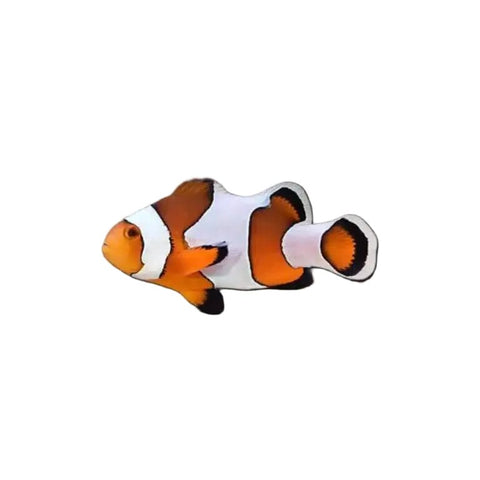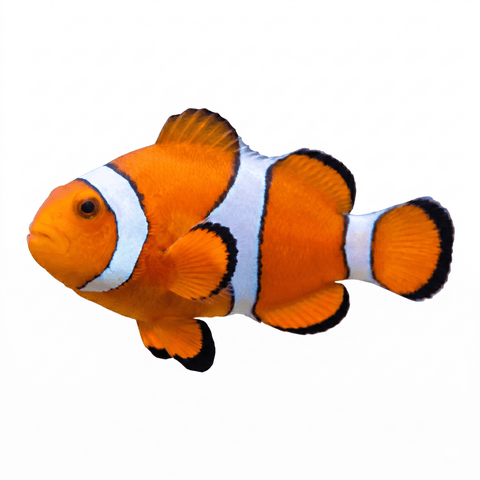
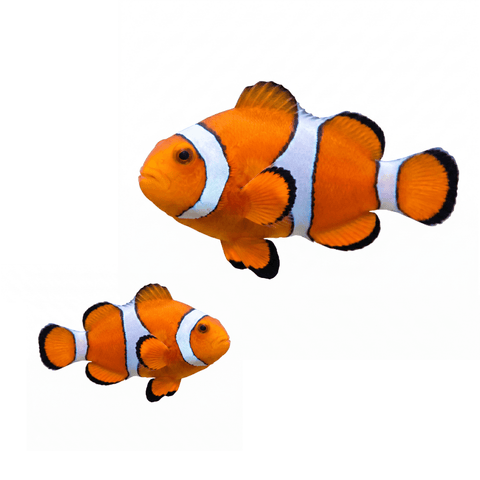
Orange Ocellaris Clown
From $35.00
Choose size

Every fish passes through our dedicated quarantine system and strict biosecurity monitoring before sale - so it arrives healthy, settled and ready to thrive. How we quarantine →
| Tasmania | YES |
| Western Australia | YES |
| Northern Territory | NO |
| All Other States | YES |
The Maroon Clownfish is one of the largest and most distinctive clownfish species available to marine aquarists. Premnas biaculeatus develops a deep maroon to red-brown body with contrasting white to yellowish vertical bars and characteristic cheek spines.
This wild pair consists of two naturally collected Maroon Clownfish being offered together. Established pairs are particularly desirable for reef aquariums and can develop a strong bond with a suitable host anemone.
Maroon Clownfish are highly territorial, especially once paired or established with an anemone. They are best housed as a bonded pair rather than introducing unrelated adults together. A spacious aquarium with plenty of rockwork and a defined territory is recommended.
Their natural host is commonly the Bubble Tip Anemone (Entacmaea quadricolor), although they can live successfully without an anemone. They are reef safe with corals but may aggressively defend their territory and host area.
Wild specimens should be offered a varied marine diet including quality pellets and flakes alongside frozen foods such as mysis and brine shrimp. Maintaining excellent water quality and stable salinity is particularly important when acclimating wild-caught fish.
A wild pair refers to two Maroon Clownfish collected from the wild and offered together as an established or naturally compatible pair. Pairing status should be confirmed at the time of sale.
Yes. Maroon Clownfish become particularly territorial as they mature and can aggressively defend their anemone, rockwork and surrounding territory.
It is generally not recommended. Maroon Clownfish are highly territorial towards other clownfish and can seriously injure or kill intruders.
No. They can be successfully maintained without an anemone, although a suitable host such as Entacmaea quadricolor can provide natural behaviour and enrichment.
Offer a varied diet of quality marine pellets and flakes supplemented with frozen mysis shrimp, brine shrimp and other suitable marine foods.
Yes. Established pairs can spawn in captivity, with the female laying eggs on a suitable surface and the male guarding and tending them.
Livestock is dispatched with heat/cool packs and oxygen from our Melbourne facility, timed for the safest transit. Live arrivals may be scheduled for the best shipping window. A live arrival guarantee applies - contact us within the required window if anything is not right.
We stand behind everything we sell. If something is not right, get in touch and we will make it right. See our returns policy for the details.
This fish has been through our dedicated quarantine system and is feeding, settled and health-checked before sale. We still recommend acclimating slowly and quarantining new additions at home. Our team is happy to talk you through the right setup - just ask.
Choose size